
Performance Review Cycle Management Across the Employee Lifecycle
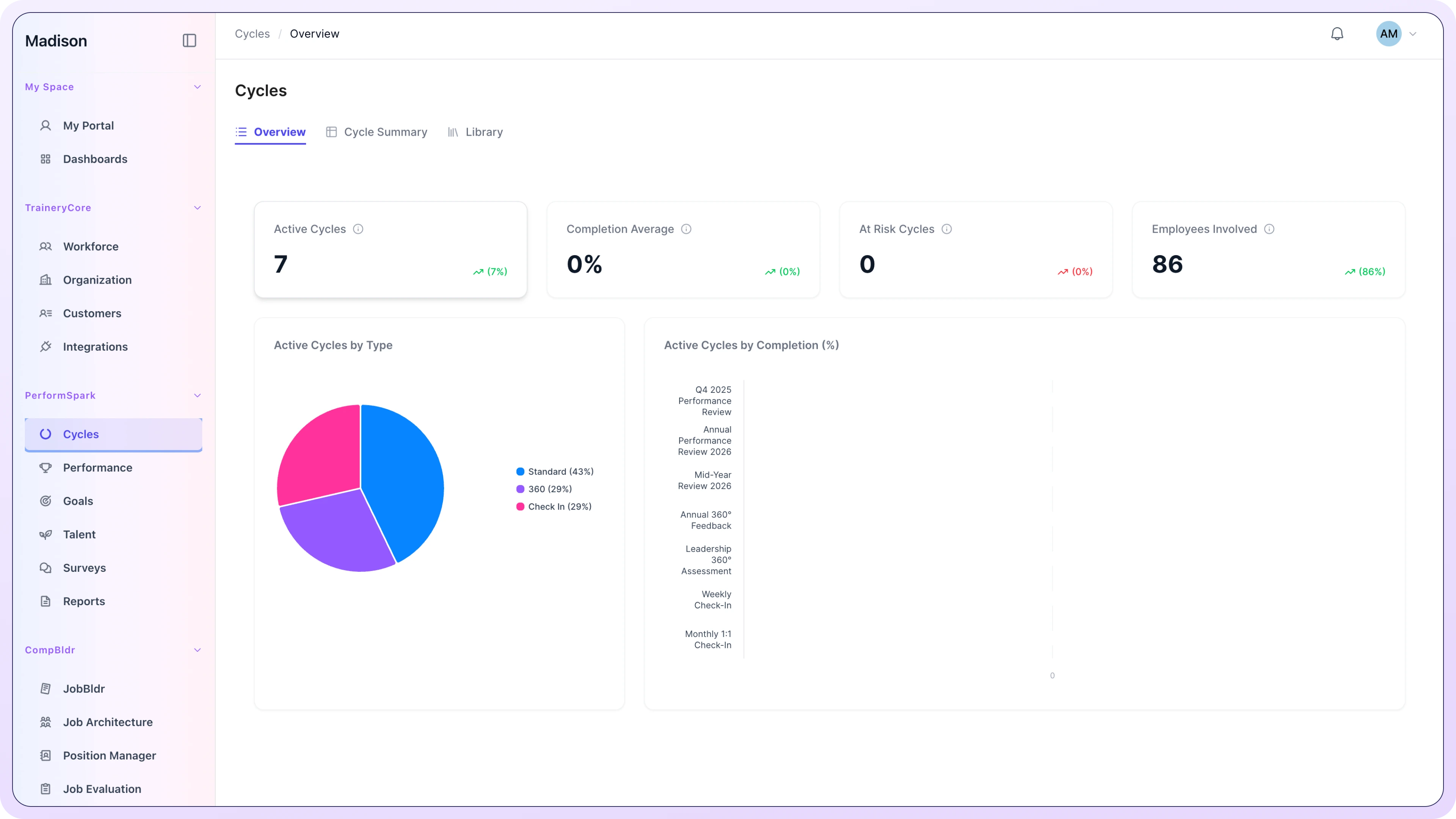
Use structured performance cycles as part of a connected HCM process—aligning review timing, evidence, development actions, and downstream workforce decisions. PerformSpark owns the specialist review workflow; TraineryHCM connects the resulting context across the employee lifecycle.
Why Traditional Reviews Fall Short

Reviews happen once a year and go nowhere.
Learning is random and disconnected from performance.
Compensation decisions feel unclear or unfair.
How Performance Cycles Connect Across HCM

Review outcomes can inform development plans and future goals.
Learning actions can respond to documented skill and development needs.
Finalized performance data can be one governed compensation input where policy calls for it.
When Performance Reviews Lose Their Value
Performance reviews are meant to create clarity, but too often they create friction. The manual overhead and lack of consistency turn vital feedback into a checkbox exercise.
A performance cycle creates more value when the outcome becomes usable context for the next employee decision—not just a completed form.
.svg)
Reviews happen too late
.svg)
Fragmented expectations
.svg)
Subjective feedback
.svg)
Dead-end documentation
What a Governed Performance Cycle Needs
The specialist performance workflow lives in PerformSpark. Within TraineryHCM, the cycle also creates structured context that can connect to employee data, development, learning, reporting, and compensation.
.svg)
Flexible Review Cadences

Clear Evaluation Structure
Coordinated Execution
.svg)
Cycle-Level Visibility
.svg)
Action-Oriented Outcomes
.svg)
Audit-Ready Records
How Performance-Cycle Data Connects Across HCM
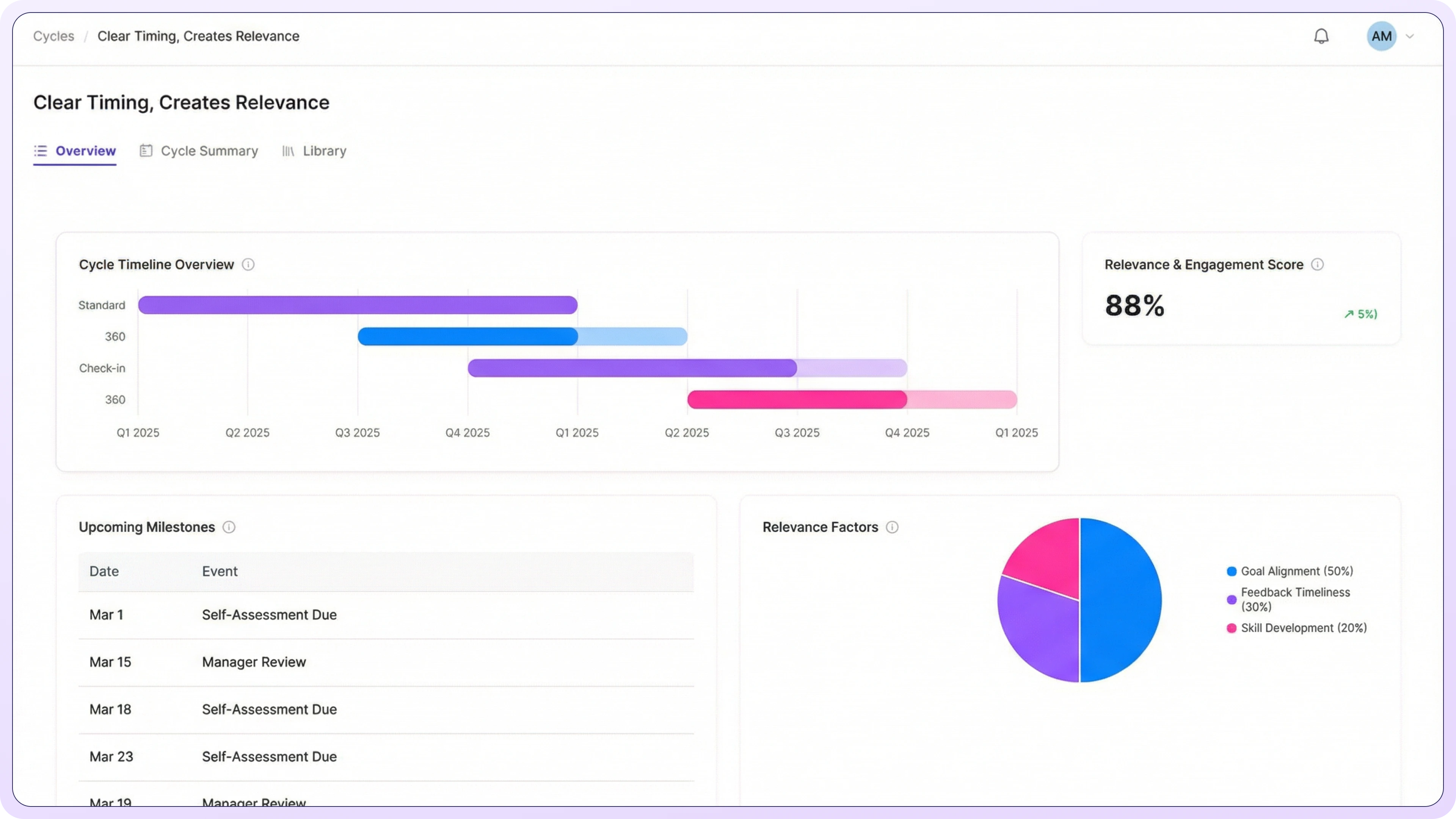
The review itself is only one part of the workflow. The value increases when timing, evidence, outcomes, and next actions remain connected.
Cycle timing connects to check-ins and goals
Formal review windows work best when they are supported by goals, check-ins, and documented feedback between cycles, so the review is not the first time performance is discussed.
.svg)
Calibration helps finalize consistent outcomes
Shared criteria and structured calibration can help teams review evidence, surface inconsistencies, document adjustments, and finalize performance outcomes more consistently.

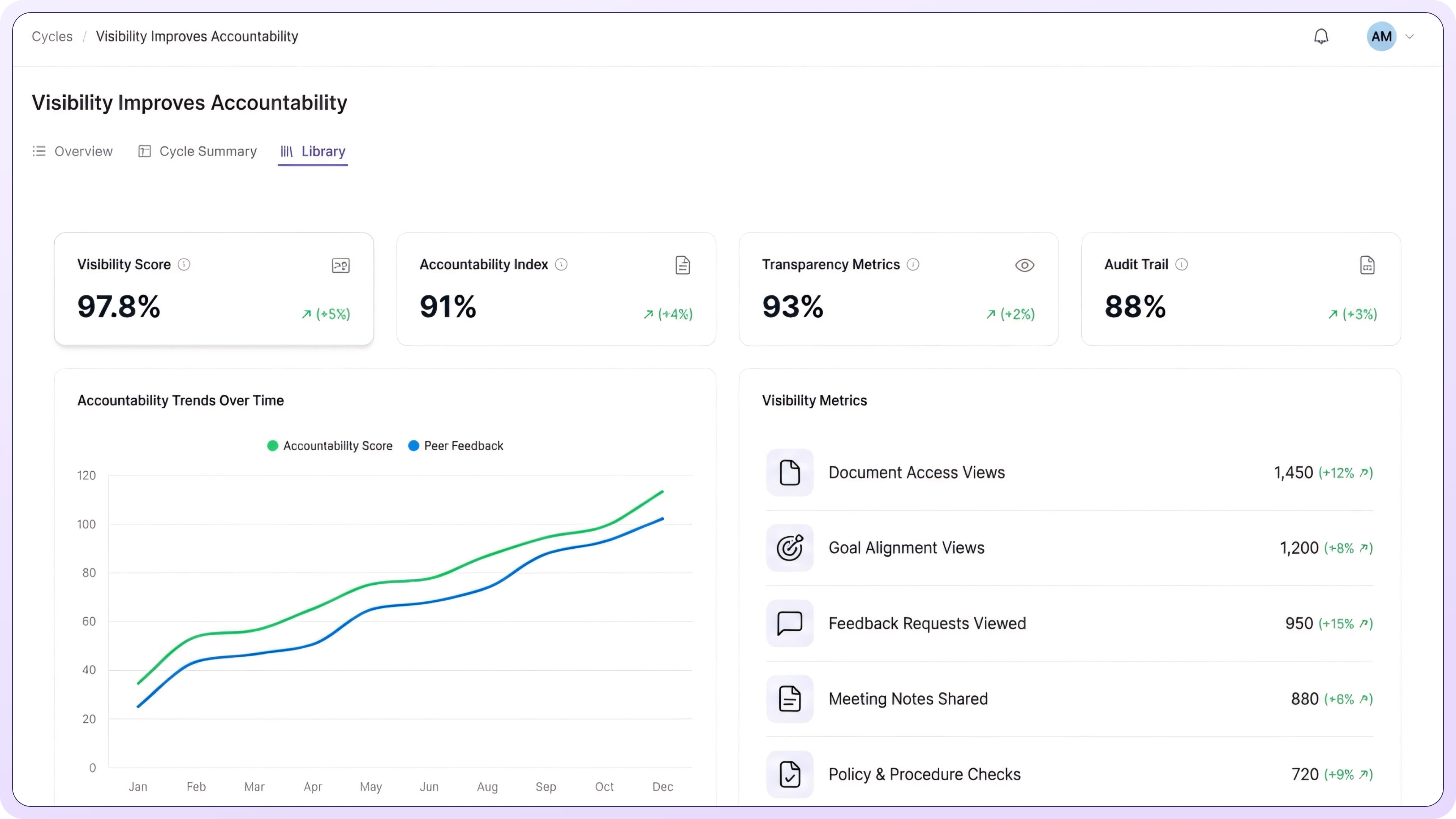
Reporting makes cycle progress visible
Cycle status, completion, and final outcomes become more useful when HR can view them alongside the wider employee and organizational context.
Finalized outcomes can inform next actions
Finalized performance outcomes can inform future goals, development plans, learning actions, workforce reporting, and—where policy explicitly uses performance—compensation decisions.
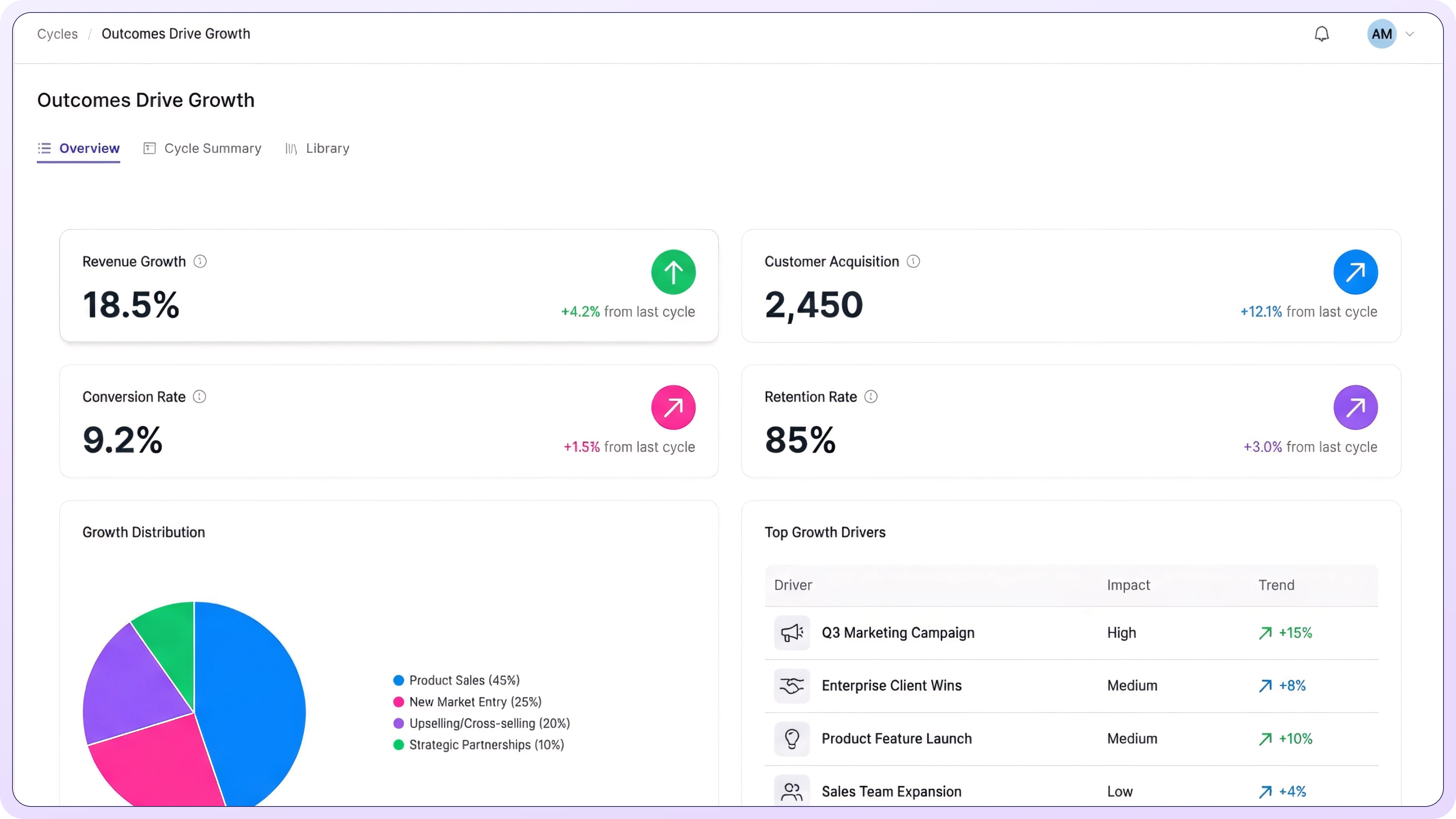
Performance as a System, Not an Event
A connected HCM view keeps finalized performance context usable after the review closes, without turning TraineryHCM into a duplicate specialist performance product.
.svg)
Cycle Frequency
Ownership
Context
Focus
Lifespan
Clear accountability and follow-through
Clear expectations across all teams
More consistent and fair evaluations

Higher completion rates without chasing
.svg)
Better visibility into performance trends
Explore the Specialist Performance Workflow
Performance Cycles is one part of PerformSpark’s specialist performance management workflow. TraineryHCM connects that performance context with employee, learning, compensation, and reporting data.
- Keep review expectations, timelines, responsibilities, and status visible so employees and managers know what is due and when.
- Use configurable cycles and review formats to support annual, quarterly, or project-based performance processes.
- Connect finalized review outcomes to development, calibration, learning, and compensation context where appropriate.
- Give employees and managers a shared view of objectives, progress, ownership, and expected outcomes.
- Use SMART goals and competency alignment to connect day-to-day work with team and organizational priorities.
- Bring goal progress into check-ins and reviews so performance conversations use current context.
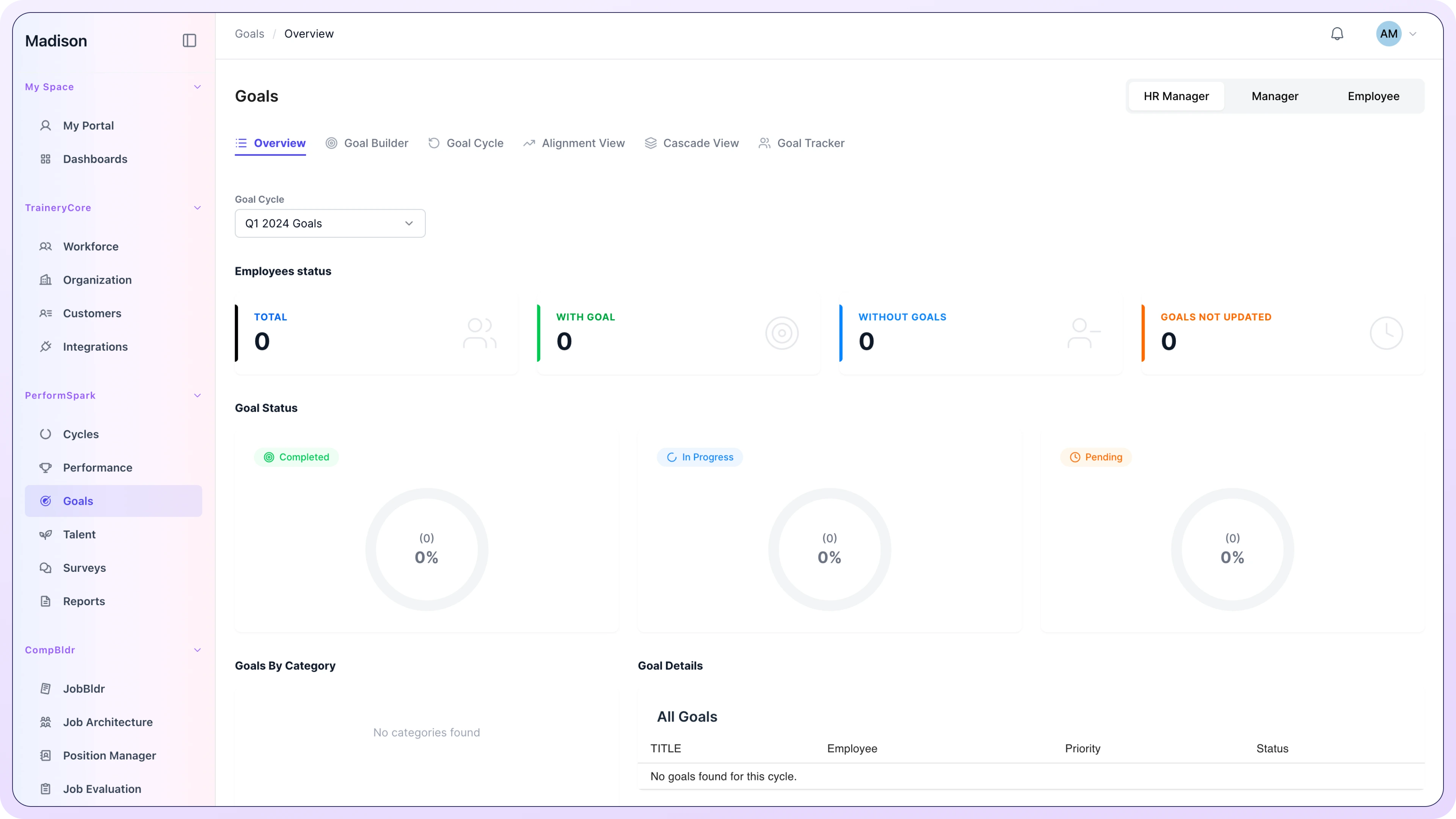
- Give managers and employees a consistent space for priorities, blockers, feedback, and follow-up actions between formal reviews.
- Use structured agendas and recurring check-ins to keep conversations focused without turning them into another annual-review workflow.
- Carry agreed actions, development needs, and goal updates into the broader performance record.
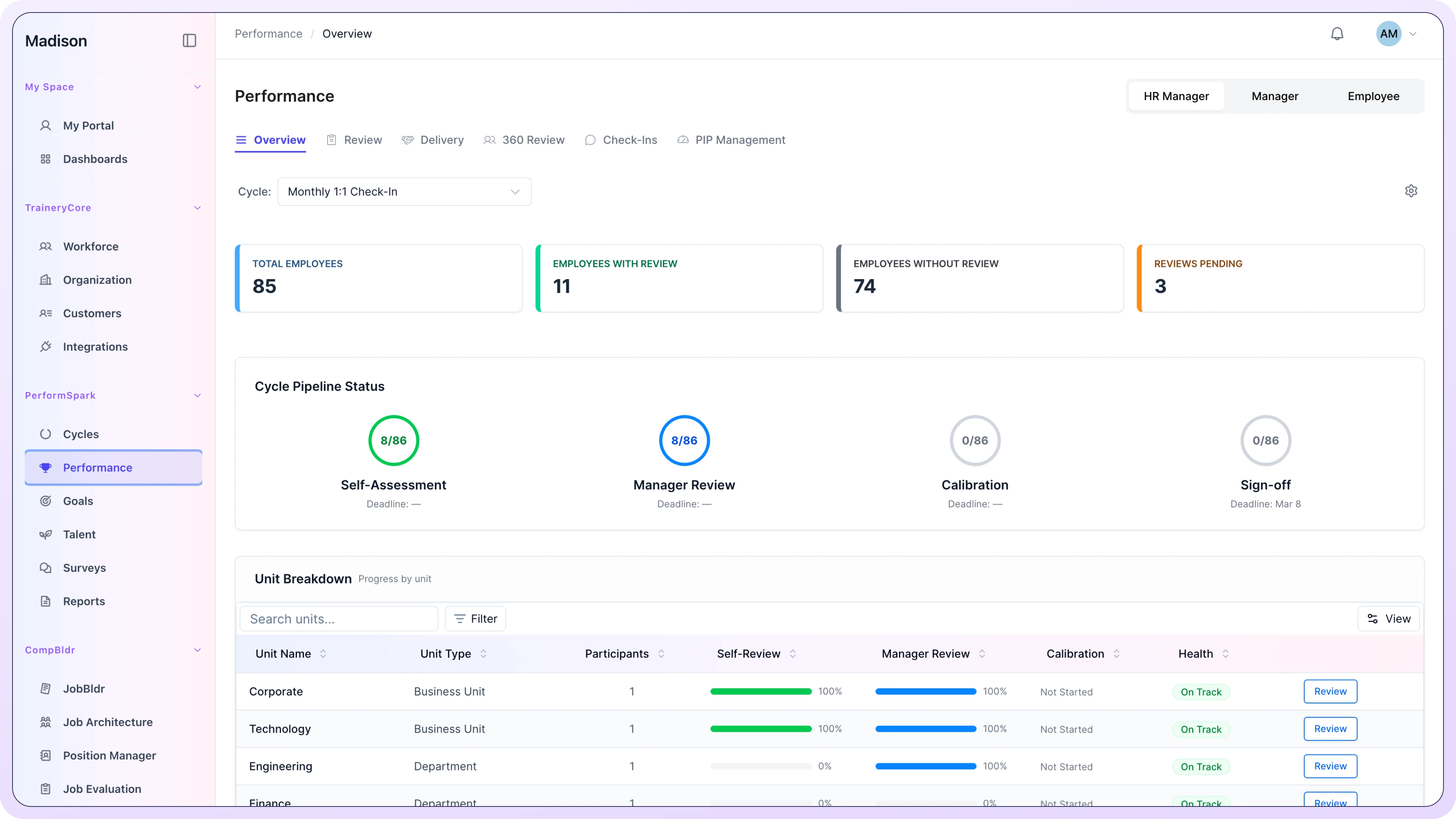
- Create consistent channels for peer, manager, and employee feedback instead of relying on informal or disconnected comments.
- Use pulse and engagement surveys to capture structured input and identify themes that need follow-up.
- Connect approved feedback insights to check-ins, development, and performance conversations without making survey results automatic ratings.
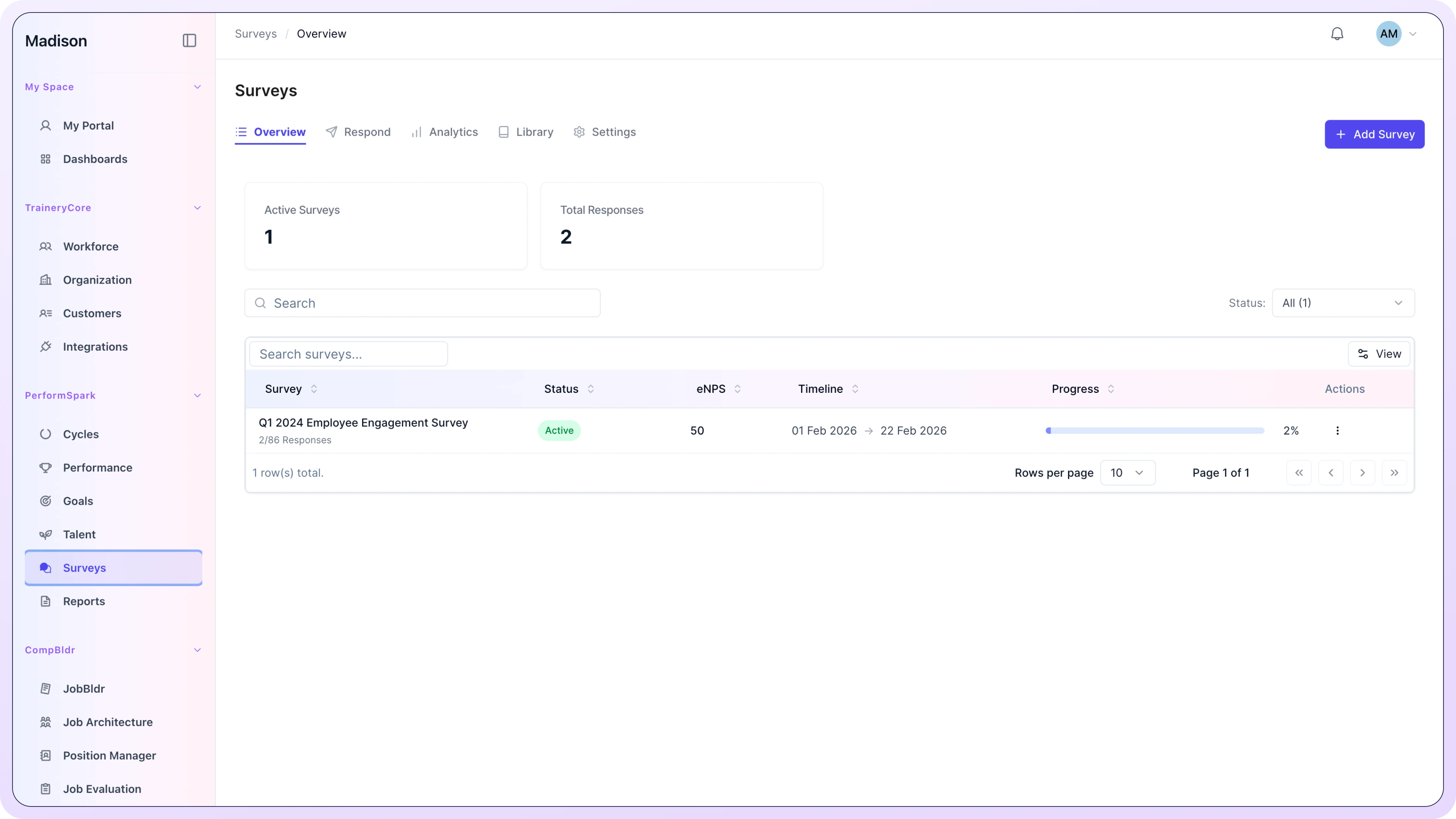
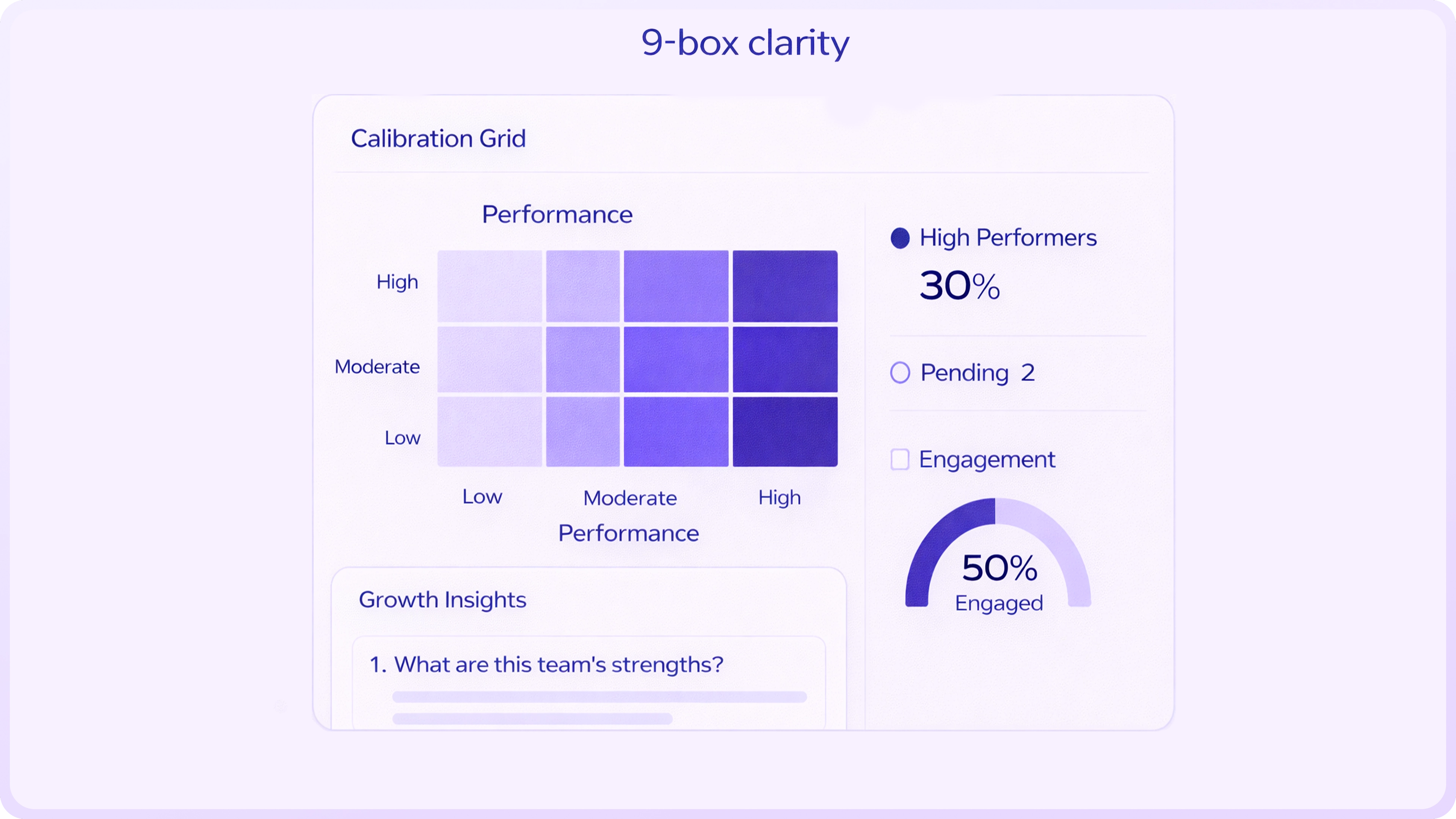
- Give HR and leaders a structured view of finalized performance context before ratings or decisions are communicated.
- Use calibration sessions to review rating consistency, outliers, and cross-team patterns with documented governance.
- Carry approved calibration outcomes into reporting and downstream people decisions without replacing human review.
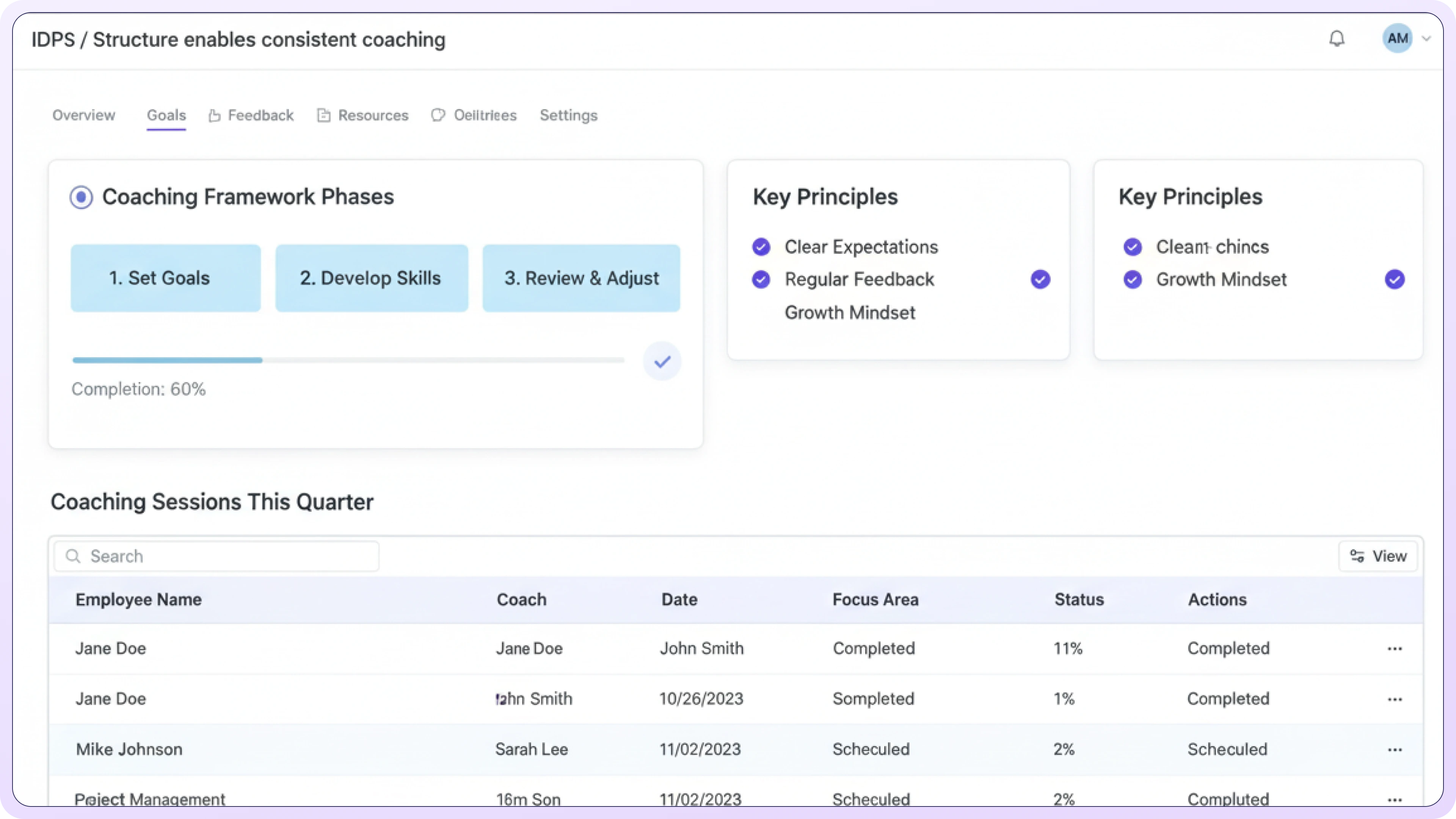
- Turn review and feedback insights into specific development priorities, actions, milestones, and ownership.
- Use IDPs to connect growth goals with skills, career direction, coaching, and relevant learning actions.
- Review progress over time so development remains part of ongoing performance conversations.
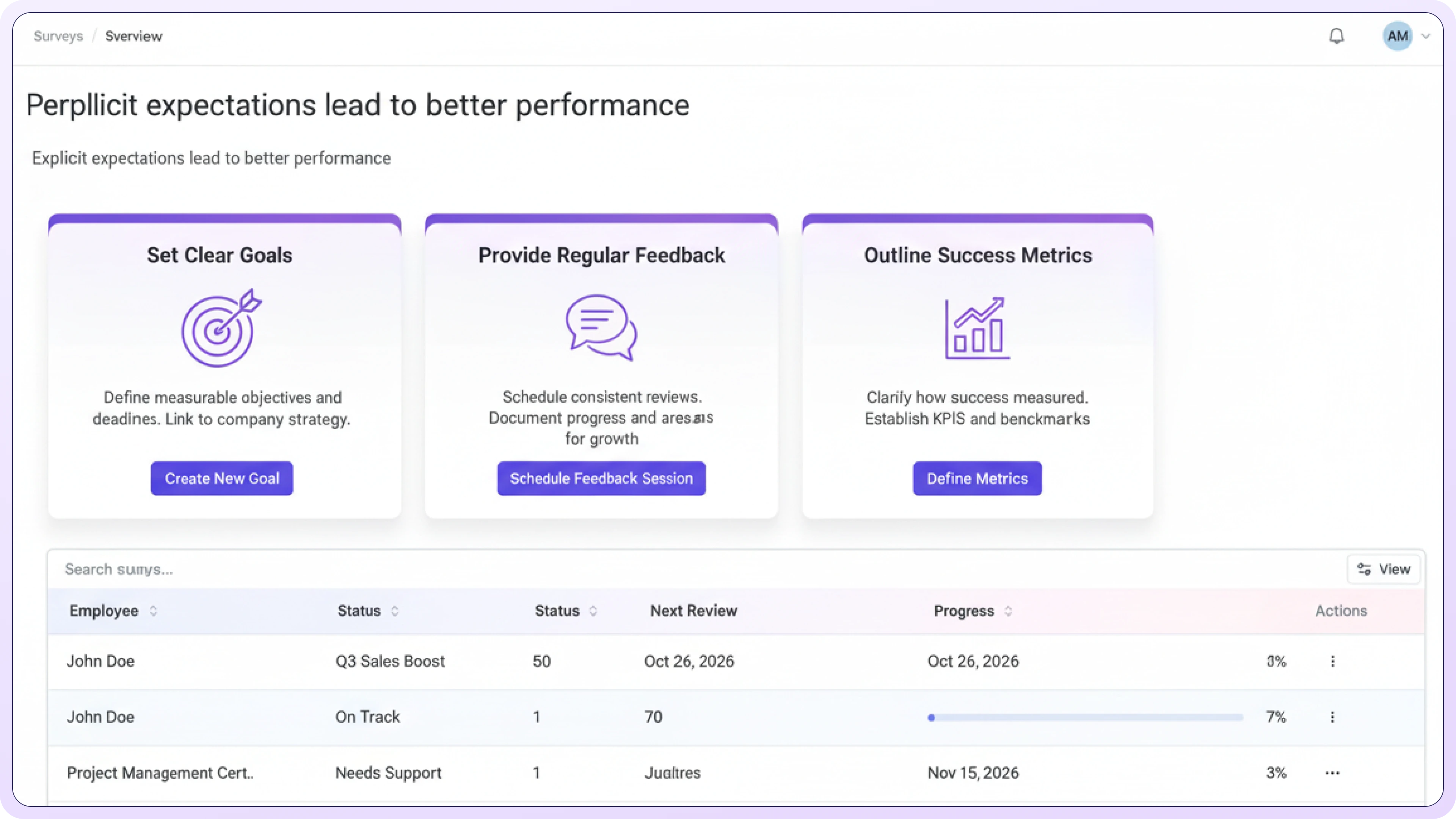
- Document performance concerns, expectations, support commitments, milestones, and follow-up in one structured improvement plan.
- Use defined timelines and check-ins to track progress consistently while keeping employment decisions with HR and managers.
- Connect PIP context to the employee record and reporting without treating the system as an automatic decision-maker.
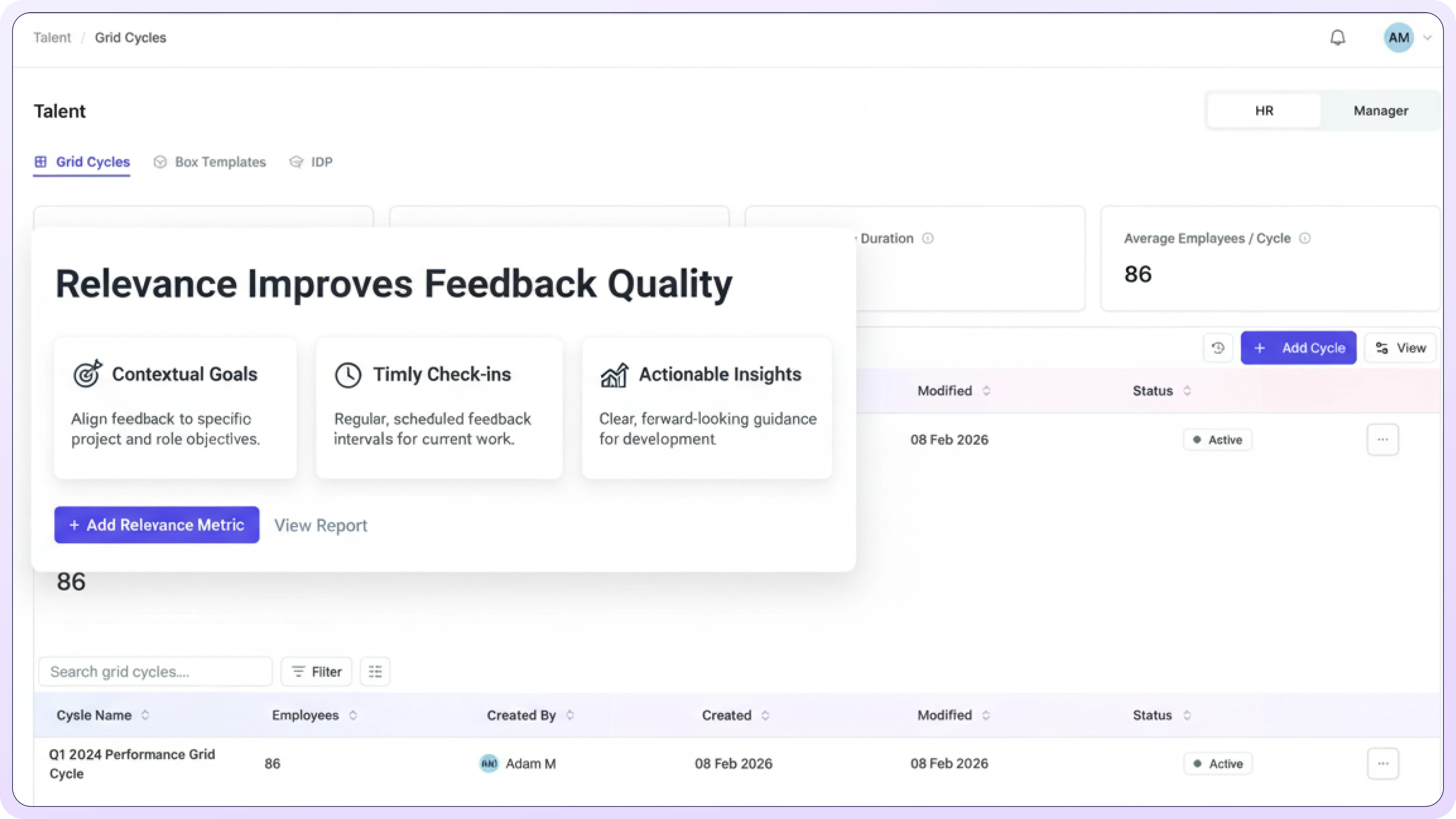
- Collect multi-rater feedback from relevant peers, managers, direct reports, and stakeholders for a broader performance perspective.
- Use structured prompts and review controls to improve consistency and reduce reliance on a single evaluator.
- Turn approved 360 insights into development priorities and follow-up actions rather than treating feedback as an automatic score.
Your questions answered
What is a performance review cycle?
How often should performance review cycles run?
Can performance review cycles be customized for different teams?
What happens after a performance review cycle closes?
Does TraineryHCM send automated reminders during review cycles?
How does the performance review cycle connect to compensation planning?
What is the difference between a performance review and a performance appraisal?
What review formats does TraineryHCM support?

Connect Performance Outcomes to the Rest of HCM
Use TraineryHCM to connect finalized performance context with employee data, development, learning, reporting, and compensation. For detailed review-cycle functionality, explore PerformSpark.
.svg)

.svg)
.svg)

