
Connect Compensation With Performance, Employee Data, and Total Rewards
TraineryHCM connects employee and performance context to compensation decisions, while CompBldr provides the specialist workflows for job structure, market pricing, planning, and total rewards.
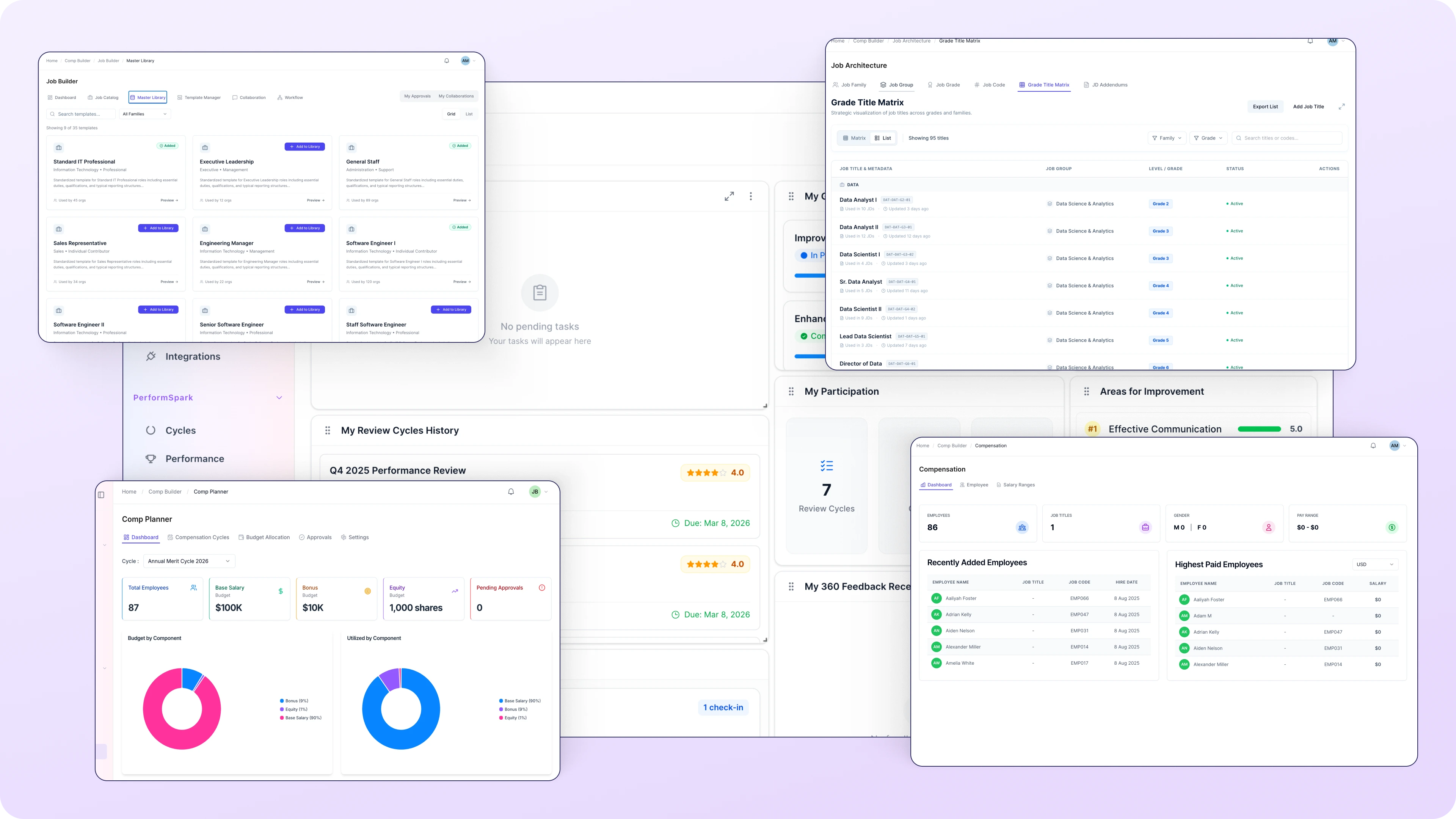
Compensation Connects Decisions Across the Employee Lifecycle
Use shared employee and performance context in TraineryHCM, then manage specialist compensation workflows in CompBldr.
.svg)
Market Surveys
.svg)
SYSTEM
CORE

Pay Transparency
.svg)
Job Descriptions
.svg)
Equitable Growth

Budget CapEx
Total Control
TraineryHCM connects the people context; CompBldr provides the governed compensation workflows.
How Compensation Fits Into TraineryHCM
TraineryHCM connects employee and performance context to compensation. CompBldr provides the specialist workflows for job structure, market pricing, planning, and total rewards.
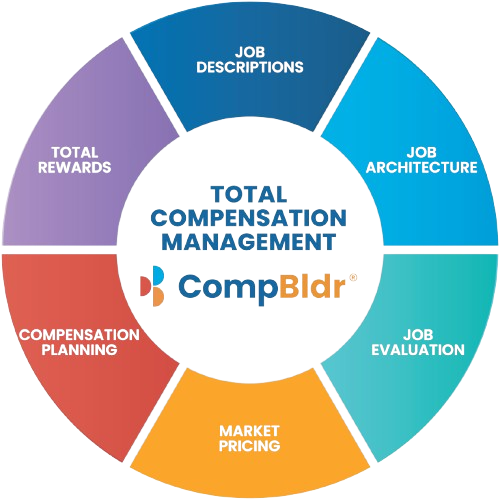
Review the compensation capabilities at a high level here, then use CompBldr for detailed product workflows and evaluation.
How Each Module Works Together
Take a deep dive into the specialized tools that power your compensation strategy.
- Managers often don’t know how to give useful feedback, and employees often don’t know how to take criticism and grow from it.
- Managers can move employees from ‘recommendation to doing’ by accessing subscribed learning solutions within the portal.
.svg)
- Managers often don’t know how to give useful feedback, and employees often don’t know how to take criticism and grow from it.
- Managers can move employees from ‘recommendation to doing’ by accessing subscribed learning solutions within the portal.
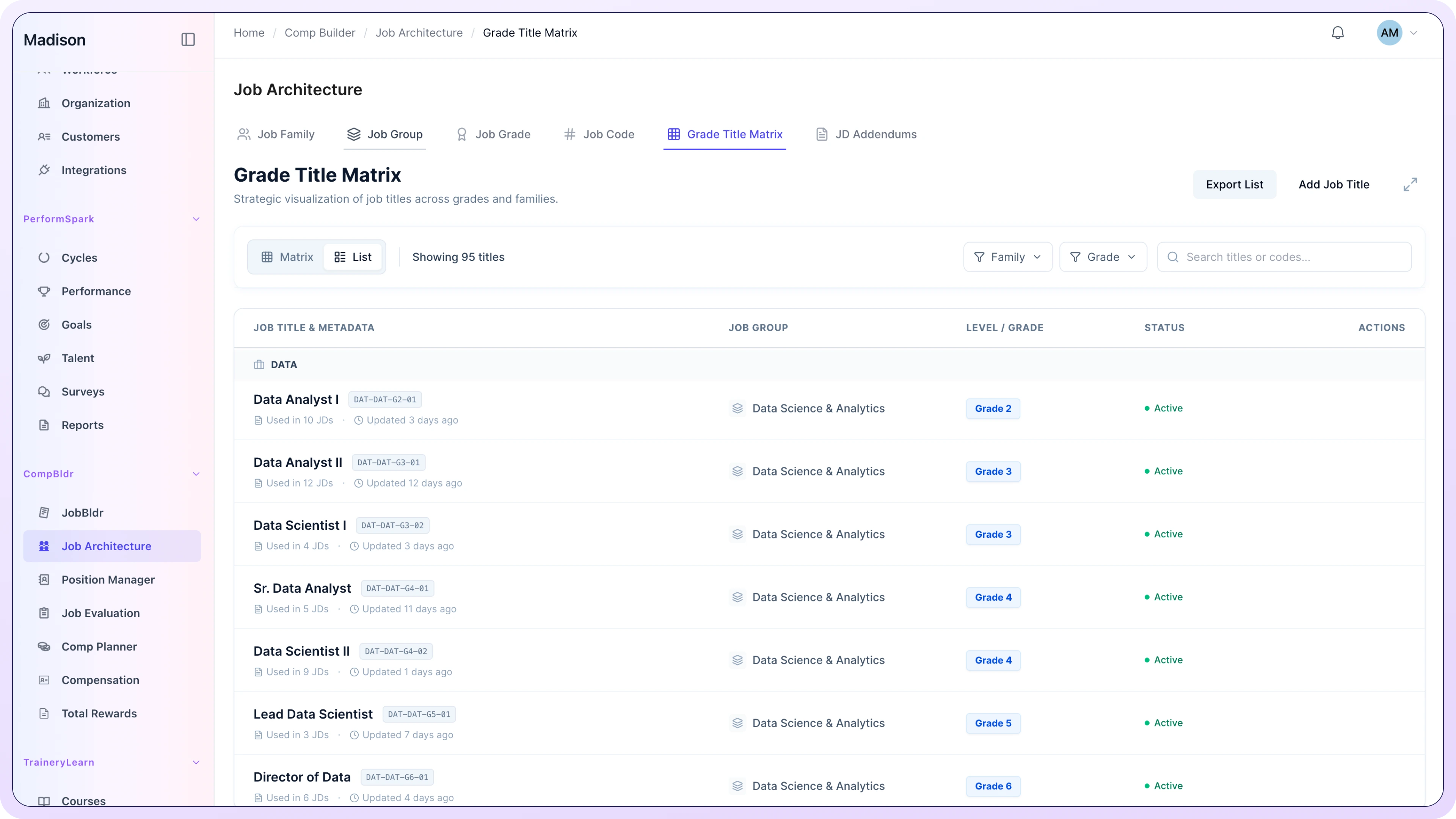
- Managers often don’t know how to give useful feedback, and employees often don’t know how to take criticism and grow from it.
- Managers can move employees from ‘recommendation to doing’ by accessing subscribed learning solutions within the portal.

- Managers often don’t know how to give useful feedback, and employees often don’t know how to take criticism and grow from it.
- Managers can move employees from ‘recommendation to doing’ by accessing subscribed learning solutions within the portal.
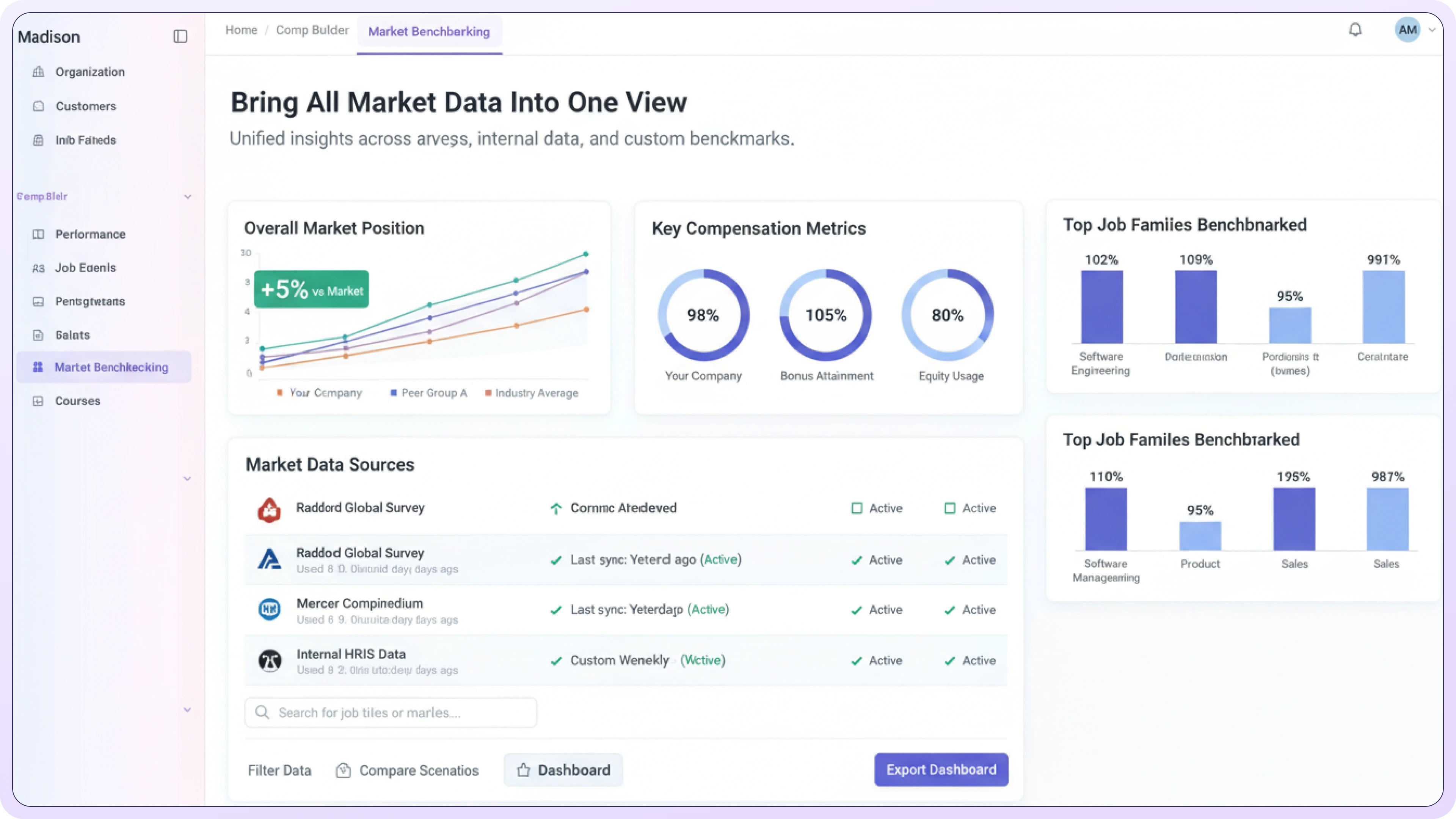
- Managers often don’t know how to give useful feedback, and employees often don’t know how to take criticism and grow from it.
- Managers can move employees from ‘recommendation to doing’ by accessing subscribed learning solutions within the portal.
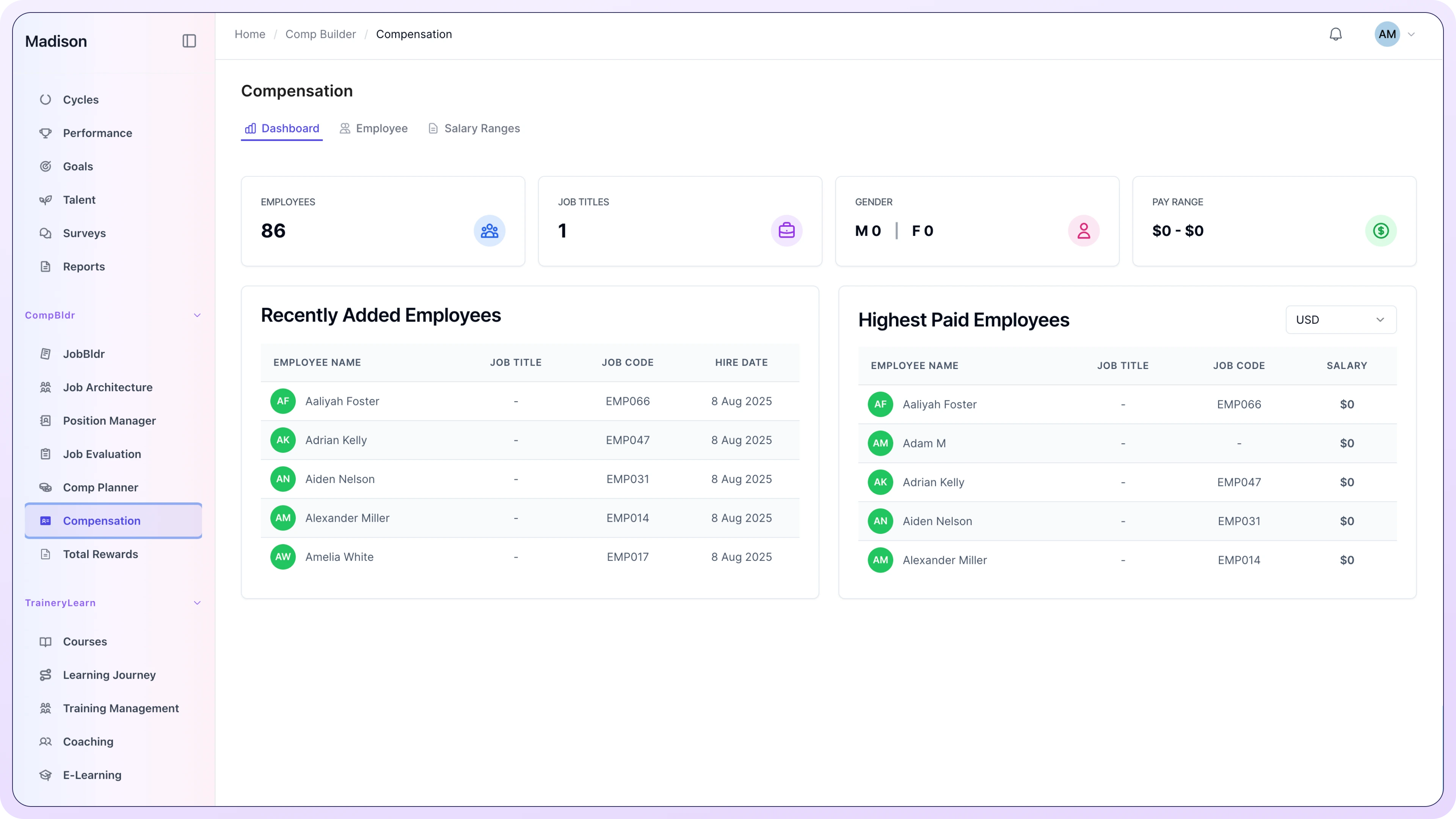
- Managers often don’t know how to give useful feedback, and employees often don’t know how to take criticism and grow from it.
- Managers can move employees from ‘recommendation to doing’ by accessing subscribed learning solutions within the portal.
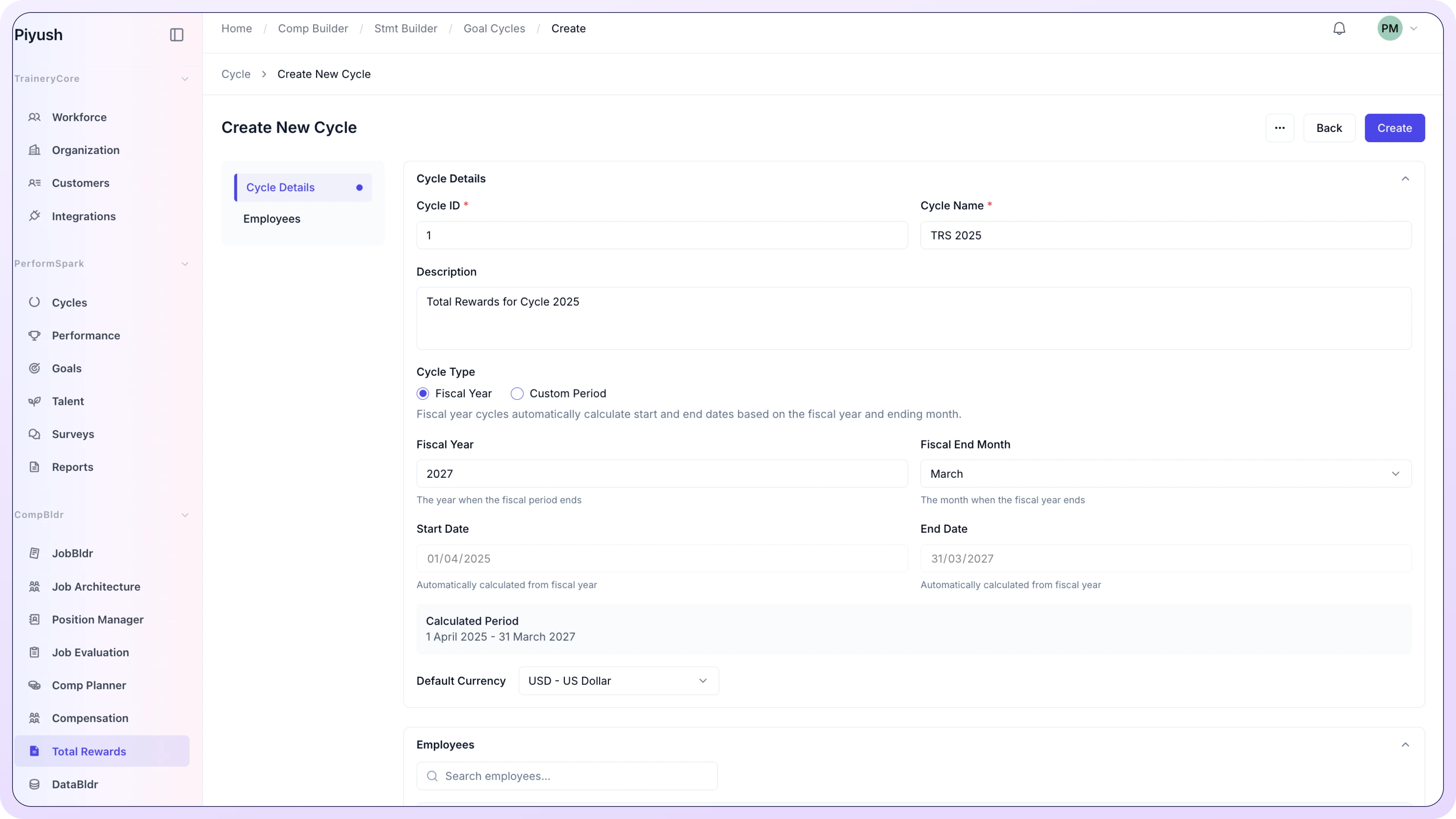
How Compensation Connects Across TraineryHCM
Bring employee records, performance context, learning investment, and compensation outcomes into one connected HCM view.
Data Centralization
Auditability
Real-time Analytics
Equity Controls
Manager Experience
Security & Permissions
Your questions answered
How does compensation fit into TraineryHCM?
What role does CompBldr play in TraineryHCM?
How can performance outcomes support compensation planning?
How does job architecture connect to HCM data?
How does market pricing fit into the connected HCM workflow?
How does compensation connect with employee data and pay-equity review?
How do total rewards connect with learning and compensation data?
Where should buyers evaluate detailed compensation capabilities?
Connect Compensation Decisions Across TraineryHCM
See how performance context, employee data, learning investment, and compensation workflows connect across the HCM suite. For detailed compensation workflows, explore CompBldr.
.svg)

.svg)
.svg)

