

Connect Job Architecture Across HCM and Compensation
Keep job families, levels, role context, employee data, performance expectations, and compensation structure connected across TraineryHCM. CompBldr owns the specialist job-architecture workflow.
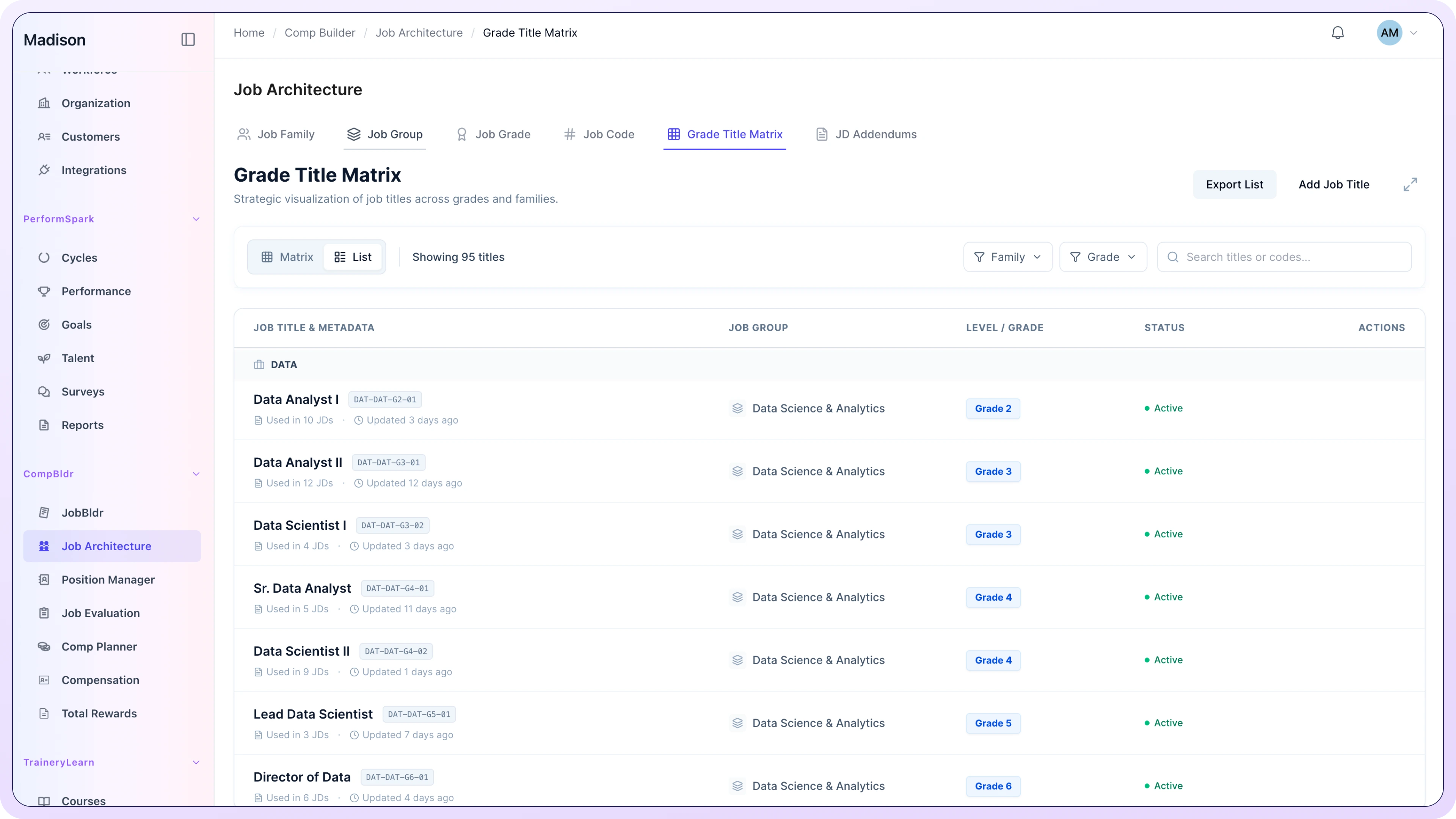
Why Disconnected Role Structures Create Friction

Reviews happen once a year and go nowhere.
Learning is random and disconnected from performance.
Role scope and compensation context become harder to compare.
Connect Role Architecture Across the Employee Lifecycle

Reviews kick off learning journeys and promotion paths.
Development paths lose clear links to role levels and expectations.
Compensation shows growth and impactful behaviors.
A Structured Framework for Roles
As organizations grow, job structures often fragment—titles multiply, levels drift, and similar roles mean different things across teams.
This module brings structure and discipline to job design by establishing a clear, methodology-driven framework that aligns roles across functions, regions, and career paths—reducing ambiguity and improving decision quality.
.svg)
Role clarity across the organization
Consistent leveling and progression
Reduced ambiguity and overlap
Better workforce decisions
A Systematic Approach to Role Design
Transforms job definitions into a governed, enterprise-wide architecture.
.svg)
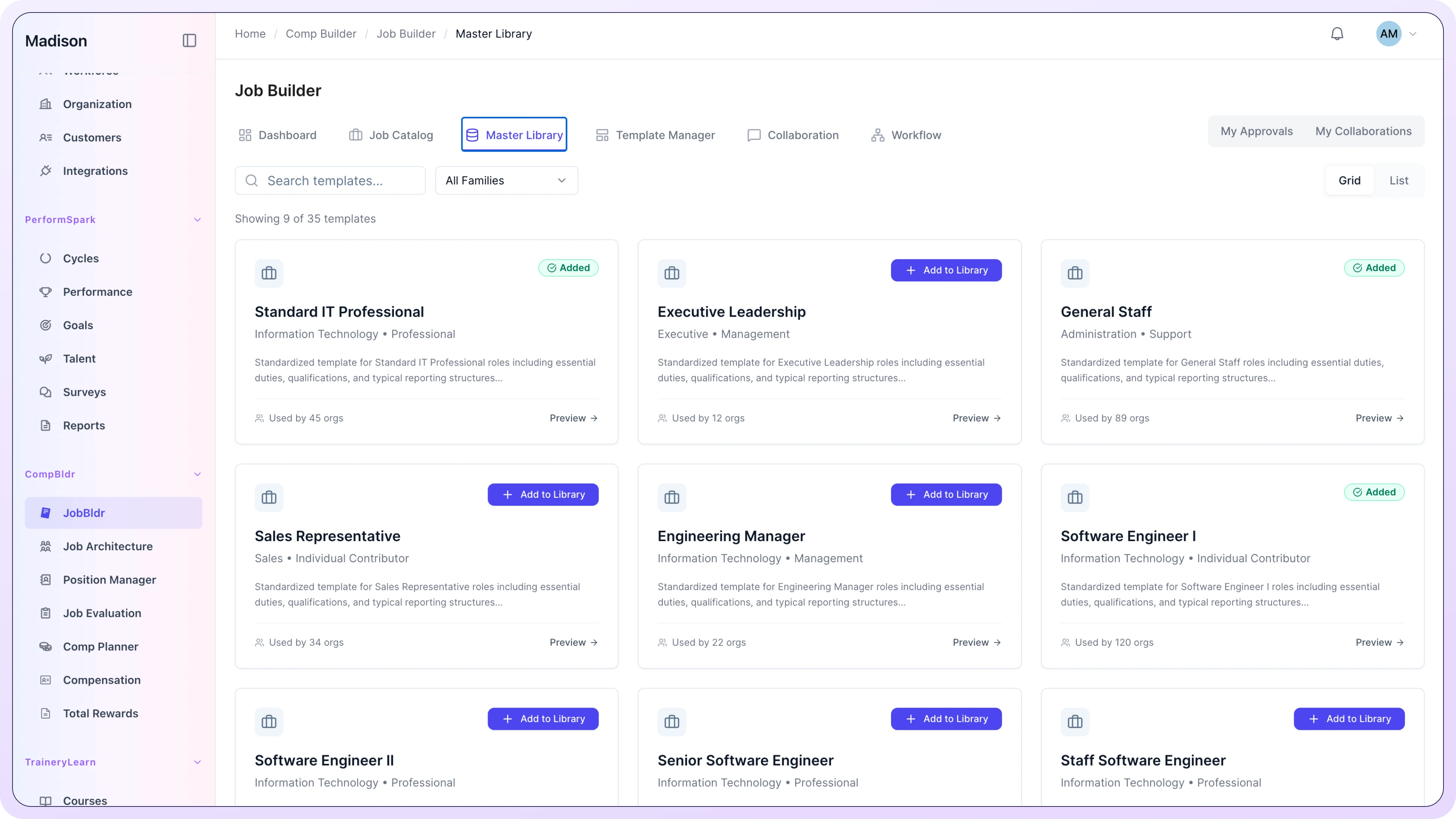
Job Groups & Job Families
Organize roles into consistent functional and professional groupings.
.svg)
Standardized Job Titles
Create harmonized titles that reduce confusion and improve comparability.
.svg)
Career Tracks & Ladders
Define progression across professional, technical, and management paths.
.svg)
Job Levels & Role Differentiation
Clearly distinguish scope, complexity, and impact at each level.
.svg)
Methodology-Aligned (JESAP)
Apply a structured, requirements-based approach recognized by compensation professionals.
.svg)
Architecture Governance
Manage changes with visibility, control, and historical context.
From Role Definition to Enterprise Alignment
A structured, methodology-driven process defines, evaluates, and aligns roles across functions, regions, and career paths.
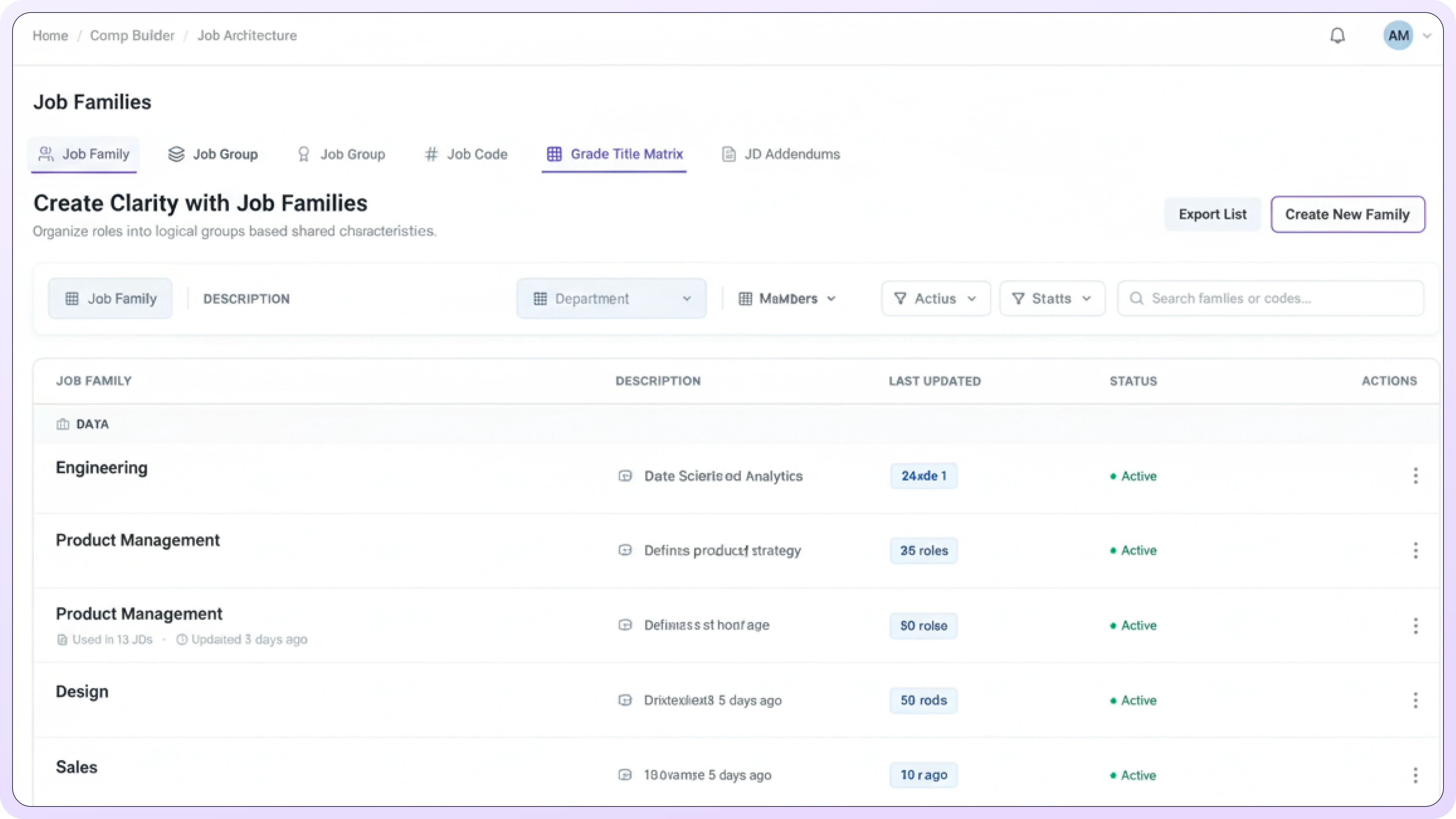
Create clarity with job families
Roles are grouped into job families that reflect how work is actually performed, bringing consistency across departments and regions.
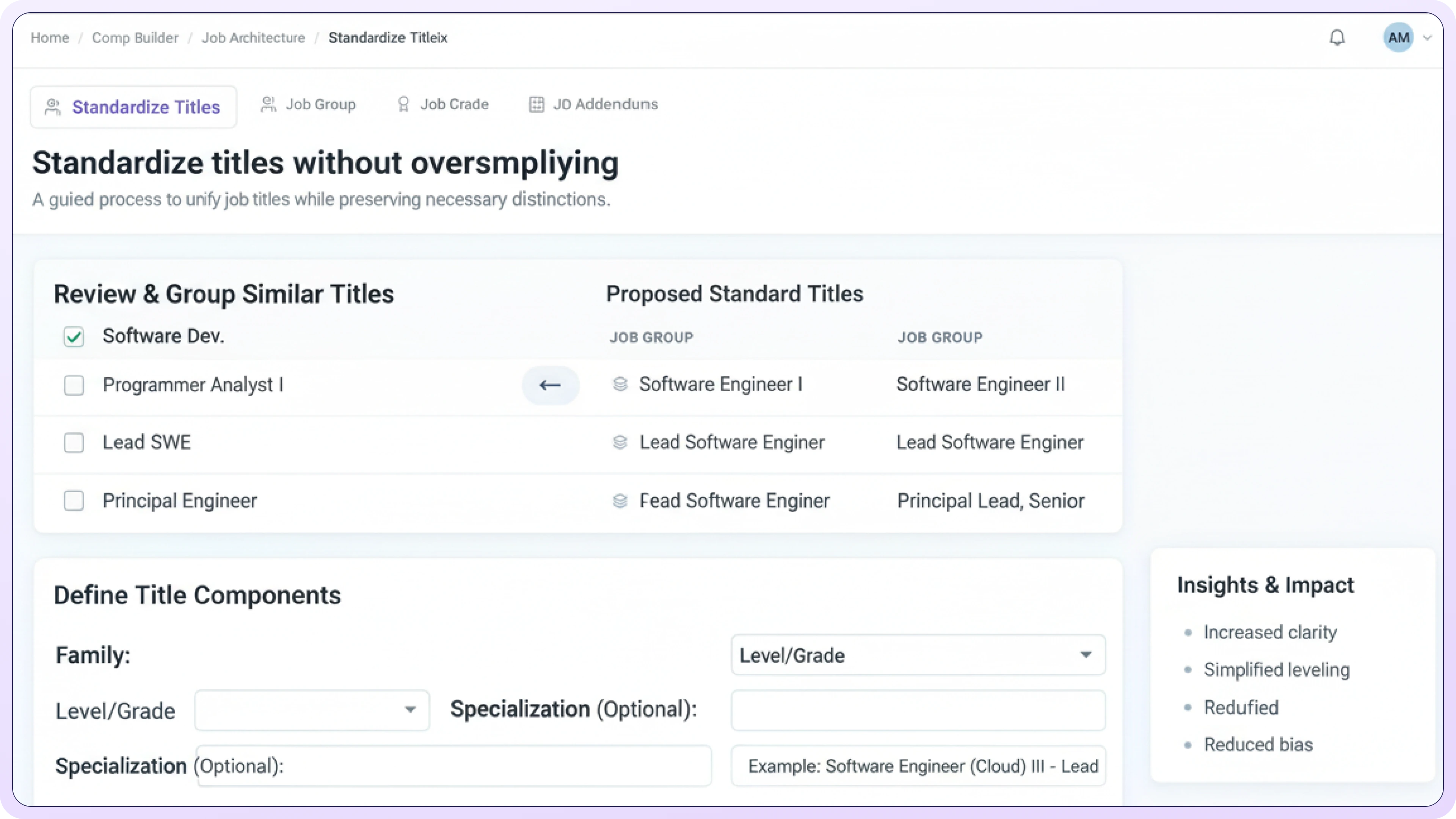
Standardize titles without oversimplifying
Titles become consistent system records while allowing flexibility in role execution.
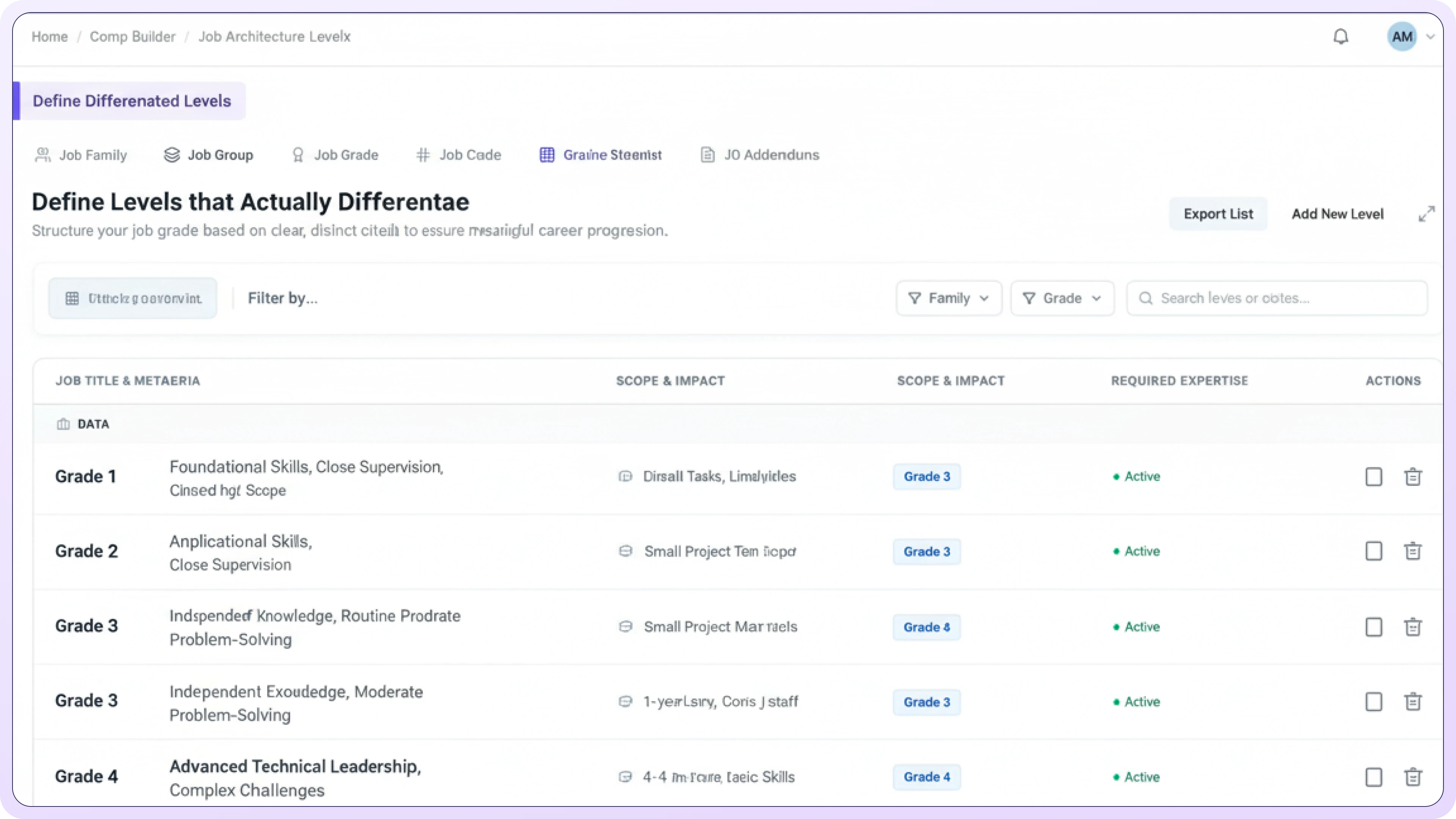
Define levels that actually differentiate
Levels are based on scope, responsibility, and contribution—not tenure or legacy titles.
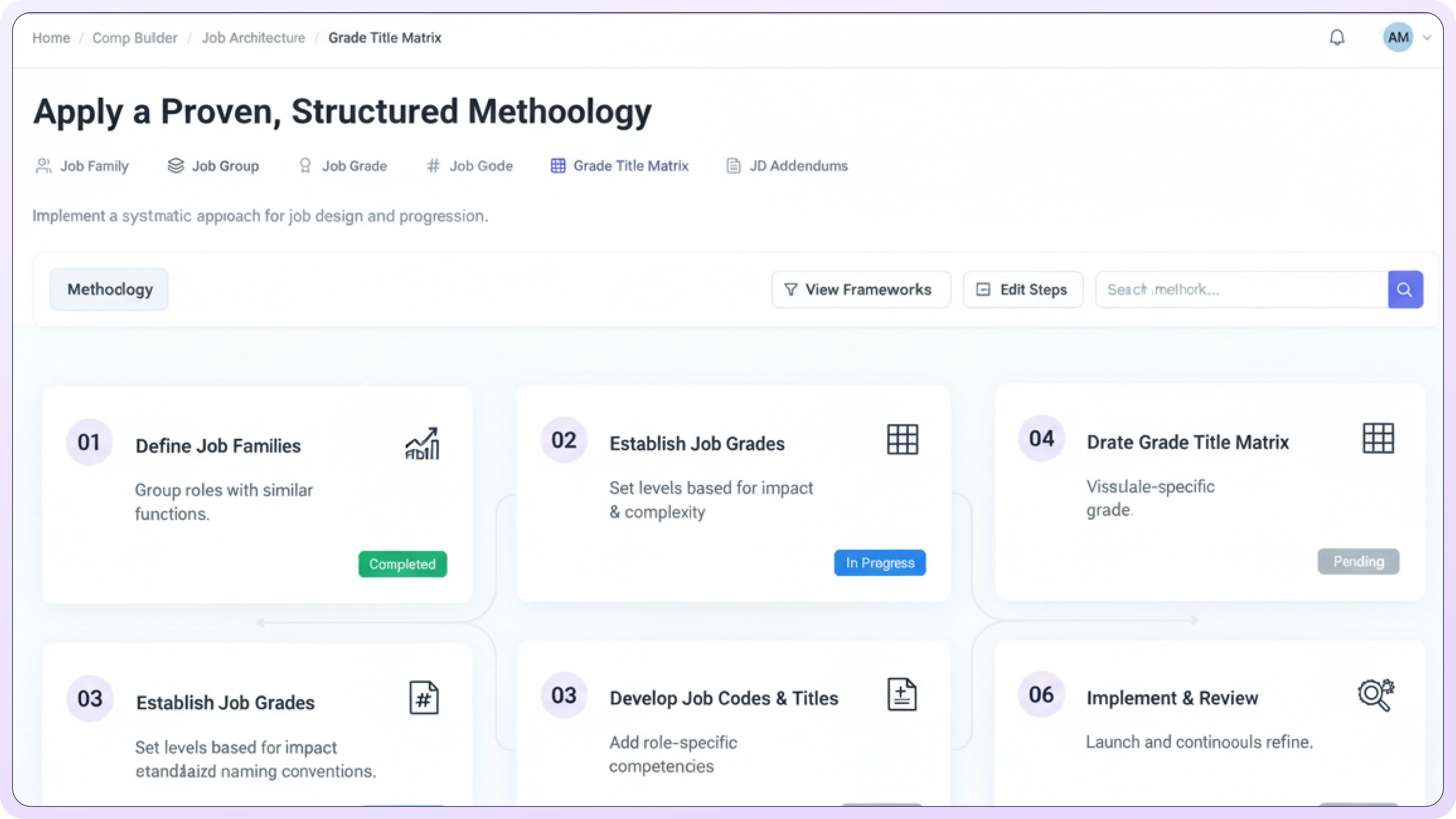
Apply a proven, structured methodology
The module supports job architecture aligned with the JESAP methodology, ensuring decisions are objective, repeatable, and defensible.
Compensation Decisions, Grounded in Role Architecture
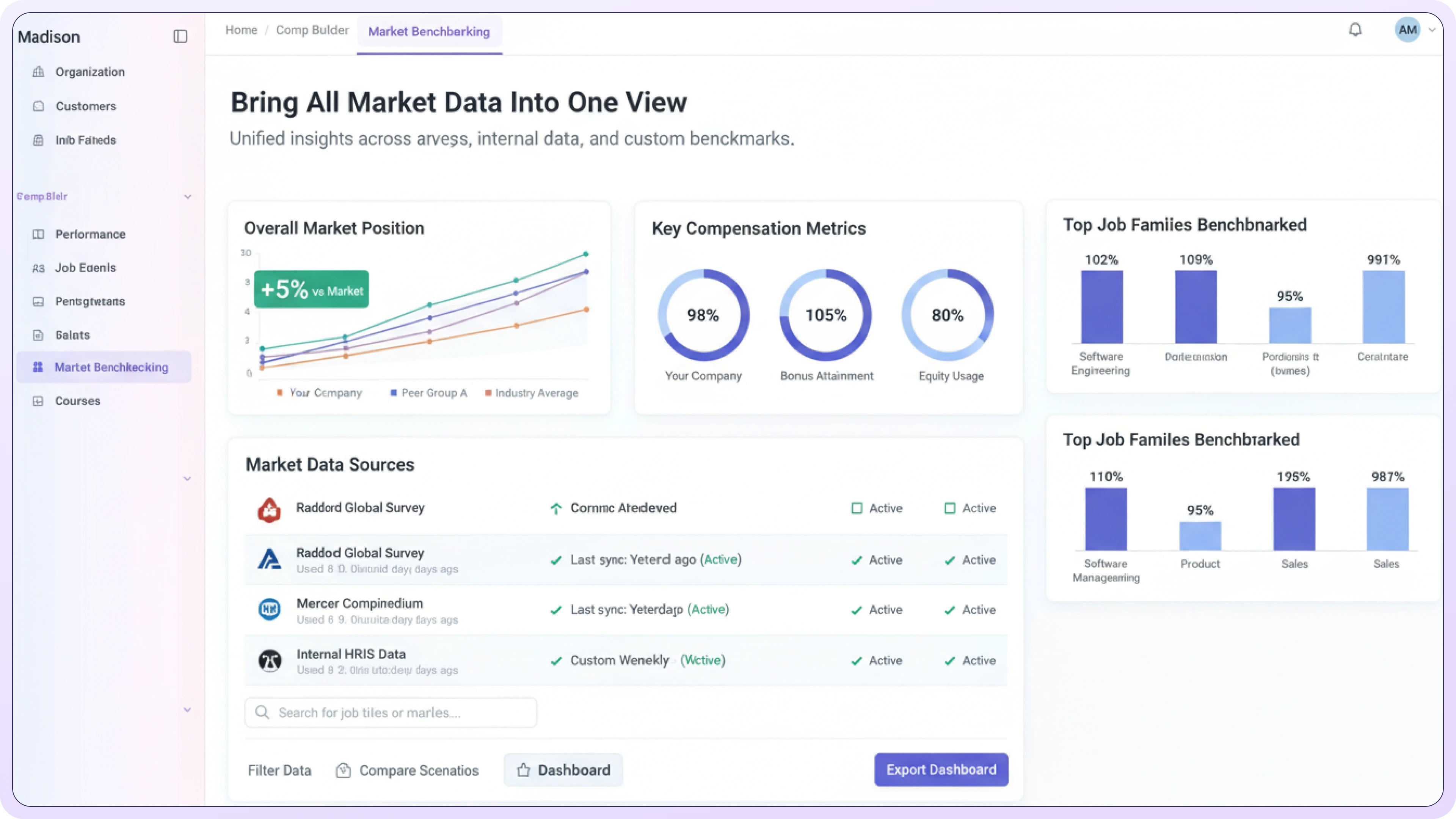
A clear, governed job architecture ensures compensation planning is based on role clarity, internal alignment, and consistent differentiation, not titles, tenure, or historical pay.
.svg)
Roles evaluated against consistent
expectations
Pay ranges align to scope and
responsibility
Internal equity issues surface earlier
Intentional Job Architecture at Scale
Move beyond fragmented, department-driven roles to a unified, enterprise-ready job framework.
.svg)
When Job Architecture Is Clear, Decisions Become More Consistent
Governed role structures drive consistency, confidence, and scale.
Consistent job structures across teams and regions
Stronger alignment between roles, levels, and pay
Reduced rework during compensation cycles
Improved career clarity and internal mobility
Support enterprise governance
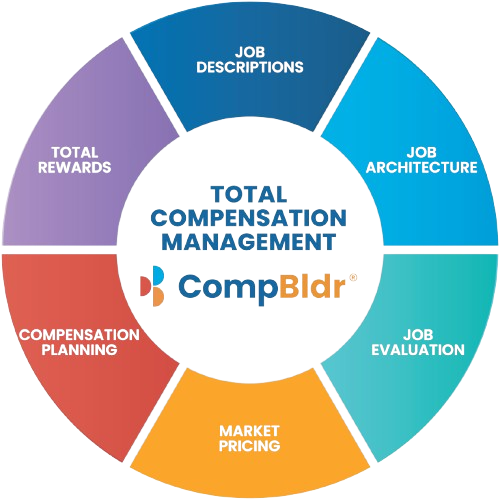
How Each Module Works Together
Take a deep dive into the specialized tools that power your compensation strategy.
- Managers often don’t know how to give useful feedback, and employees often don’t know how to take criticism and grow from it.
- Managers can move employees from ‘recommendation to doing’ by accessing subscribed learning solutions within the portal.
- Managers often don’t know how to give useful feedback, and employees often don’t know how to take criticism and grow from it.
- Managers can move employees from ‘recommendation to doing’ by accessing subscribed learning solutions within the portal.
- Managers often don’t know how to give useful feedback, and employees often don’t know how to take criticism and grow from it.
- Managers can move employees from ‘recommendation to doing’ by accessing subscribed learning solutions within the portal.

- Managers often don’t know how to give useful feedback, and employees often don’t know how to take criticism and grow from it.
- Managers can move employees from ‘recommendation to doing’ by accessing subscribed learning solutions within the portal.
- Managers often don’t know how to give useful feedback, and employees often don’t know how to take criticism and grow from it.
- Managers can move employees from ‘recommendation to doing’ by accessing subscribed learning solutions within the portal.
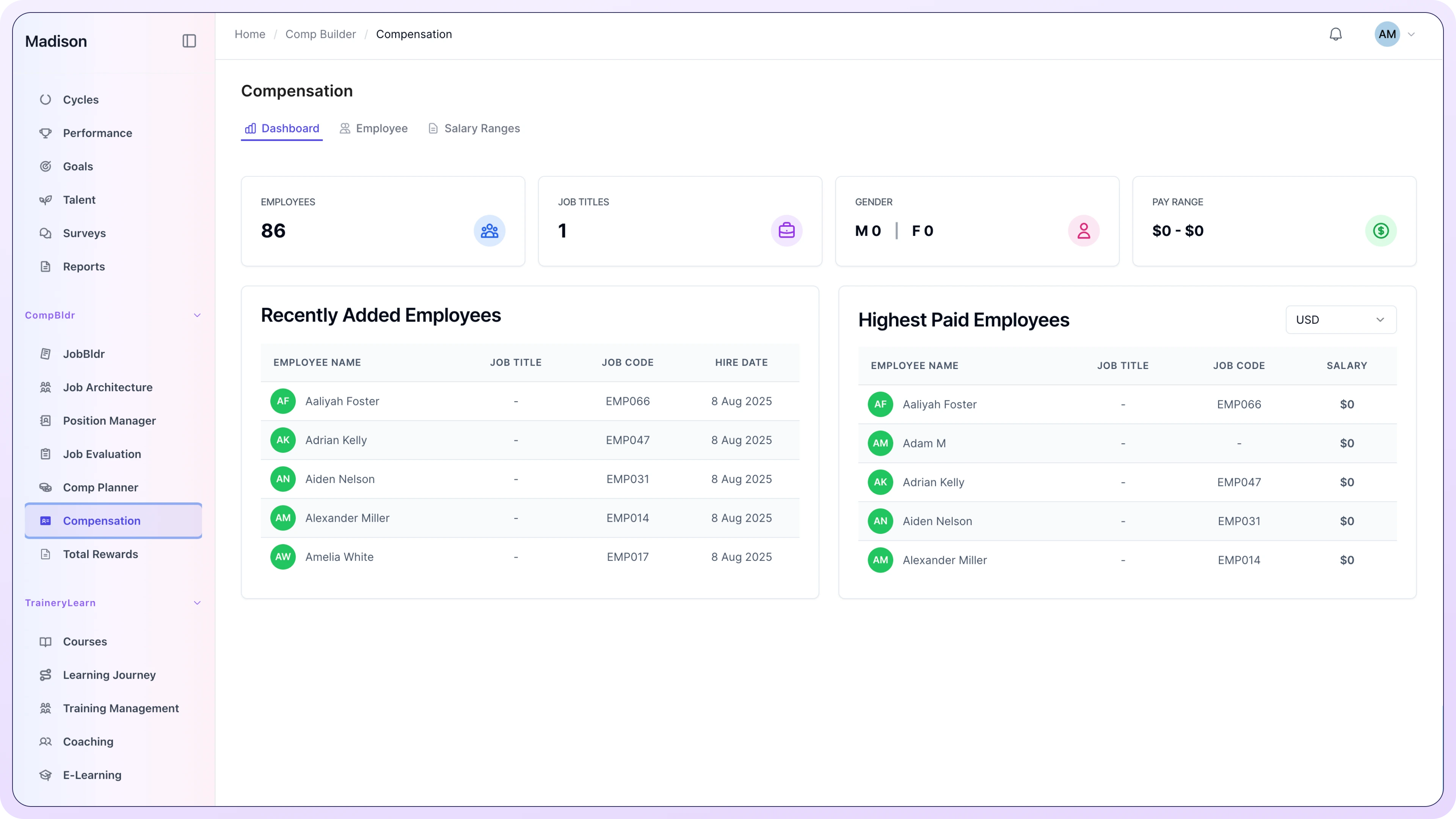
- Managers often don’t know how to give useful feedback, and employees often don’t know how to take criticism and grow from it.
- Managers can move employees from ‘recommendation to doing’ by accessing subscribed learning solutions within the portal.
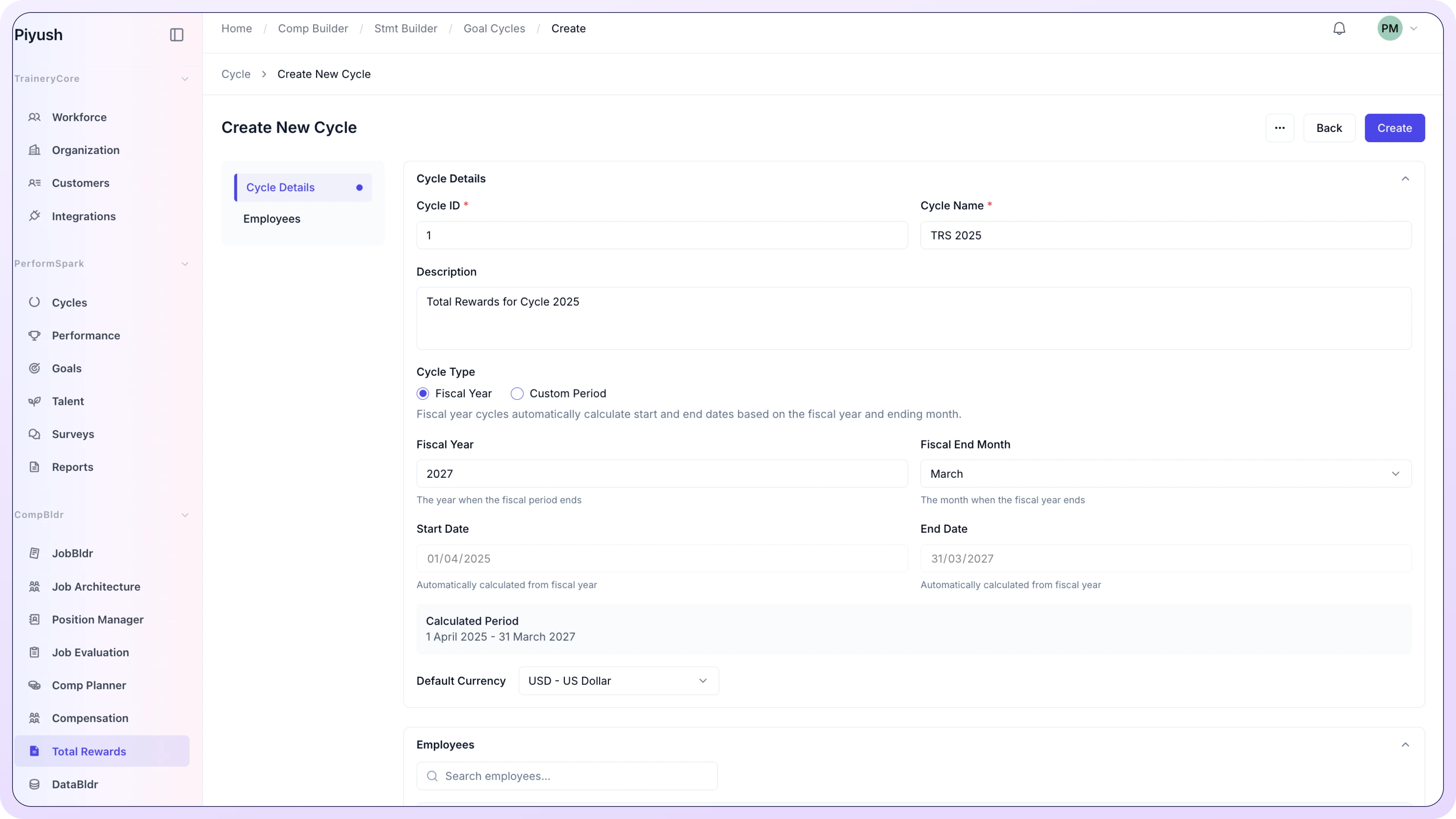
Your questions answered
What is job architecture?
What is a job family in job architecture?
How does job architecture connect to compensation management?
How do you build a job architecture from scratch?
What is pay banding and how does it relate to job architecture?
What is the difference between job architecture and org design?
How can job architecture support pay transparency work?
How does CompBldr's job architecture module work?


Design a job structure you can rely on
If job architecture underpins your compensation, equity, and workforce decisions, this module provides the structure and confidence to build it properly.

.svg)

.svg)
.svg)

