

Connect Market Benchmarking Across
HCM and Compensation
Keep benchmark outcomes, role context, employee data, compensation planning, and reporting connected across TraineryHCM. CompBldr owns the specialist market-benchmarking workflow.
Price Roles With Confidence
Reliable market insight is critical to fair pay. This module brings scattered market data into a single, normalized view, so roles can be compared accurately and priced with confidence.
.svg)
Eliminate Inconsistency
Standardize data from dozens of sources to ensure every role is priced against the same validated benchmarks.
.svg)
Defensible Pay Decisions
Back every compensation move with audit-ready reports and real-time comparative analysis that leadership trusts.
.svg)
Strategic Talent Acquisition
Know exactly what the market is paying today, not six months ago, to win top talent in competitive industries.
Market Intelligence, Built for Compensation
More than a data feed, this module standardizes, analyzes, and contextualizes market inputs for accurate pay decisions.
Why Disconnected Market Data Creates Friction

Survey matches and role context become difficult to maintain.
Market updates require manual reconciliation across spreadsheets.
Pay decisions lose a clear link to approved benchmark evidence.
Connect Market Benchmarking Across the Compensation Lifecycle

Approved market positions inform connected compensation decisions.
Role and level context stay aligned with benchmark comparisons.
Benchmark outputs support planning, reporting, and pay communication.
.svg)
Reliable Market Data Management
Work with current, relevant market data to understand real-time pay trends.
.svg)
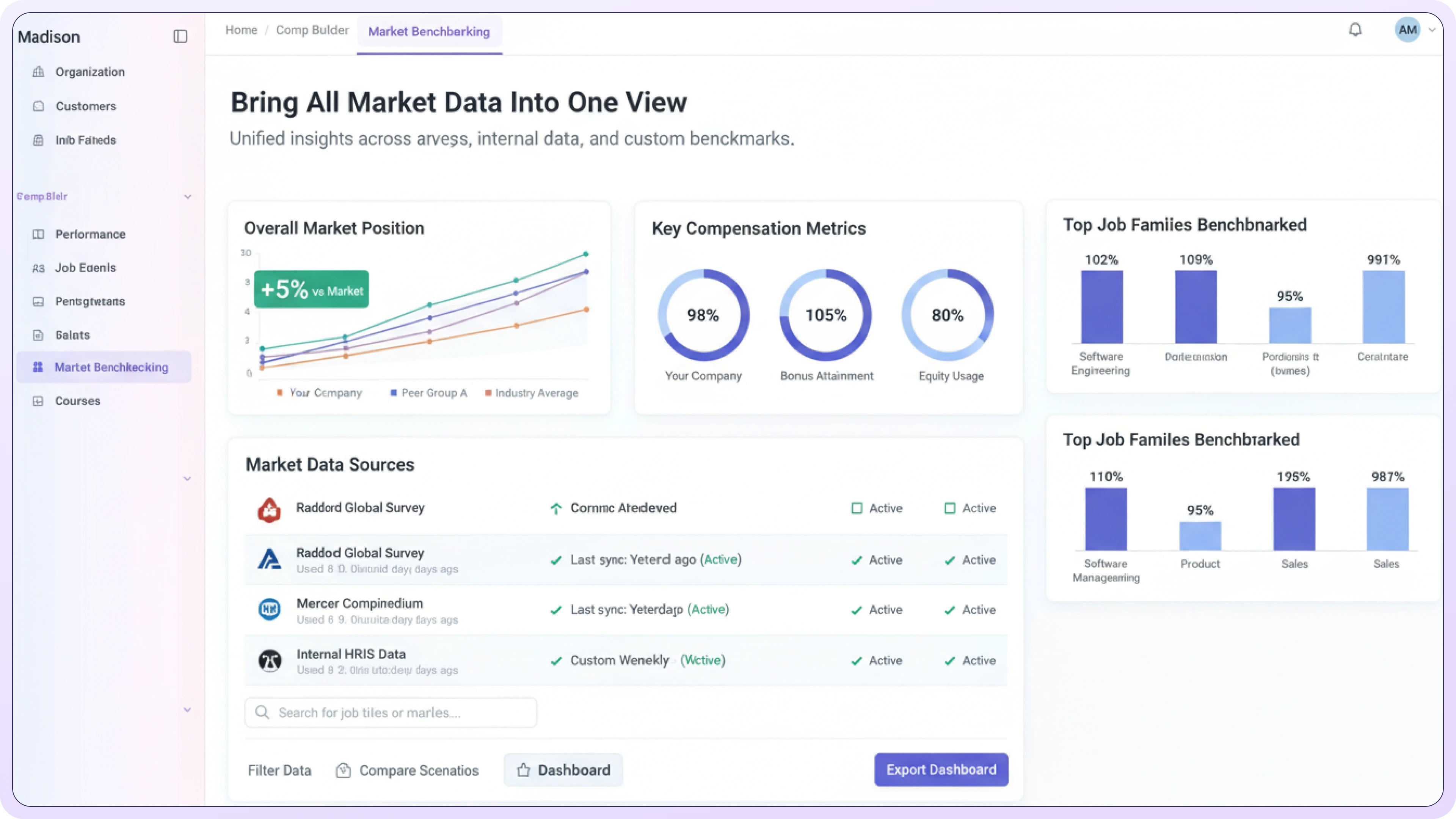
Multi-Source Data Consolidation
Combine data from multiple survey providers, internal surveys, and datasets.
.svg)
Side-by-Side Market Comparisons
Compare roles across geography, industry, size, and job scope.
.svg)
Interactive Market Analysis
Analyze pay variations using intuitive, point-and-click workflows.
.svg)
Custom Survey & Dataset Support
Incorporate custom surveys and proprietary data when needed.
.svg)
Decision-Ready Market Reports
Generate clear, user-friendly reports for stakeholders.
A Controlled Approach to Market Benchmarking
Built-in methodology ensures market data is applied consistently, transparently, and defensibly.
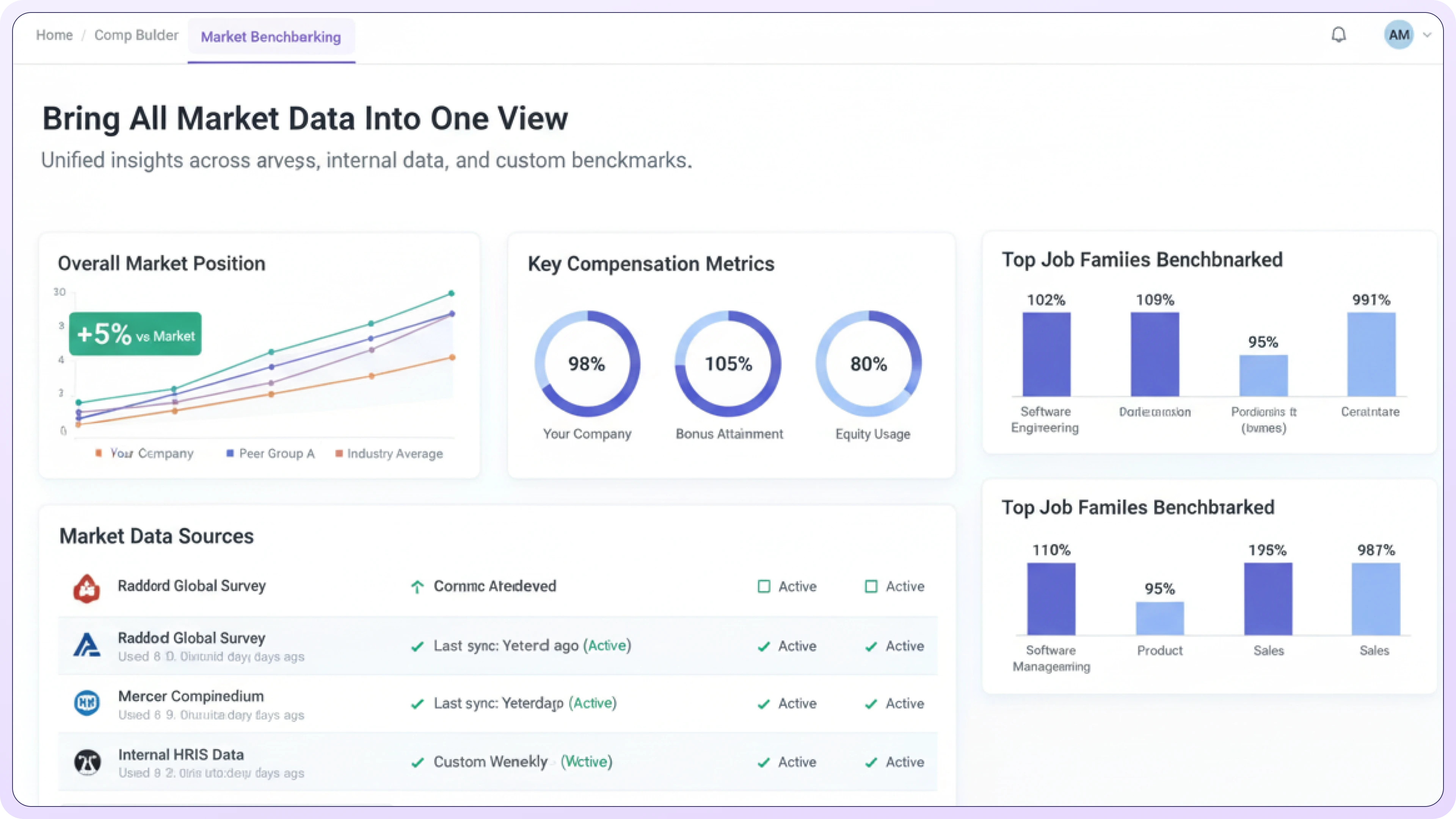
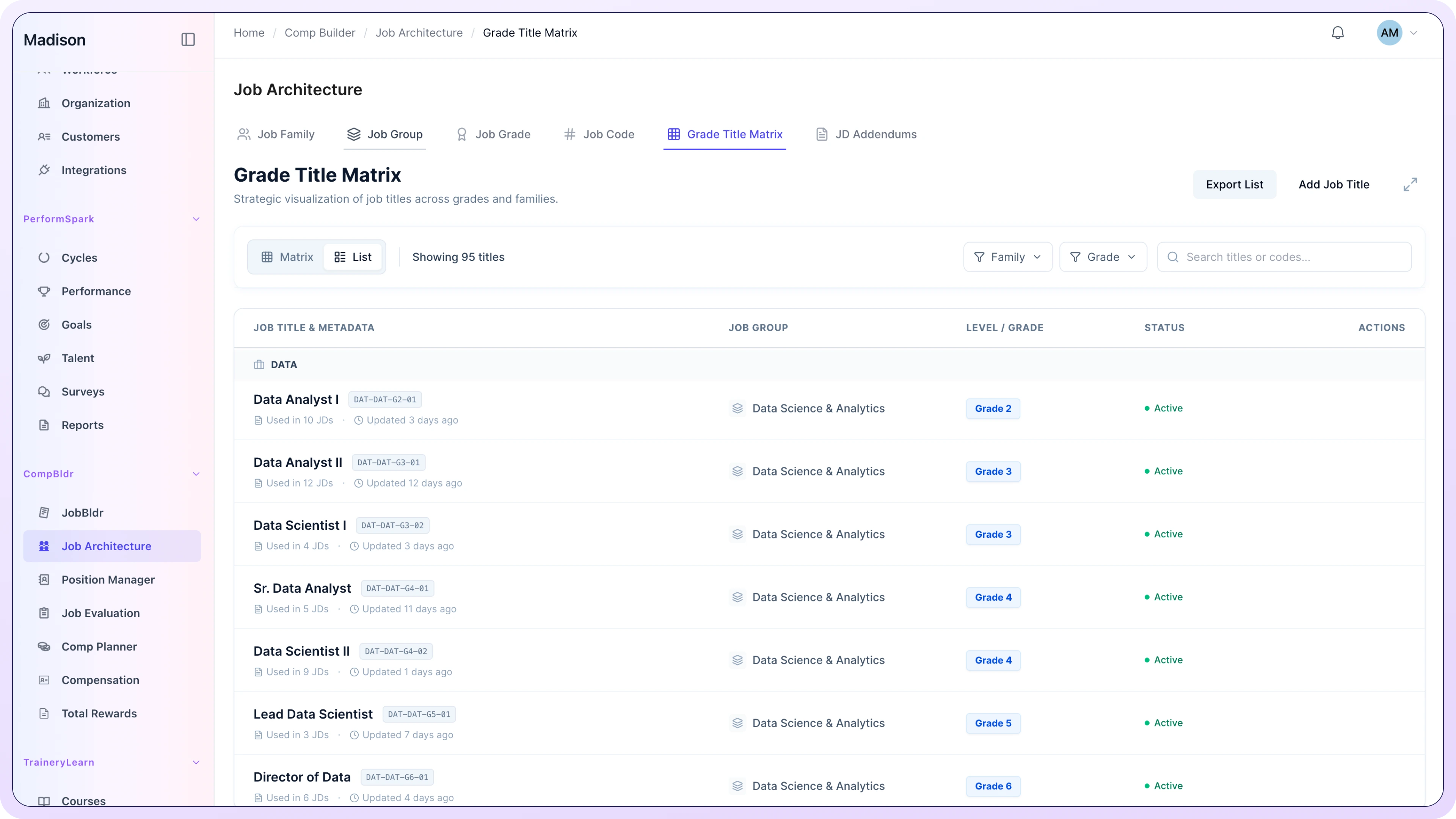
Bring all market data into one view
Instead of managing multiple spreadsheets and survey files, market data is consolidated into a single workspace.
Compare comparable roles accurately
Side-by-side comparisons make it easy to evaluate how roles stack up in the market.

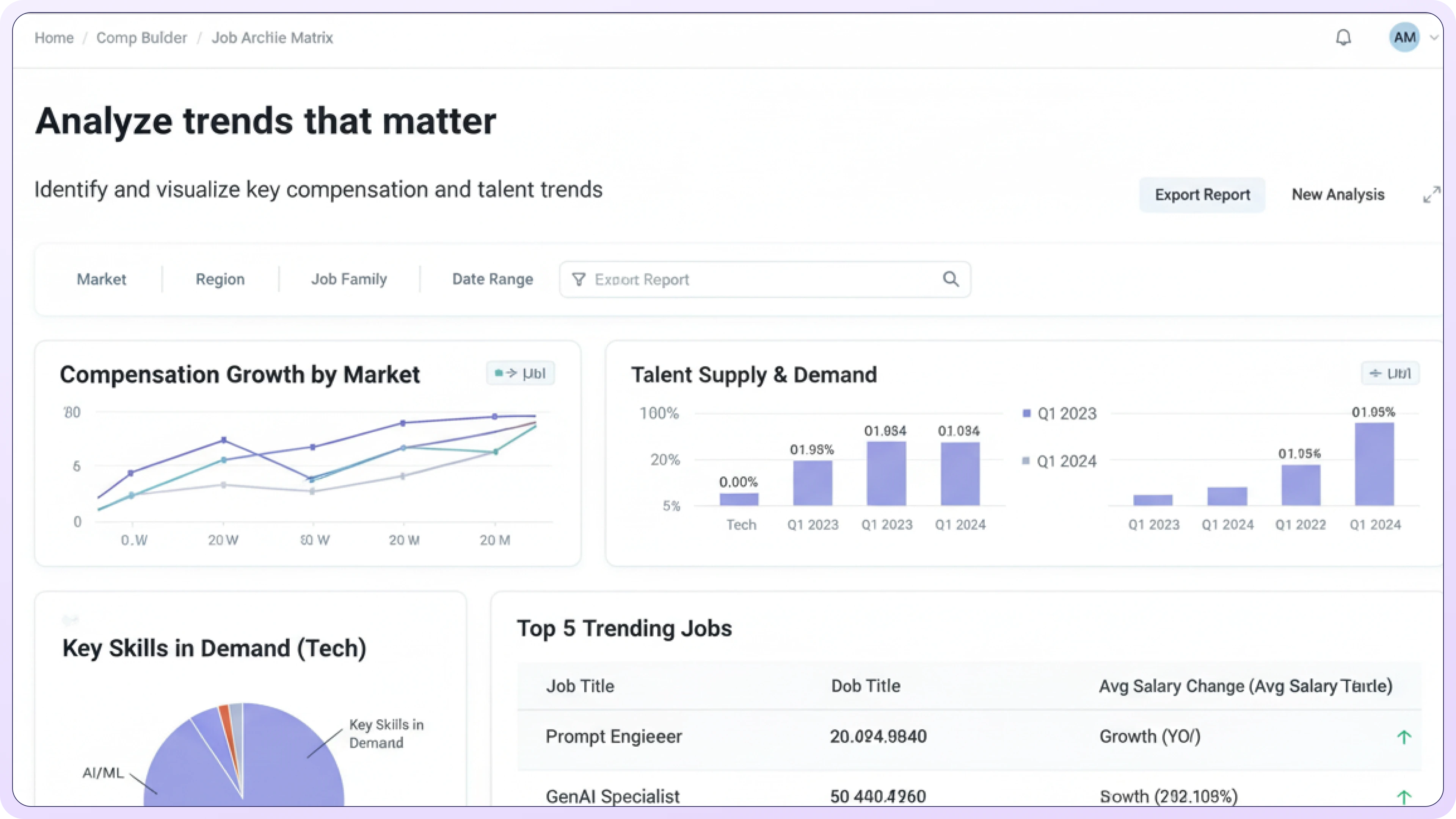
Analyze trends that matter
Market benchmarking goes beyond static percentiles to surface actionable insights.
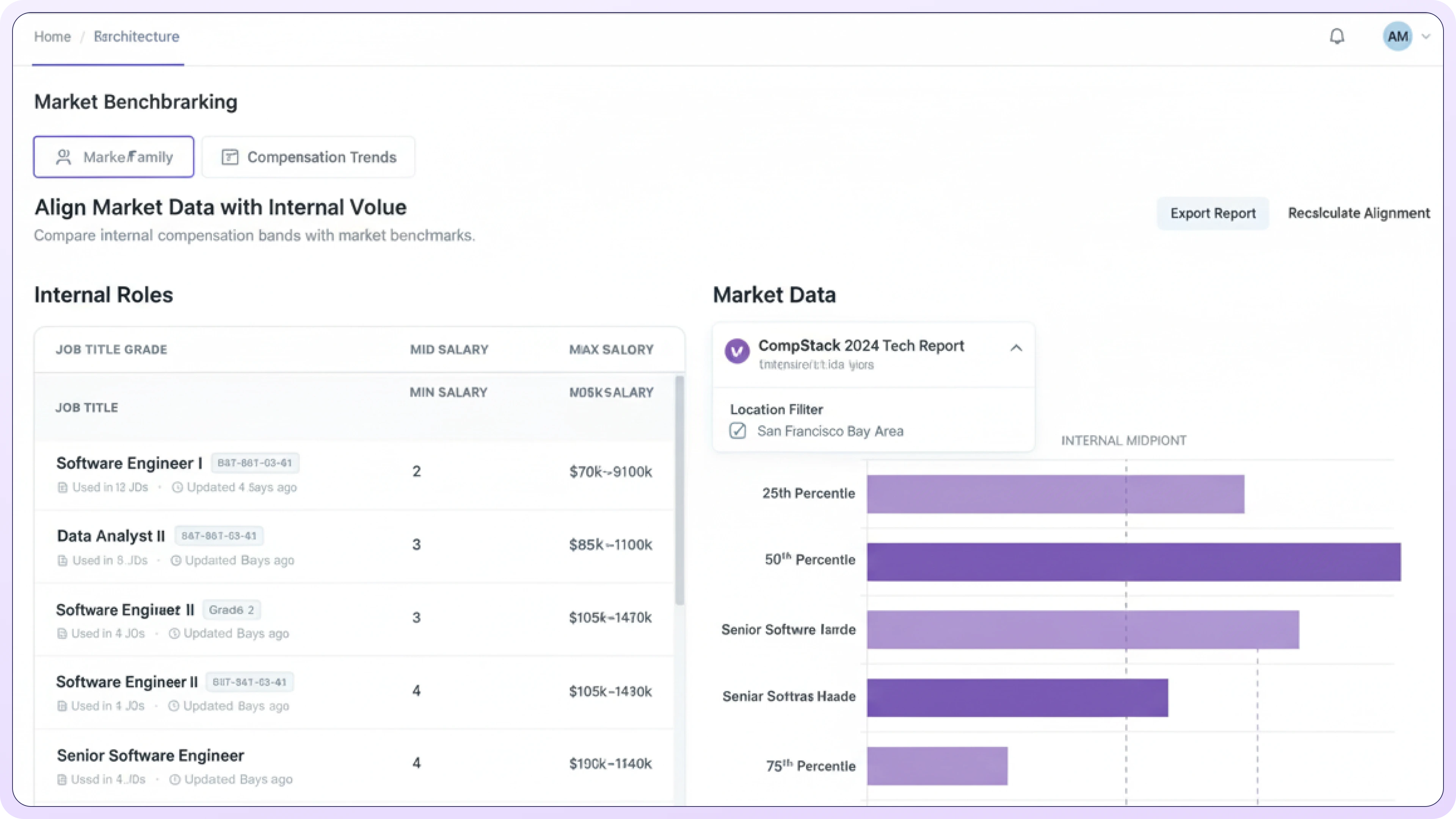
Align market data with internal role value
Market pricing is more effective when paired with internal role evaluation.
Benchmarking Without Spreadsheets
Interactive, centralized market insight, built for accurate job pricing.
.svg)
Data Organization
Analysis Method
Reporting
Scalability
Enterprise Control Without Compromise
Manage diverse market data across geographies and roles with the governance required for scale.
Large Dataset Support
Handles complex, multi-source datasets without performance lag.
.svg)
Custom Surveys
Easily integrate proprietary or custom surveys for niche markets.
.svg)
Role-Based Access
Secure, granular permissions to ensure data privacy and compliance.
Global Scalability
Seamlessly scales across different regions, currencies, and job families.
How Each Module Works Together
Take a deep dive into the specialized tools that power your compensation strategy.
- Managers often don’t know how to give useful feedback, and employees often don’t know how to take criticism and grow from it.
- Managers can move employees from ‘recommendation to doing’ by accessing subscribed learning solutions within the portal.
- Managers often don’t know how to give useful feedback, and employees often don’t know how to take criticism and grow from it.
- Managers can move employees from ‘recommendation to doing’ by accessing subscribed learning solutions within the portal.
- Managers often don’t know how to give useful feedback, and employees often don’t know how to take criticism and grow from it.
- Managers can move employees from ‘recommendation to doing’ by accessing subscribed learning solutions within the portal.

- Managers often don’t know how to give useful feedback, and employees often don’t know how to take criticism and grow from it.
- Managers can move employees from ‘recommendation to doing’ by accessing subscribed learning solutions within the portal.
- Managers often don’t know how to give useful feedback, and employees often don’t know how to take criticism and grow from it.
- Managers can move employees from ‘recommendation to doing’ by accessing subscribed learning solutions within the portal.
- Managers often don’t know how to give useful feedback, and employees often don’t know how to take criticism and grow from it.
- Managers can move employees from ‘recommendation to doing’ by accessing subscribed learning solutions within the portal.
Your questions answered
What is salary market pricing?
What are P25, P50, and P75 in salary benchmarking?
What data sources does CompBldr use for market pricing?
How often should salary market pricing be updated?
What is external equity in compensation?
How does market pricing connect to compensation planning?
What is job matching in salary benchmarking?
How does CompBldr's market pricing module work?

Benchmark pay with confidence
If market data informs your compensation strategy, this module provides the clarity and control needed to use it effectively.

.svg)

.svg)
.svg)

