
Connect Total Rewards Across HCM and Compensation
Keep finalized pay decisions, benefits, performance context, learning investment, and employee communication connected across TraineryHCM. CompBldr owns the specialist total-rewards statement workflow.
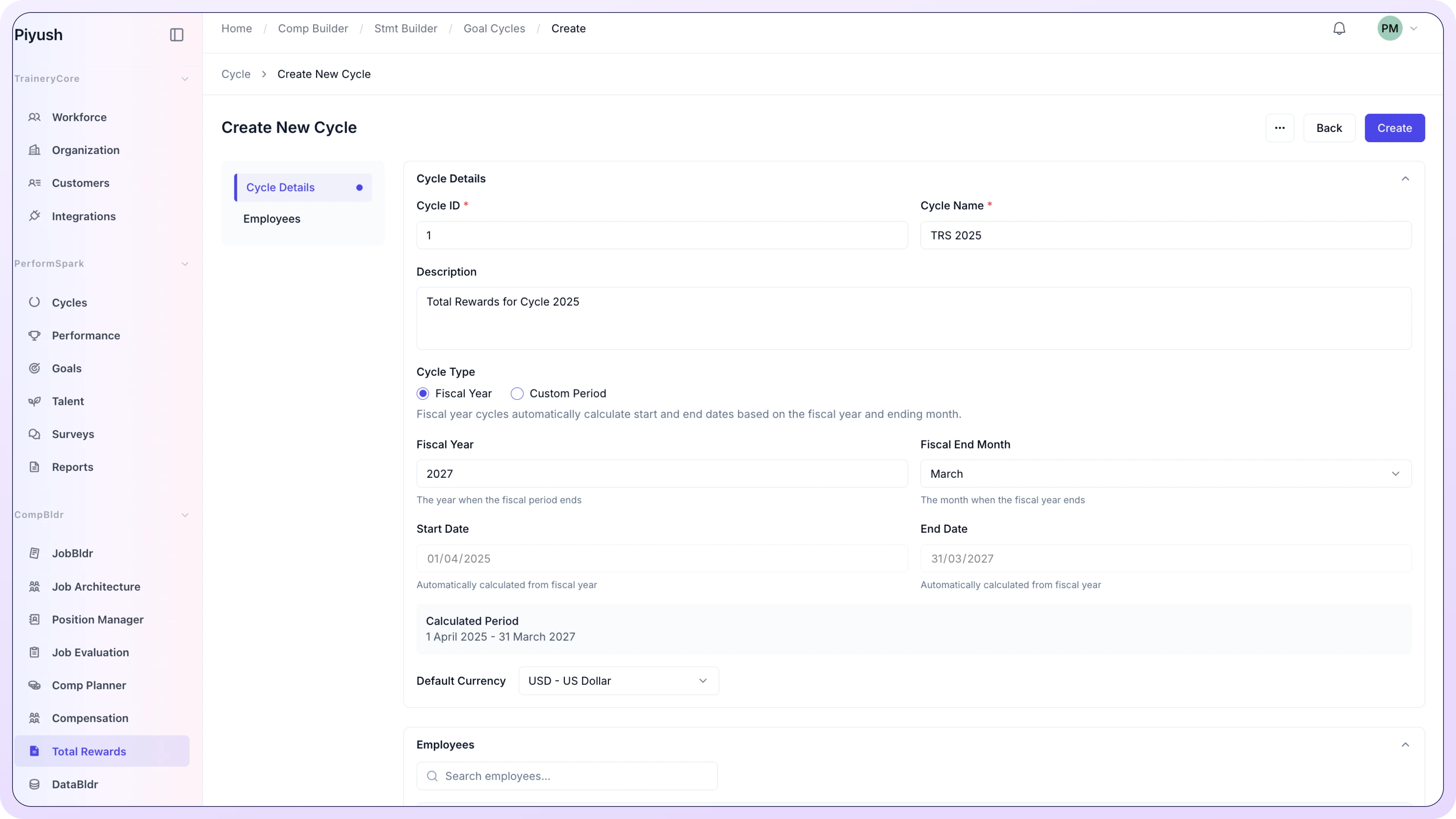
Reframing How Employees See Compensation
Without transparency, compensation value is underestimated. Total Rewards creates clarity that supports retention and alignment.
.svg)
Value Underestimation
Fragmented data can cause employees to overlook important parts of their total rewards value.
.svg)
Friction in Pay Talks
Managers lack the tools to articulate the full compensation story during performance reviews.
.svg)
Trust Erosion
Opaque compensation models create doubt around equity, driving turnover in key roles.
Built for enterprise value communication.
A framework designed for transparency, not just a benefits catalog.
Why Disconnected Reward Communication Creates Friction

Employees see base pay but miss the broader value of benefits and rewards.
Managers lack consistent context for compensation conversations.
Reward communication can drift from finalized pay decisions.
Connect Total Rewards Across the Employee Lifecycle

Finalized pay decisions flow into employee reward communication.
Learning and development investment can appear alongside compensation.
Managers and employees receive clearer, more consistent reward context.
.svg)
Unified Total Rewards View
Present base pay, incentives, benefits, and rewards in one consolidated, real-time dashboard.
.svg)
Customizable Reward Components
Configure which elements are included based on role, region, or policy with dynamic logic.
.svg)
Employee-Friendly Statements
Generate clear, jargon-free statements that explain exactly how pay is calculated.
.svg)
Manager & HR Views
Empower decision makers with accurate, up-to-date data during sensitive compensation reviews.
.svg)
Secure Access & RBAC
Enterprise-grade role-based access ensures privacy and policy compliance across the globe.
.svg)
Compensation Alignment
Synchronize total rewards with pay ranges, market data, and organizational structures automatically.
Clarity at Every Level of the Organization
Total Rewards transforms disconnected data into consistent, understandable communication for employees and leaders.
Bring all elements into one view
Instead of fragmented systems and documents, total rewards are presented as a single, cohesive picture of value.

Present compensation clearly to employees
Simple, intuitive reward statements reduce confusion and improve the perception of total investment.

Support better compensation conversations
Managers and HR teams have a reliable reference during sensitive salary and bonus discussions.
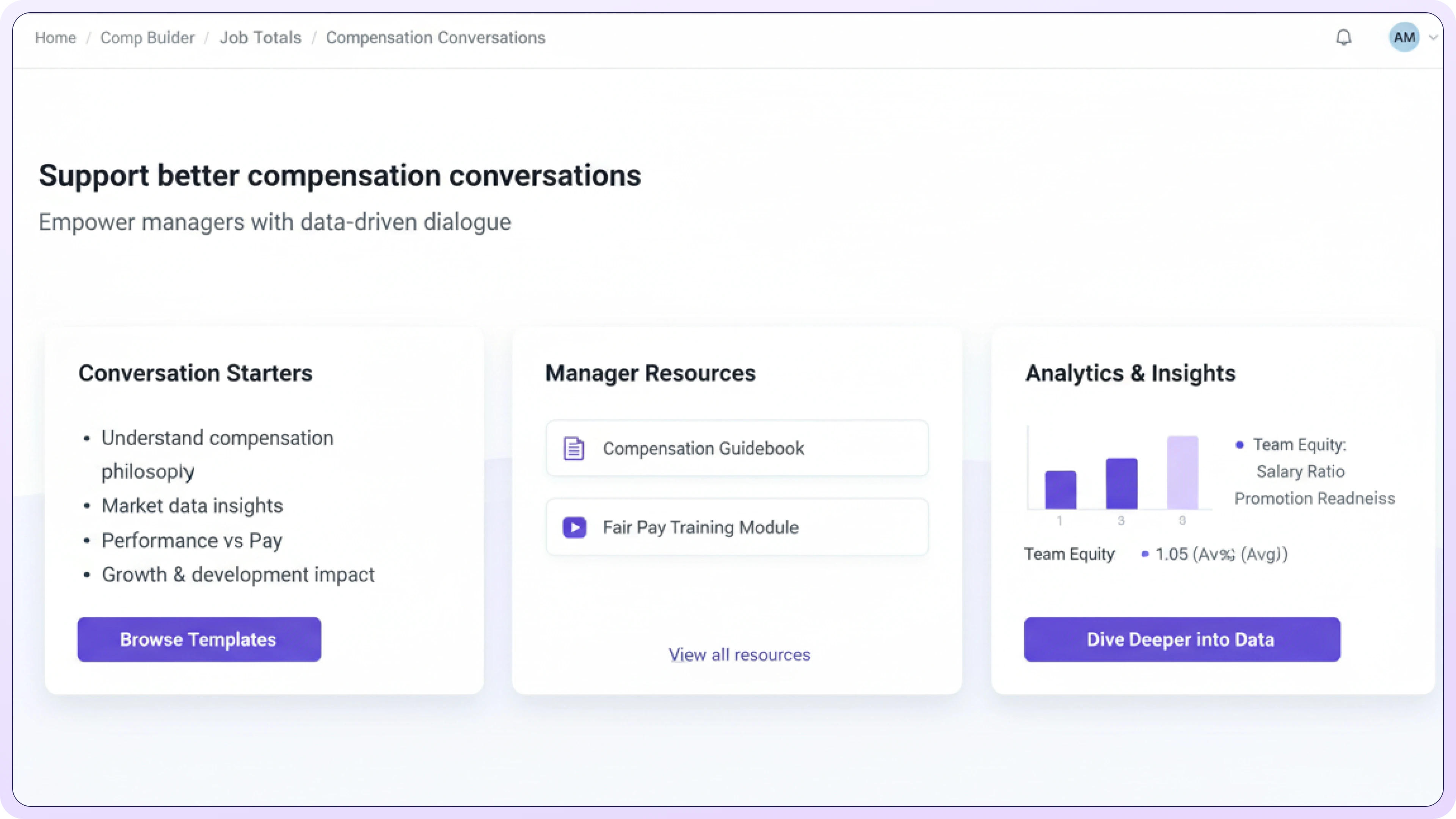
Maintain governance and consistency
Ensure that rewards communication stays aligned with policy, structural changes, and regional requirements.
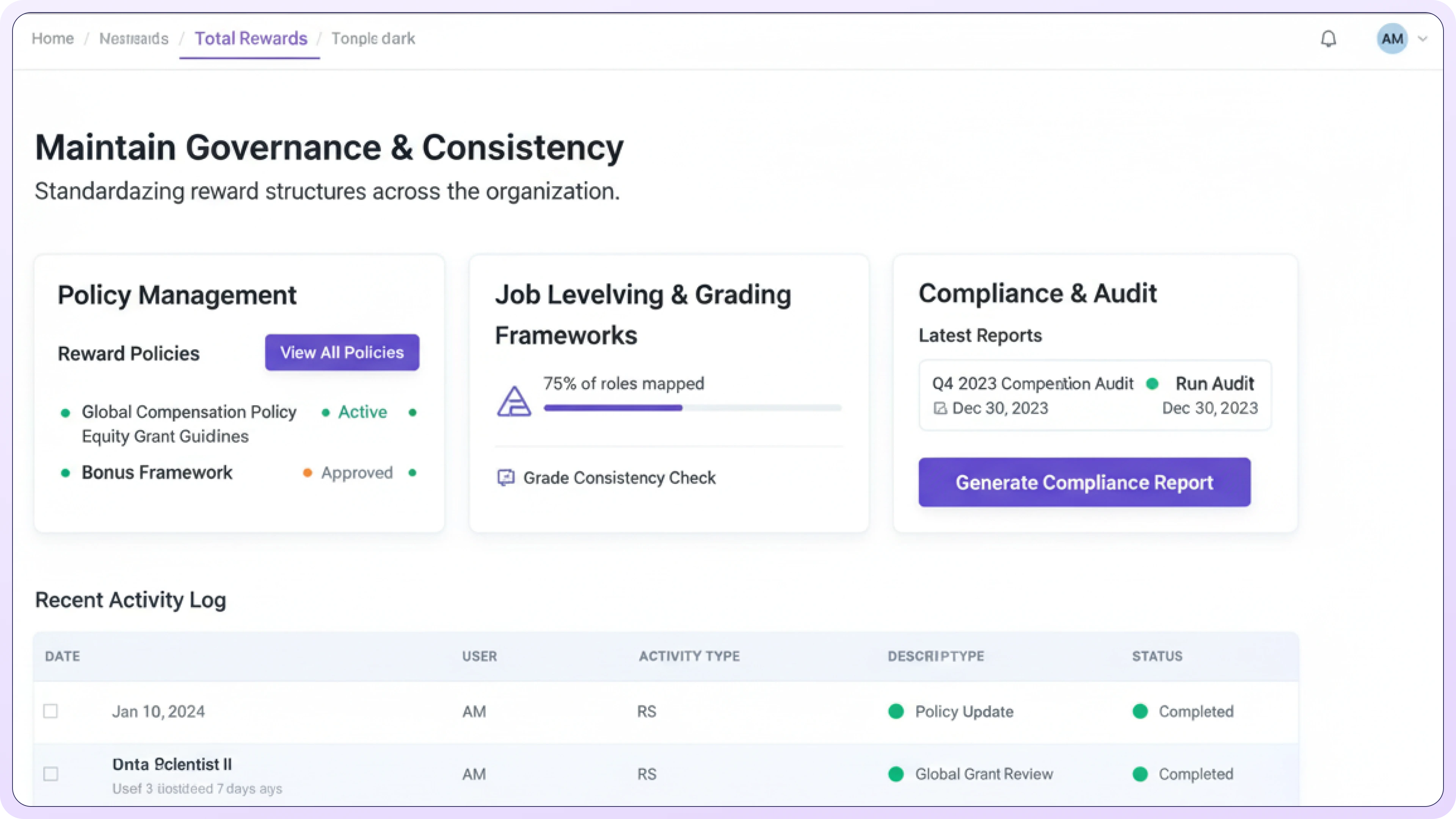
Strengthen your compensation strategy.
Compensation strategy isn’t just about setting pay; it’s about how that value is perceived. Our module bridges the gap between compensation design and employee experience.
Improved perceived equity
Confident pay discussions
Better retention signals
Clarity over promises
Rewards, Delivered as a Platform
An always-current Total Rewards system replaces outdated, static summaries.

Static, outdated PDFs generated once a year
Fragmented data from multiple sources
One-size-fits-all reports for everyone
Opaque governance and policy alignment
.svg)
Dynamic, system-driven live views
Centralized, consistent, and current data
Controlled access and smart governance
Scalable communication across the workforce
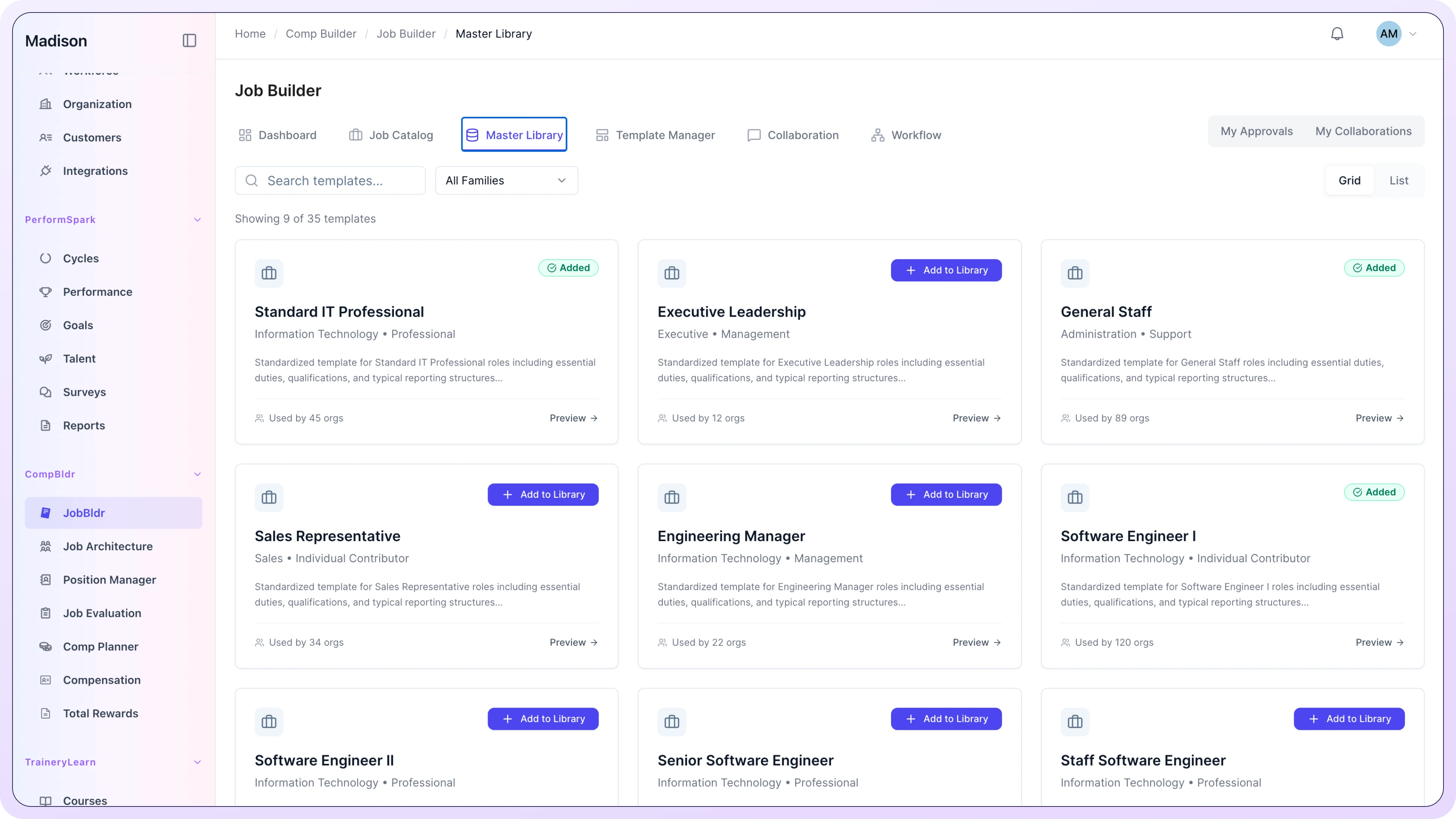
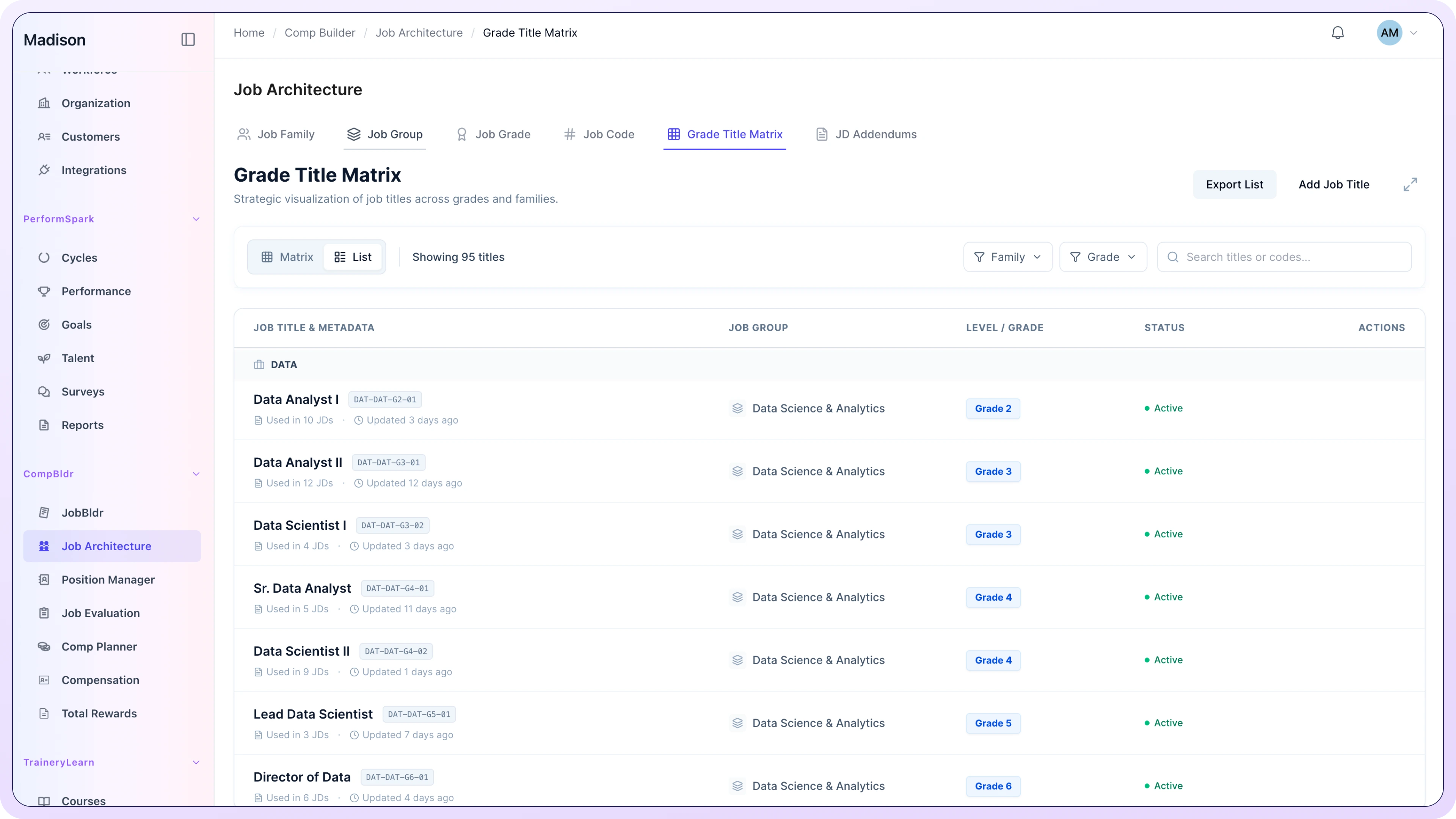
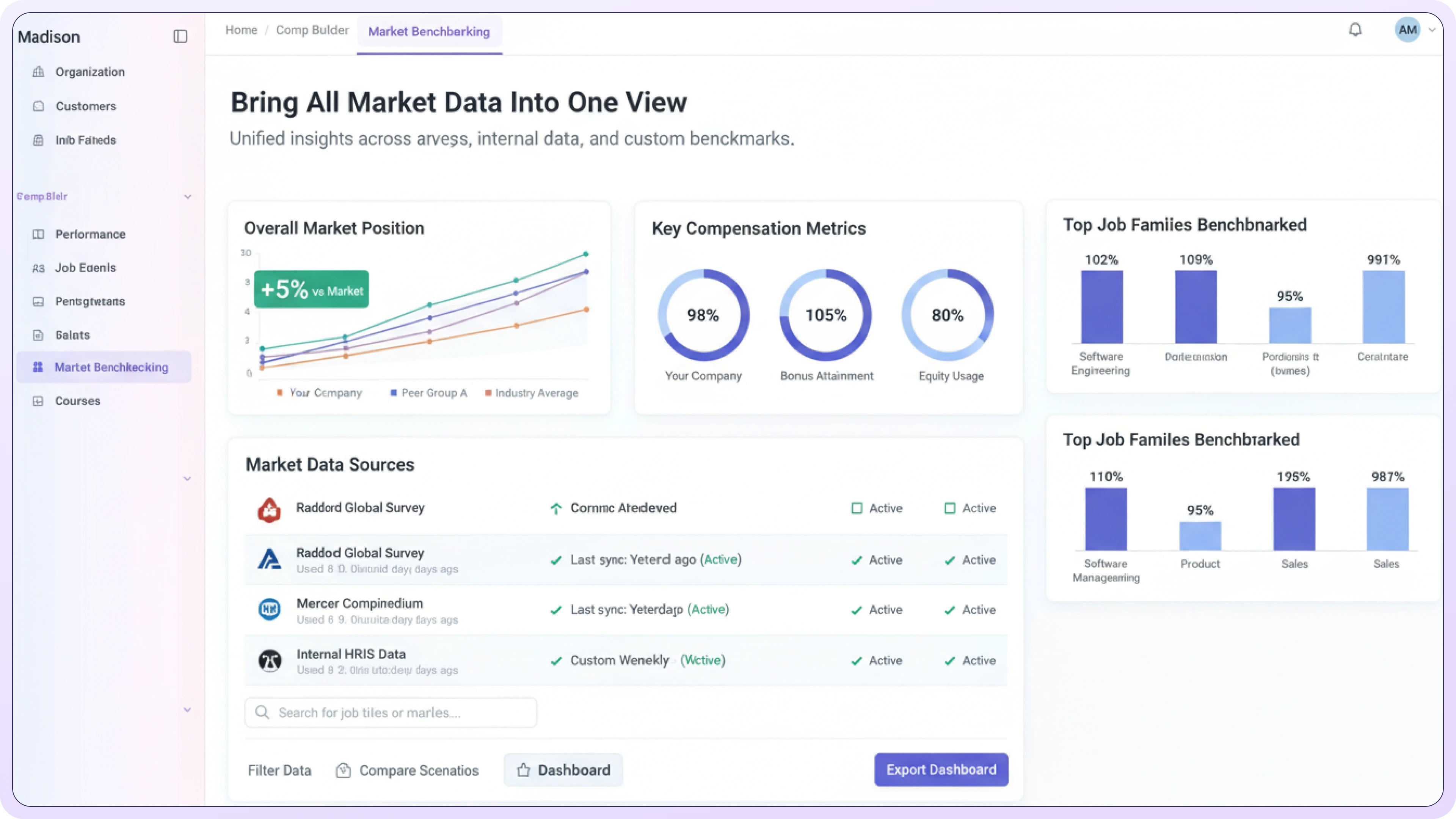
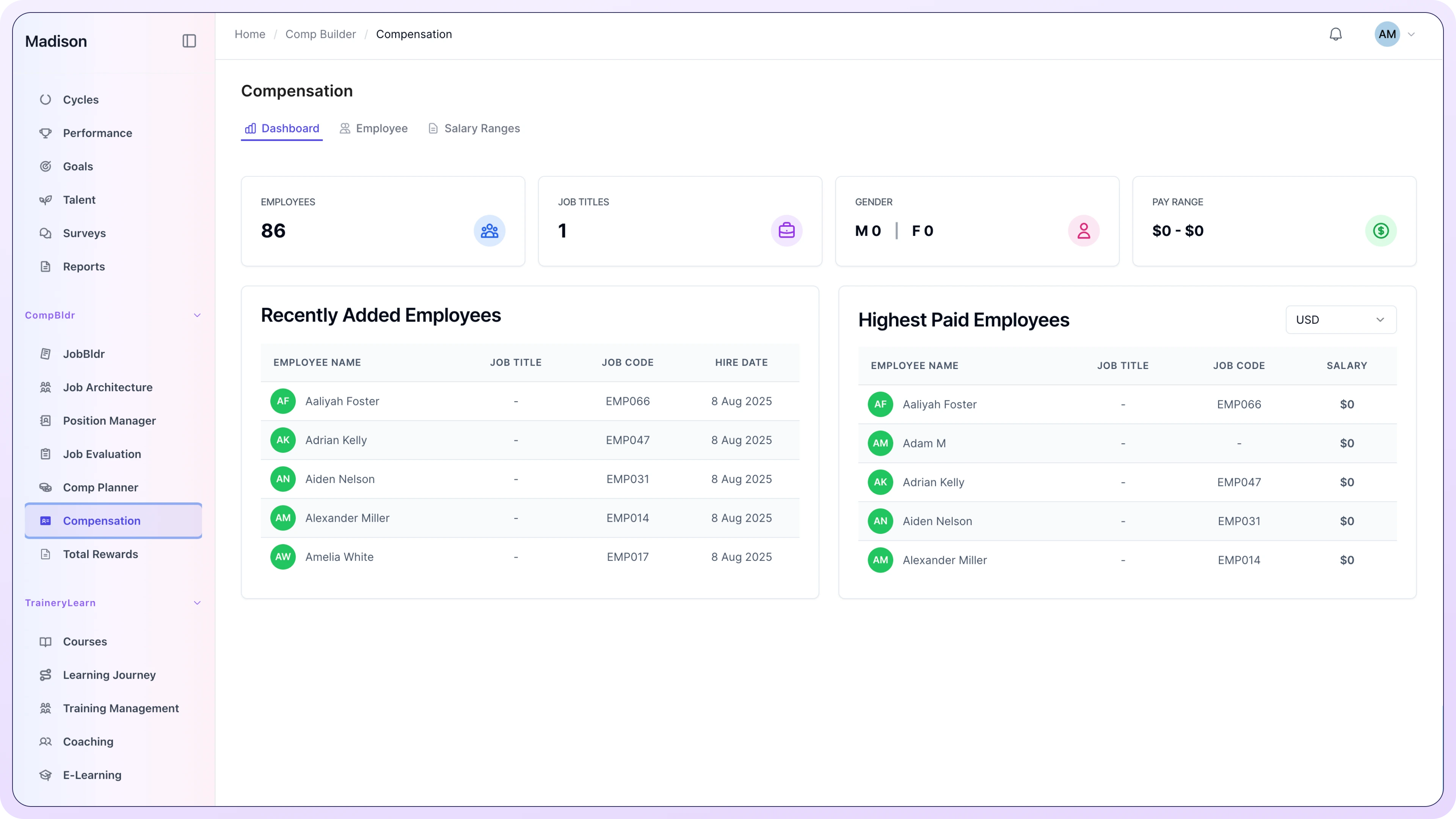
How Each Module Works Together
Take a deep dive into the specialized tools that power your compensation strategy.
- Managers often don’t know how to give useful feedback, and employees often don’t know how to take criticism and grow from it.
- Managers can move employees from ‘recommendation to doing’ by accessing subscribed learning solutions within the portal.
.svg)
- Managers often don’t know how to give useful feedback, and employees often don’t know how to take criticism and grow from it.
- Managers can move employees from ‘recommendation to doing’ by accessing subscribed learning solutions within the portal.
- Managers often don’t know how to give useful feedback, and employees often don’t know how to take criticism and grow from it.
- Managers can move employees from ‘recommendation to doing’ by accessing subscribed learning solutions within the portal.

- Managers often don’t know how to give useful feedback, and employees often don’t know how to take criticism and grow from it.
- Managers can move employees from ‘recommendation to doing’ by accessing subscribed learning solutions within the portal.
- Managers often don’t know how to give useful feedback, and employees often don’t know how to take criticism and grow from it.
- Managers can move employees from ‘recommendation to doing’ by accessing subscribed learning solutions within the portal.
- Managers often don’t know how to give useful feedback, and employees often don’t know how to take criticism and grow from it.
- Managers can move employees from ‘recommendation to doing’ by accessing subscribed learning solutions within the portal.
Your questions answered
What is a total rewards strategy?
What elements are included in total rewards?
What is a total rewards statement?
How does total rewards management connect to performance management?
What is the difference between total rewards and total compensation?
How do you communicate total rewards to employees?
Why do employees underestimate their total compensation?
What role does L&D play in a total rewards strategy?
Built for enterprise communication
The Total Rewards module supports complex enterprise requirements for scale, accuracy, and trust.
.svg)

.svg)
.svg)

