

Connect Job Descriptions Across
HCM and Compensation
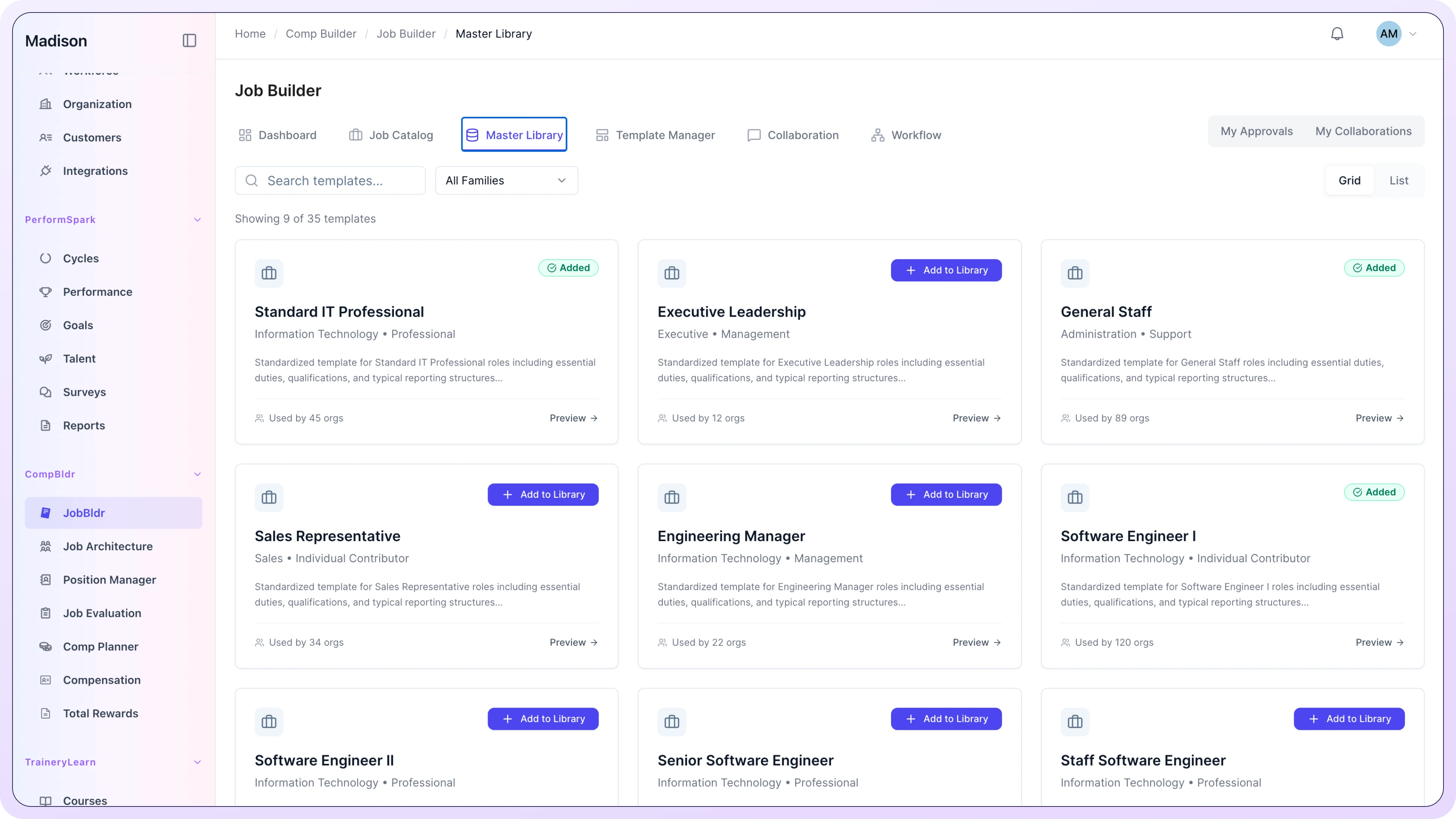
Create, standardize, and manage job descriptions that feed directly into evaluation, grading, and compensation planning, all within your compensation system.
Why Disconnected Job Descriptions Create Risk

Reviews happen once a year and go nowhere.
Learning is random and disconnected from performance.
Job expectations and pay context can drift apart.
Connect Job Description Context Across HCM

Reviews kick off learning journeys and promotion paths.
Role requirements can become disconnected from development and performance expectations.
Compensation shows growth and impactful behaviors.
Most compensation issues don’t start with pay
They start with unclear roles.
When job descriptions are inconsistent, role expectations, job architecture, and compensation context can drift apart. Structured job descriptions help keep these inputs connected instead of leaving them as static documents.
"Transform documentation into standardized, defensible infrastructure."
The Cost of Inconsistency
.svg)
.svg)

.svg)
.svg)
From Job Documents to Strategic Infrastructure
Designed for compensation-driven organizations, this module transforms job documentation into standardized, defensible infrastructure.
Why Disconnected Job Descriptions Create Risk
Reviews happen once a year and go nowhere.
Learning is random and disconnected from performance.
Job expectations and pay context can drift apart.
Connect Job Description Context Across HCM
Reviews kick off learning journeys and promotion paths.
Role requirements can become disconnected from development and performance expectations.
Compensation shows growth and impactful behaviors.
Expansive Structured Library
Access 12,000+ ready-to-use job descriptions built on compensation best practices.
.svg)
Flexible Template Framework
Customize structure while maintaining consistency across departments.
.svg)
Side-by-Side Role Comparison
Analyze comparable jobs to identify overlap, scope gaps, or inequities.
Stakeholder Collaboration
Controlled editing and approval workflows eliminate version confusion.
.svg)
Role-Based Permissions
Define access by HR, leadership, or department to protect governance.
.svg)
Historical Version Archive
Maintain documented version history and review records to support internal governance and audit preparation.
.svg)
Structured Job Description Import
Bring existing job descriptions into a structured workflow for review and standardization in CompBldr.
.svg)
Guided Job Description Authoring
Create and refine compensation-aligned job descriptions with guided authoring and human review in CompBldr.
Enterprise organizations need more than just a document store
This module supports scalable job architecture while keeping compensation data aligned, ensuring governance is baked into the workflow, not an afterthought.
.svg)
A Governed Approach to Job Descriptions
Built-in governance helps teams keep roles structured, reviewed, and aligned with internal standards as the organization evolves.
Move Beyond Word Documents and Spreadsheets
Replace disconnected files with a centralized, structured job description engine that integrates with your compensation strategy. No more digging through emails for the latest version.
.svg)
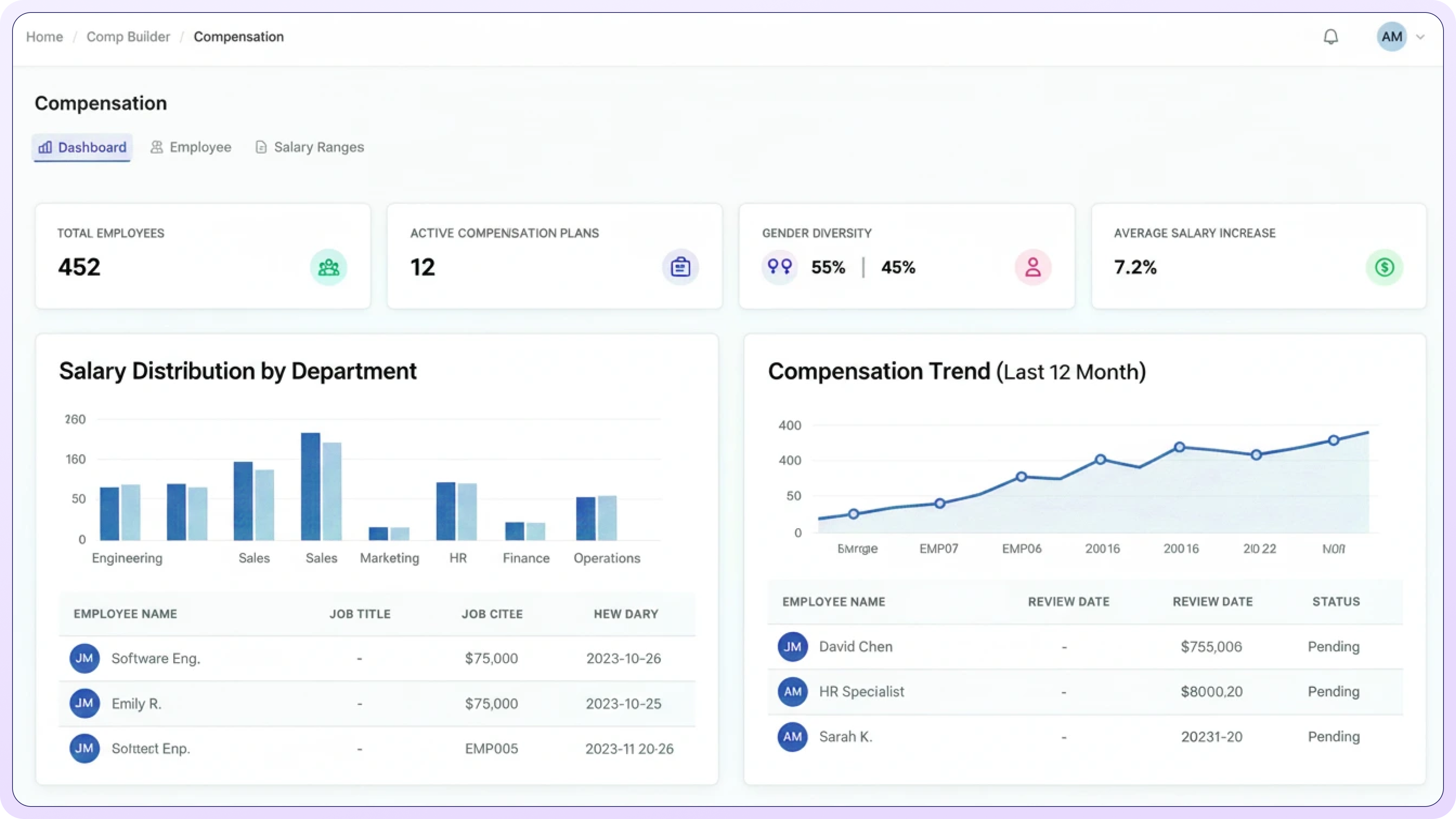
Identify Gaps Before They Become Pay Issues
Compare job scope, responsibilities, and competencies side-by-side to prevent grading inconsistencies. See exactly where roles overlap or where expectations diverge.
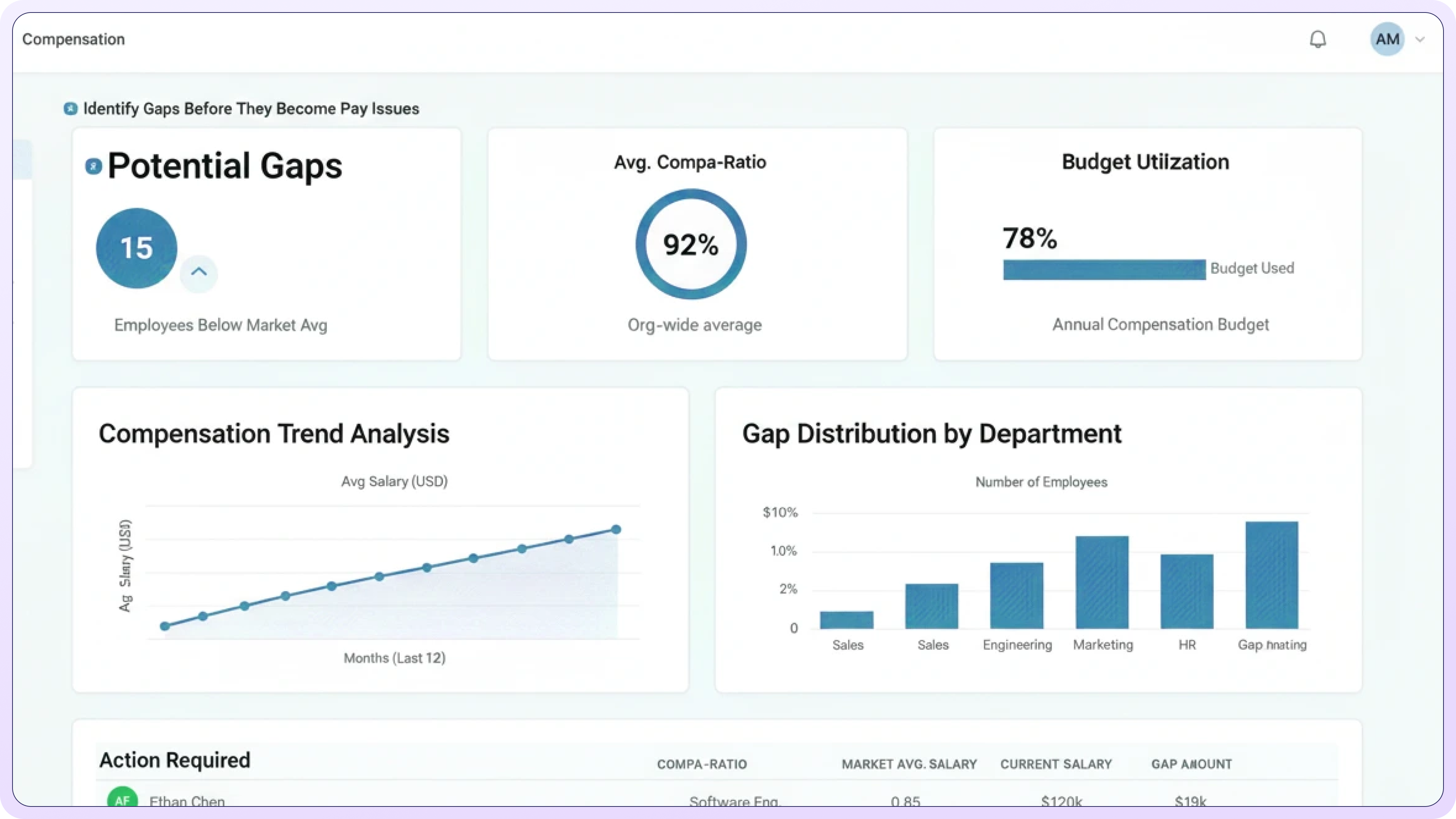
Generic JD Tools vs
Compensation-Driven Job Infrastructure
Designed to eliminate file chaos and establish a single, trusted source of truth.

Static files
No grading linkage
No evaluation integration
No compensation visibility
.svg)
Structured for evaluation
Integrated with grade architecture
Designed for pay defensibility
Built inside a full compensation system
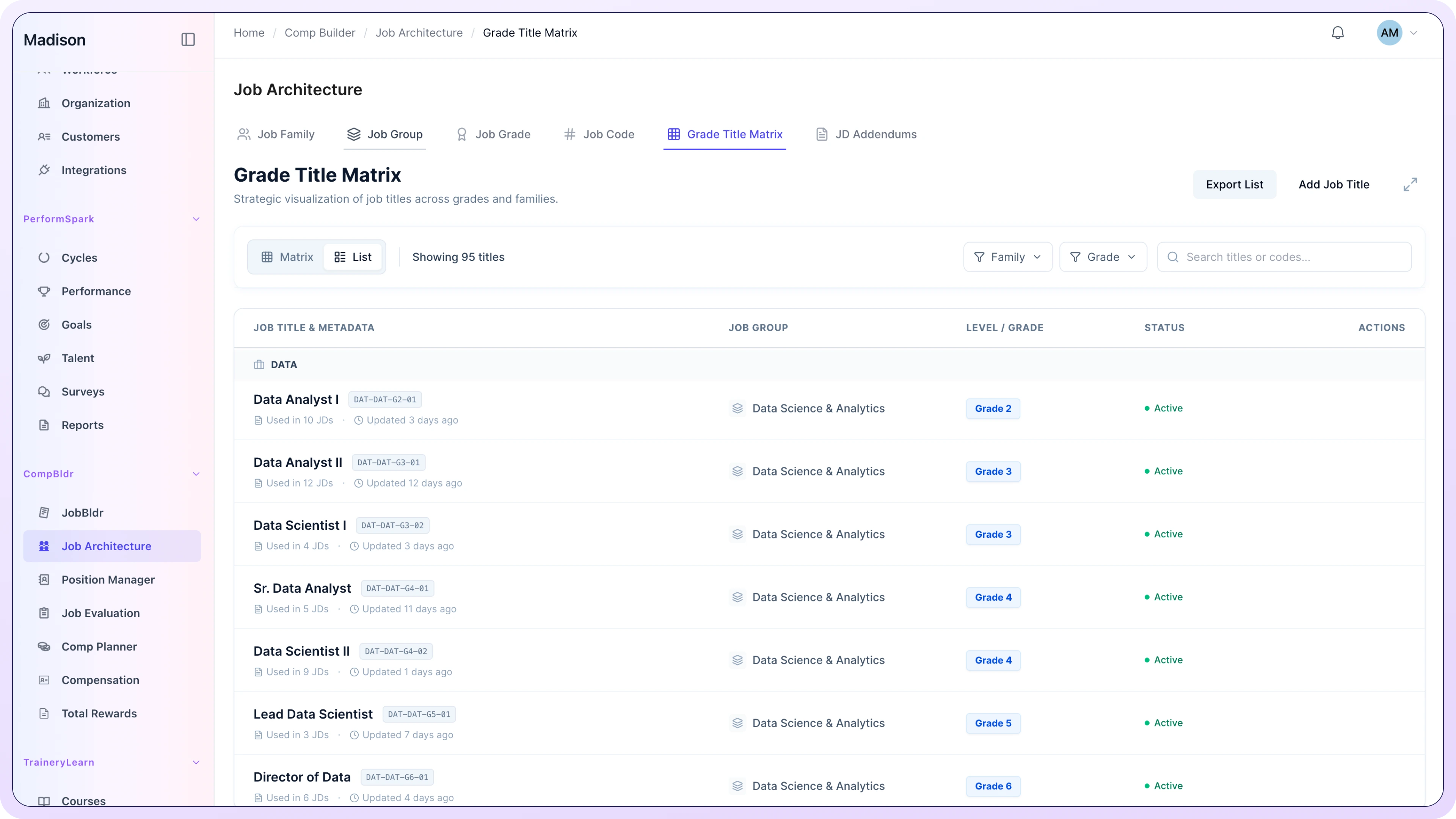
How Each Module Works Together
Take a deep dive into the specialized tools that power your compensation strategy.
- Managers often don’t know how to give useful feedback, and employees often don’t know how to take criticism and grow from it.
- Managers can move employees from ‘recommendation to doing’ by accessing subscribed learning solutions within the portal.
.svg)
- Managers often don’t know how to give useful feedback, and employees often don’t know how to take criticism and grow from it.
- Managers can move employees from ‘recommendation to doing’ by accessing subscribed learning solutions within the portal.
- Managers often don’t know how to give useful feedback, and employees often don’t know how to take criticism and grow from it.
- Managers can move employees from ‘recommendation to doing’ by accessing subscribed learning solutions within the portal.

- Managers often don’t know how to give useful feedback, and employees often don’t know how to take criticism and grow from it.
- Managers can move employees from ‘recommendation to doing’ by accessing subscribed learning solutions within the portal.
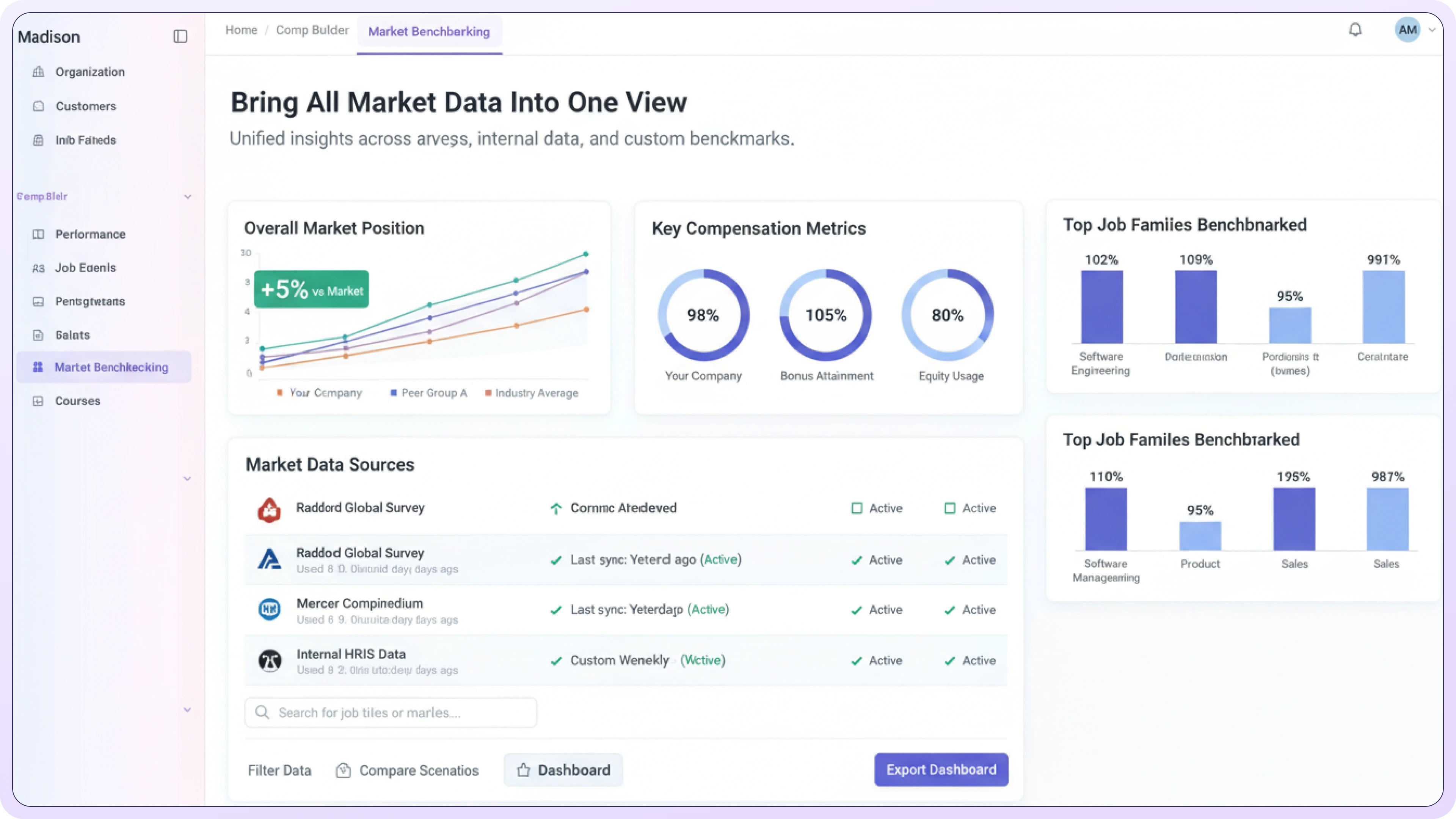
- Managers often don’t know how to give useful feedback, and employees often don’t know how to take criticism and grow from it.
- Managers can move employees from ‘recommendation to doing’ by accessing subscribed learning solutions within the portal.
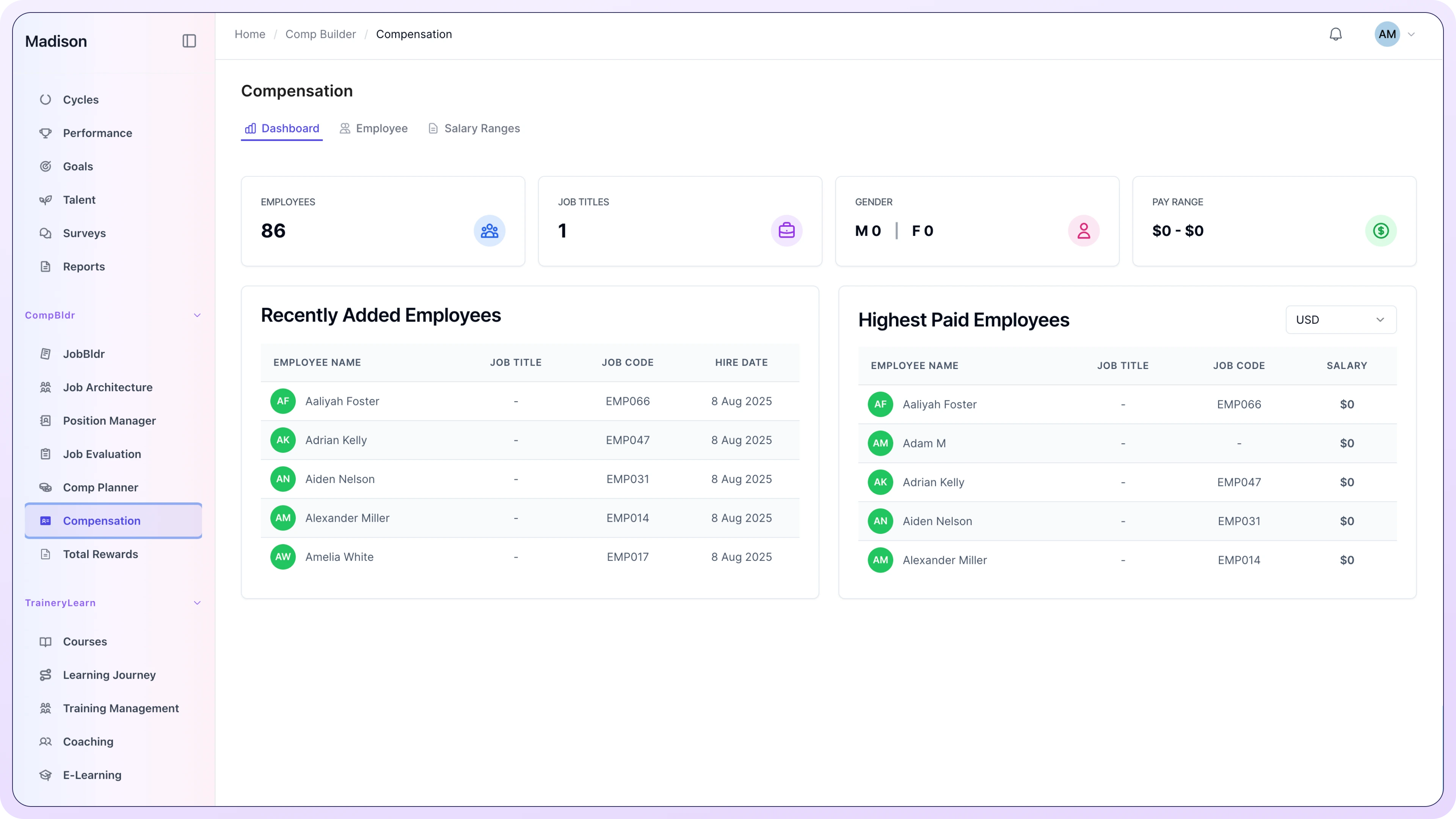
- Managers often don’t know how to give useful feedback, and employees often don’t know how to take criticism and grow from it.
- Managers can move employees from ‘recommendation to doing’ by accessing subscribed learning solutions within the portal.
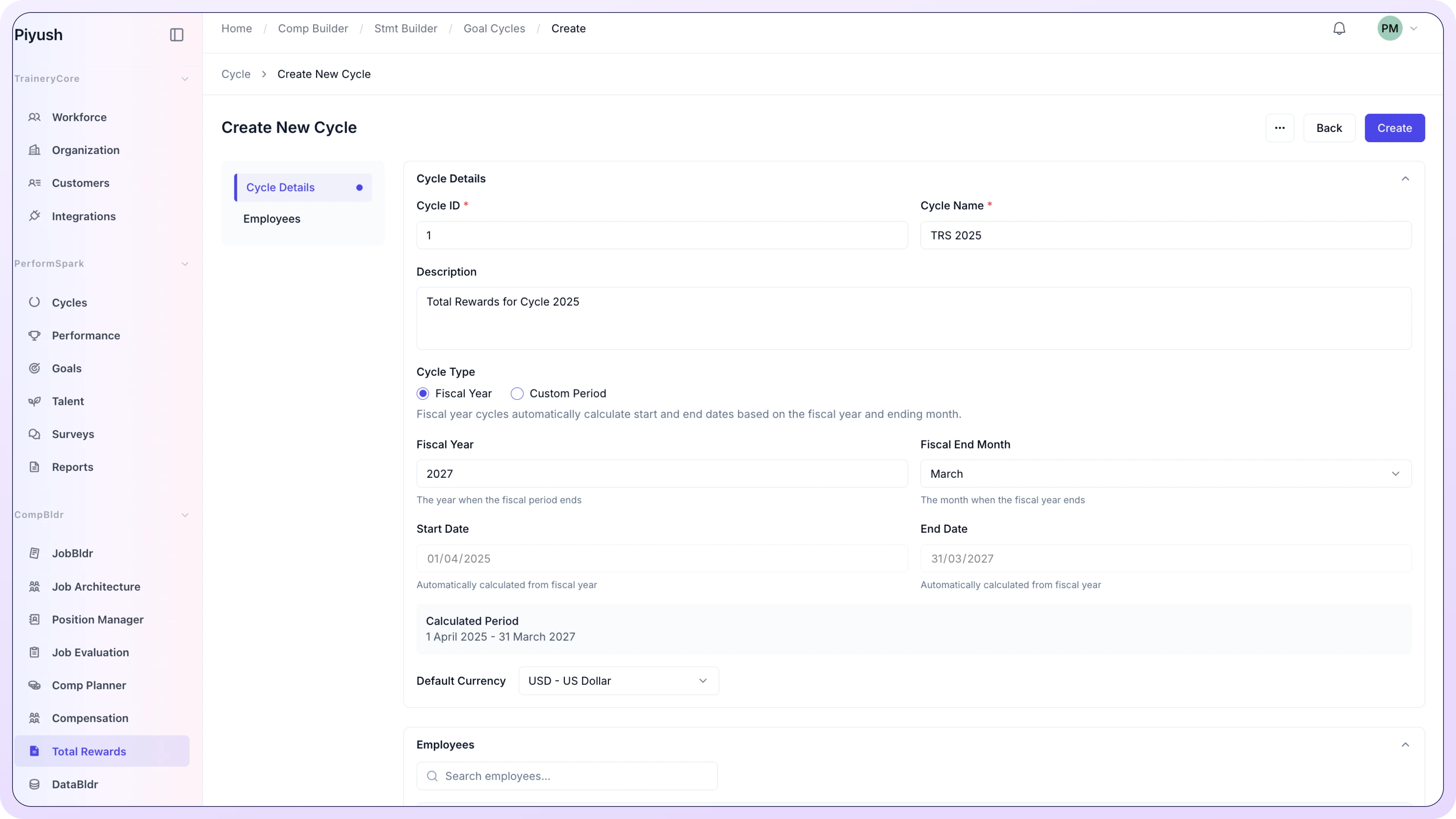
Your questions answered
What is job description management software?
How do job descriptions connect to job architecture?
What should a job description include?
How do job descriptions connect to compensation bands?
How do job descriptions support pay transparency requirements?
Can managers access and update job descriptions in CompBldr?
How do job descriptions connect to performance management?
What is the difference between a job description and a job posting?
Define roles once. Use them across your entire compensation framework.
Stop managing descriptions in silos. Build a unified infrastructure that scales with your organization.

.svg)

.svg)
.svg)

