

Connect Compensation Planning Across HCM and Pay Decisions
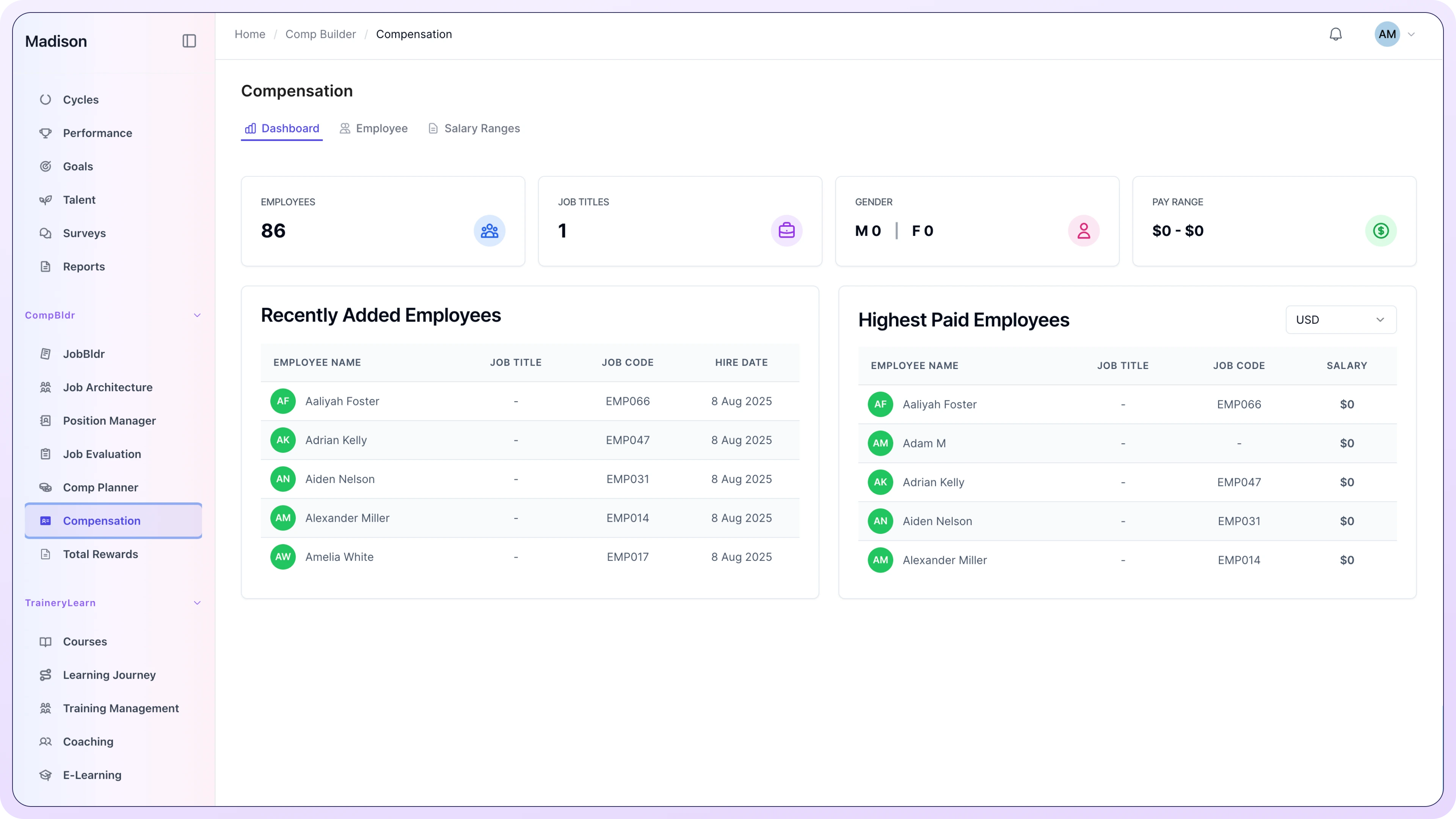
Keep employee data, finalized performance context, role value, pay ranges, budgets, approvals, and compensation outcomes connected across TraineryHCM. CompBldr owns the specialist compensation-planning workflow.
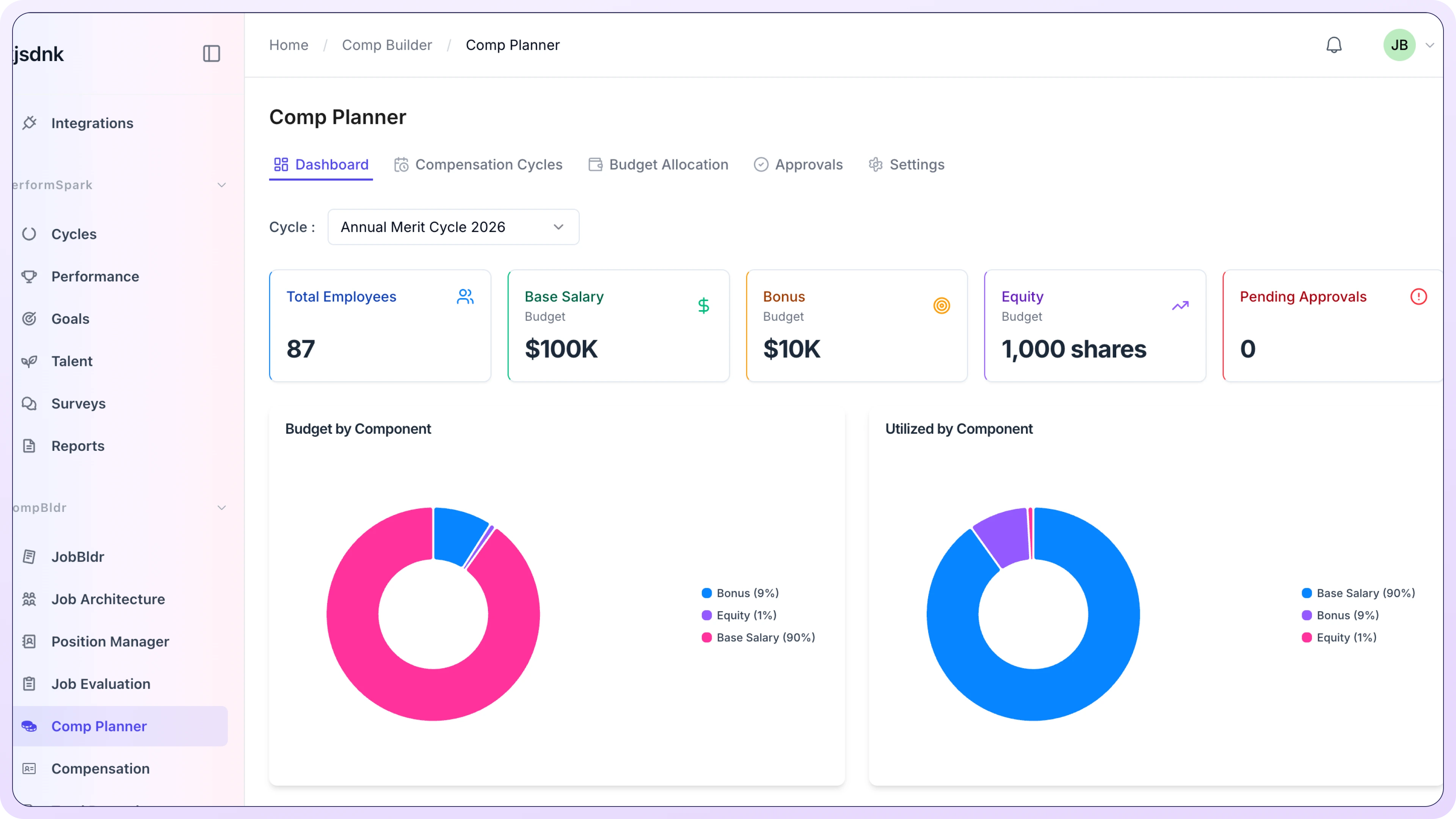
Why compensation planning matters
Compensation planning is one of the most sensitive and high-impact processes in an organization. Without structure, it quickly becomes a liability.

Budgets drift
Disconnected files lead to unplanned overruns.
.svg)
Decisions lack consistency
No central source for benchmarking or guidelines.
.svg)
Equity issues surface late
Bias is often only identified after approvals.
.svg)
Approvals slow everything down
Email chains and legacy software stall momentum.
Ready to bring discipline to your planning?
This module brings discipline and visibility so organizations can plan confidently, fairly, and on time.
A Framework Built for Controlled Decisions
Moves beyond data capture to provide a structured environment that scales with organizational complexity.
.svg)
Planning Cycles & Events
Support annual, off-cycle, and ad hoc compensation planning.
.svg)
Budget Allocation & Controls
Set, allocate, and manage budgets across teams and levels.
.svg)
Merit & Promotion Planning
Compare roles across geography, industry, size, and job scope.
.svg)
Guideline Enforcement
Apply rules and guardrails automatically during planning.
.svg)
Approval Workflows
Route plans through structured, auditable approval paths.
.svg)
Real-Time Visibility
Track progress, spend, and impact as plans evolve.
Operationalizing Compensation Planning
Standardized workflows translate complex inputs into scalable, defensible pay plans.
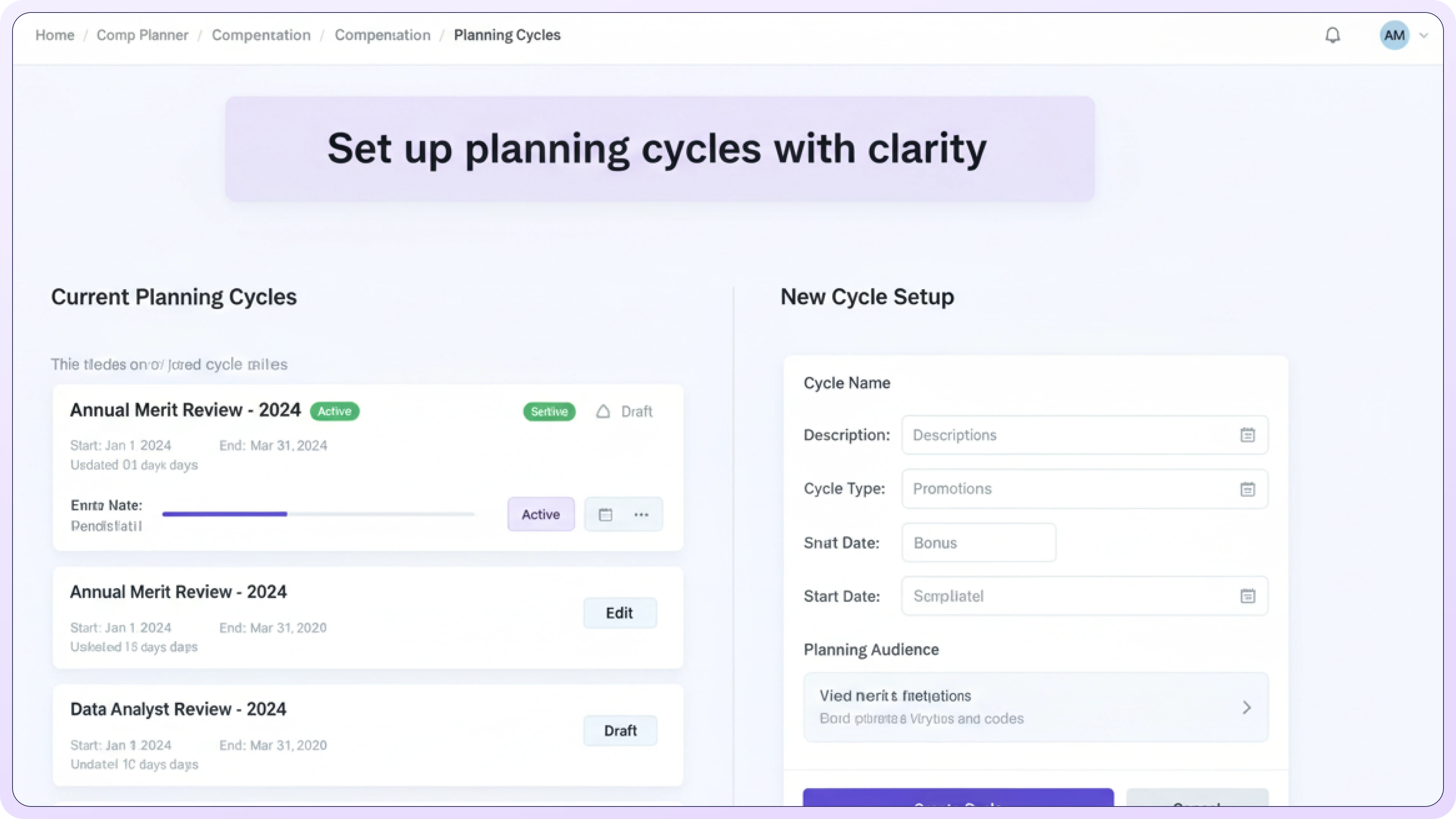
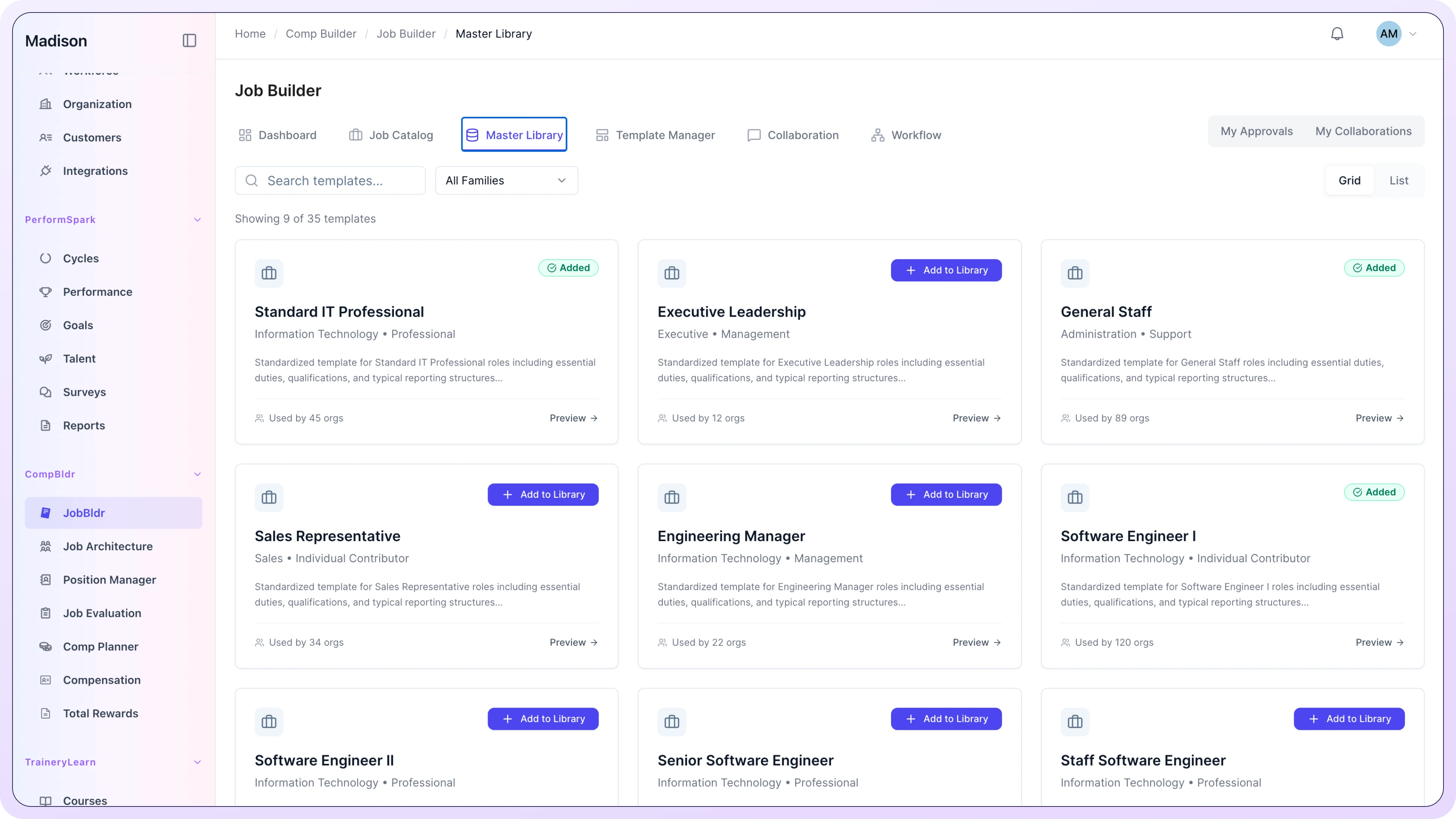
Set up planning cycles with clarity
Compensation planning begins with clearly defined cycles, timelines, and guidelines, so every decision is aligned from the start.
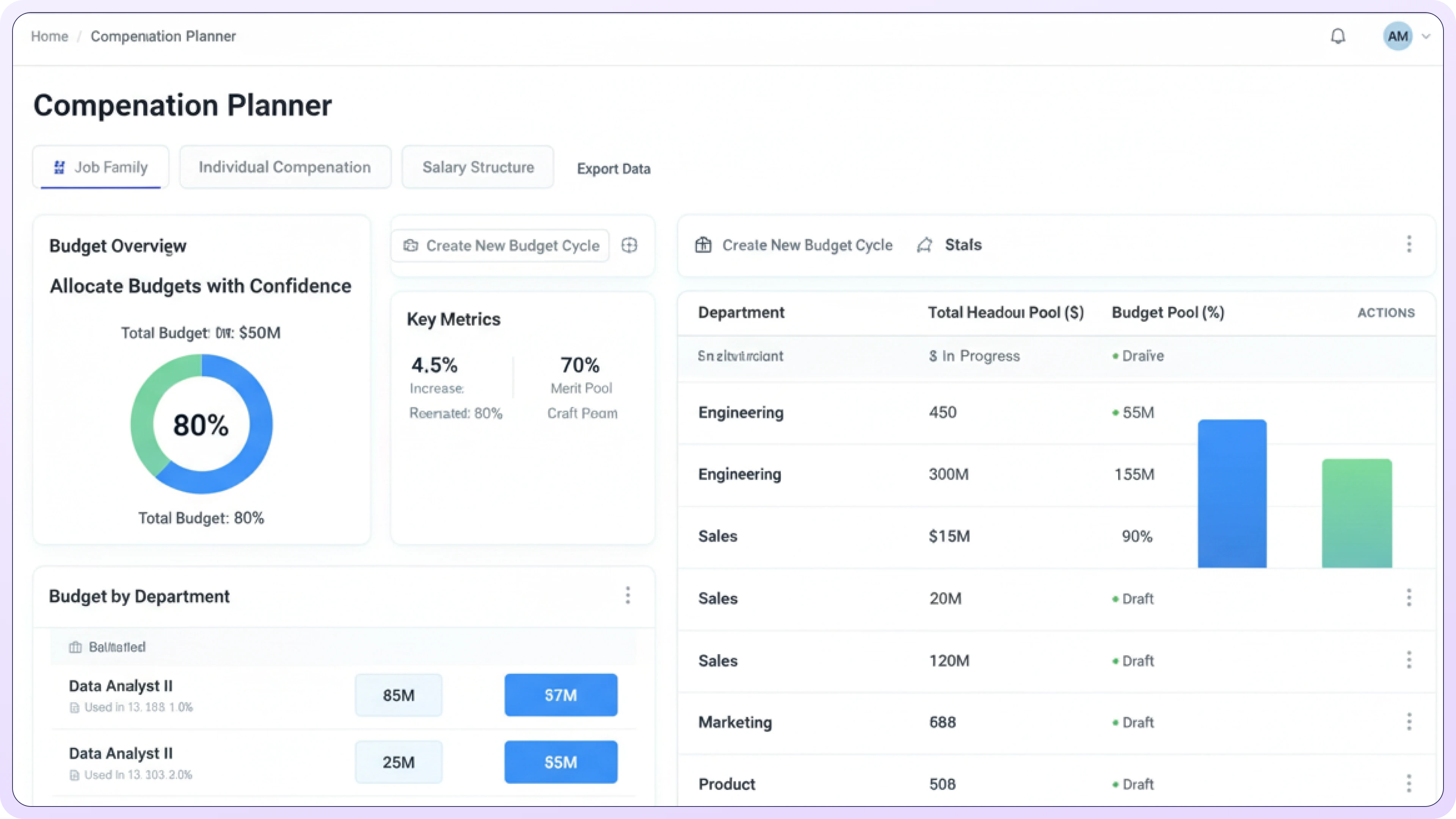
Allocate budgets with confidence
A structured approach replaces guesswork with confident, defensible budget decisions.
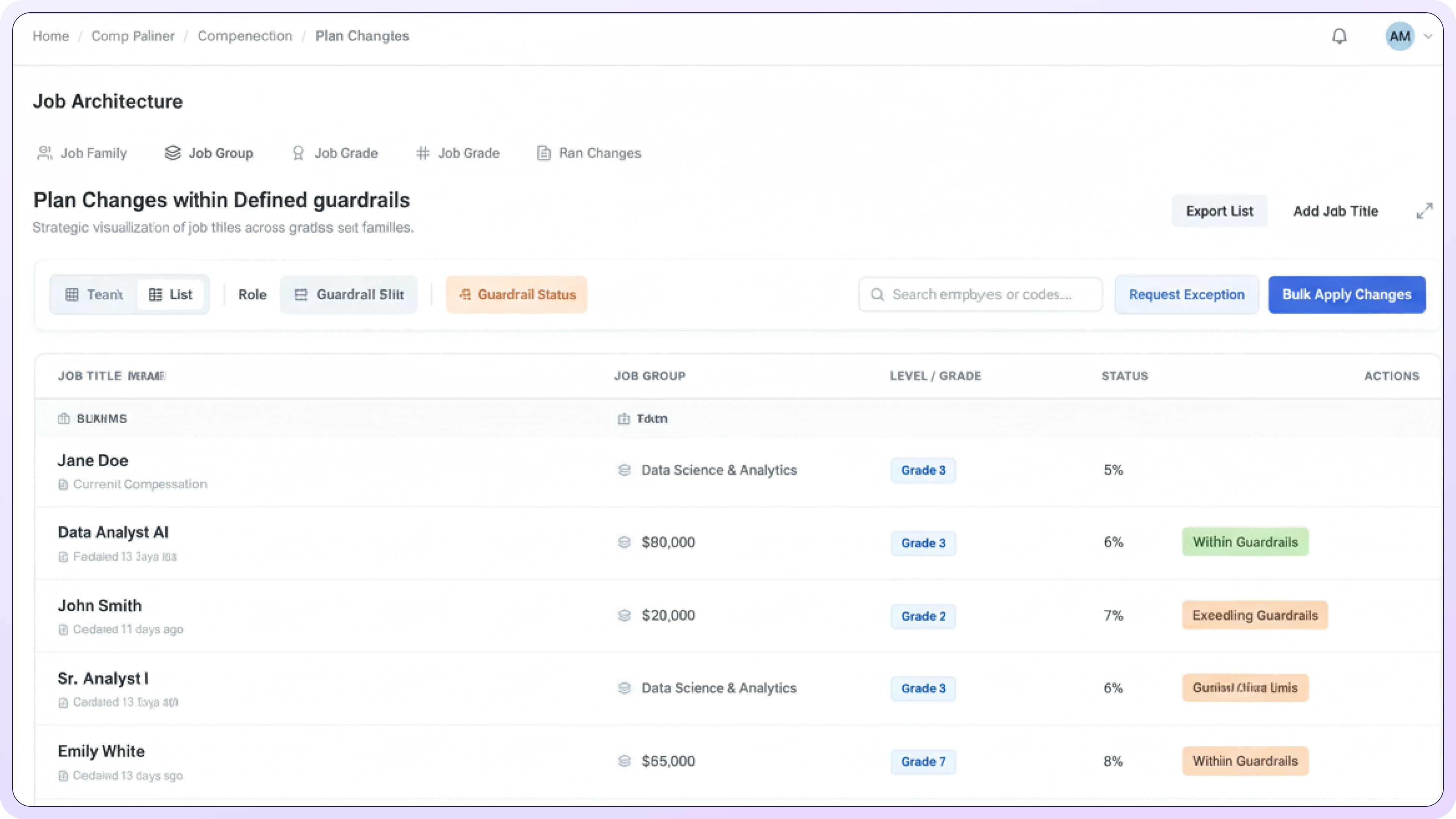
Plan changes within defined guardrails
Managers plan compensation changes while staying within approved limits.
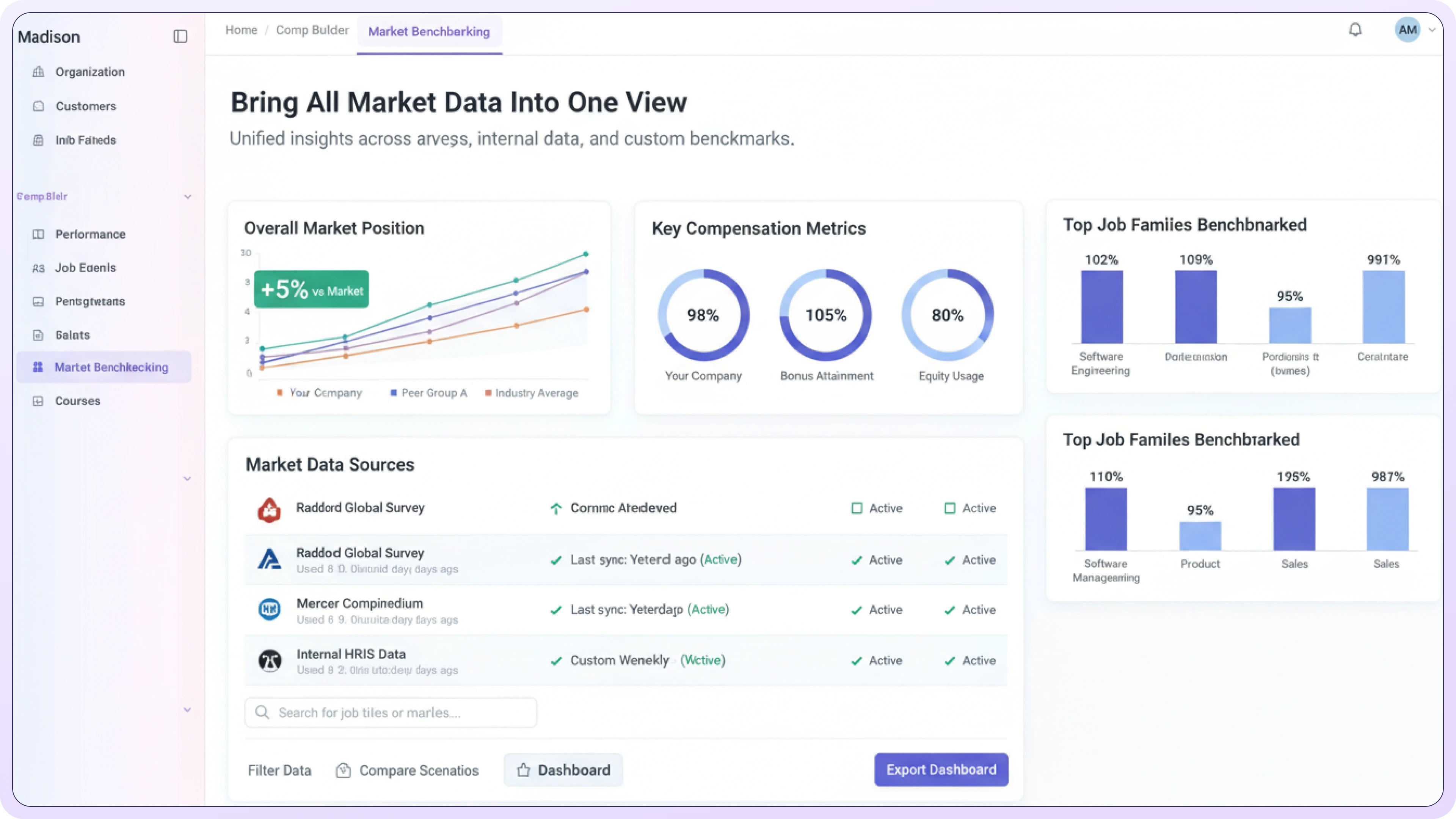
Align decisions with market context
Planning decisions are informed by role value and market positioning.

Stronger Pay Outcomes Through Structured Planning
Good compensation planning balances strategy, fairness, and budget discipline. Compensation planning becomes a repeatable, defensible process, not a scramble.
.svg)
Better Decisions
Managers are equipped with accurate role, market, and budget context—enabling informed, consistent pay decisions instead of reactive judgment calls.
Financial Discipline
Budgets are applied through defined guardrails and planning rules, ensuring fiscal control without slowing teams down or requiring constant oversight.

Risk Mitigation
Equity gaps, outliers, and policy exceptions are identified early, reducing downstream compliance, retention, and reputational risk.
Stakeholder Trust
Transparent processes and defensible outcomes build confidence among leadership, finance, and employees alike.
Compensation Planning at Scale
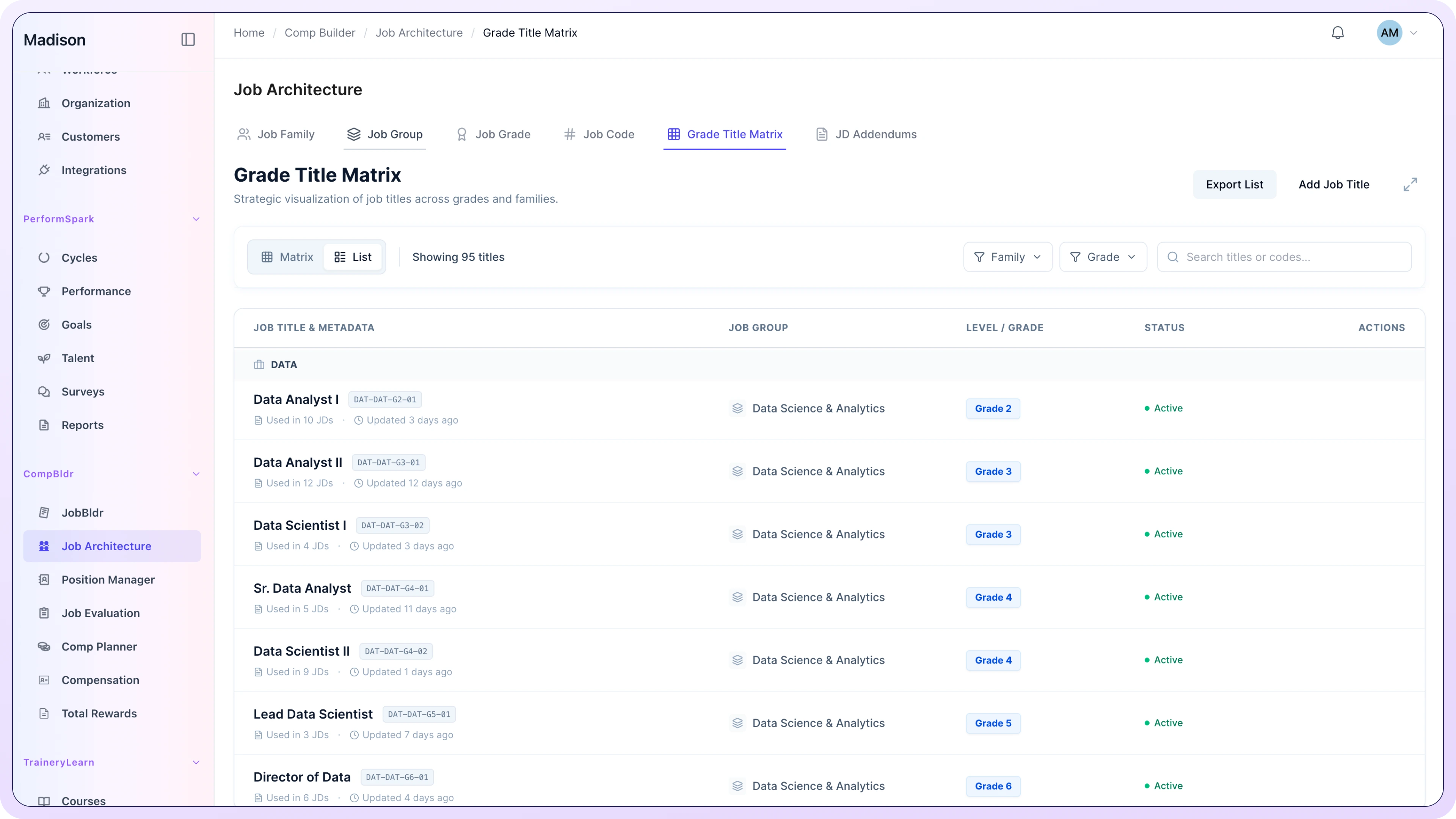
Move beyond fragmented, department-driven roles to a unified, enterprise-ready job framework.
The Old Way
.svg)
Connected Planning
.svg)
The Impact of Structured Compensation Planning
When planning is transparent and governed, organizations achieve stronger alignment, better control, and more confident pay outcomes.
How Each Module Works Together
Take a deep dive into the specialized tools that power your compensation strategy.
- Managers often don’t know how to give useful feedback, and employees often don’t know how to take criticism and grow from it.
- Managers can move employees from ‘recommendation to doing’ by accessing subscribed learning solutions within the portal.
- Managers often don’t know how to give useful feedback, and employees often don’t know how to take criticism and grow from it.
- Managers can move employees from ‘recommendation to doing’ by accessing subscribed learning solutions within the portal.
- Managers often don’t know how to give useful feedback, and employees often don’t know how to take criticism and grow from it.
- Managers can move employees from ‘recommendation to doing’ by accessing subscribed learning solutions within the portal.

- Managers often don’t know how to give useful feedback, and employees often don’t know how to take criticism and grow from it.
- Managers can move employees from ‘recommendation to doing’ by accessing subscribed learning solutions within the portal.
- Managers often don’t know how to give useful feedback, and employees often don’t know how to take criticism and grow from it.
- Managers can move employees from ‘recommendation to doing’ by accessing subscribed learning solutions within the portal.
- Managers often don’t know how to give useful feedback, and employees often don’t know how to take criticism and grow from it.
- Managers can move employees from ‘recommendation to doing’ by accessing subscribed learning solutions within the portal.
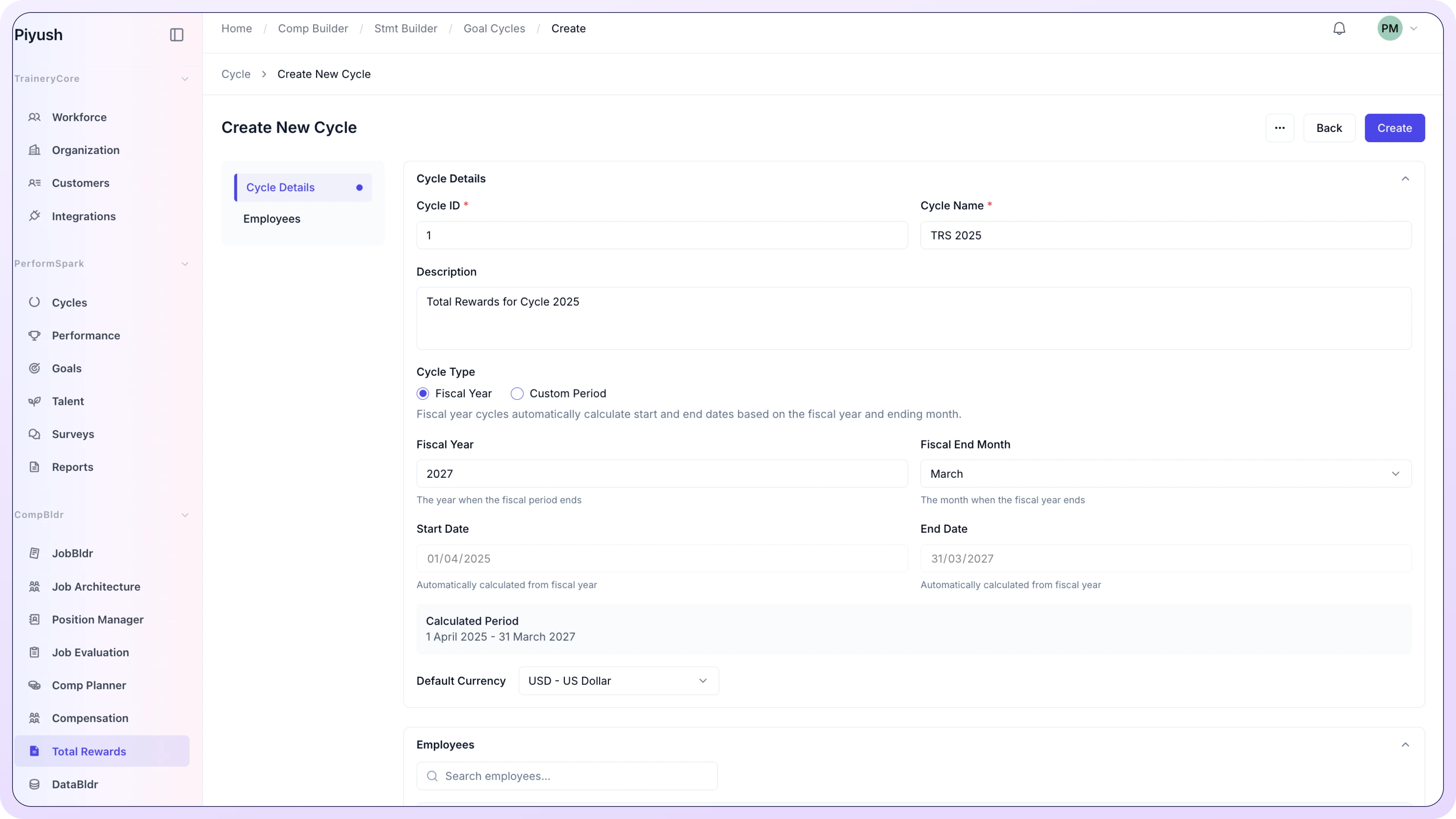
Your questions answered
What is compensation planning?
What is a merit matrix?
How does performance data feed into compensation planning in TraineryHCM?
What is a compa ratio in compensation planning?
What is pay equity analysis in the context of compensation planning?
How do you budget for a merit increase cycle?
What is the difference between a merit increase and a cost-of-living adjustment (COLA)?
Does equity compensation planning work differently from merit planning?

Plan compensation with confidence
If compensation decisions impact trust, retention, and financial outcomes in your organization, this module provides the structure needed to plan effectively.

.svg)

.svg)
.svg)

