

Connect Job Evaluation Context Across HCM and Compensation
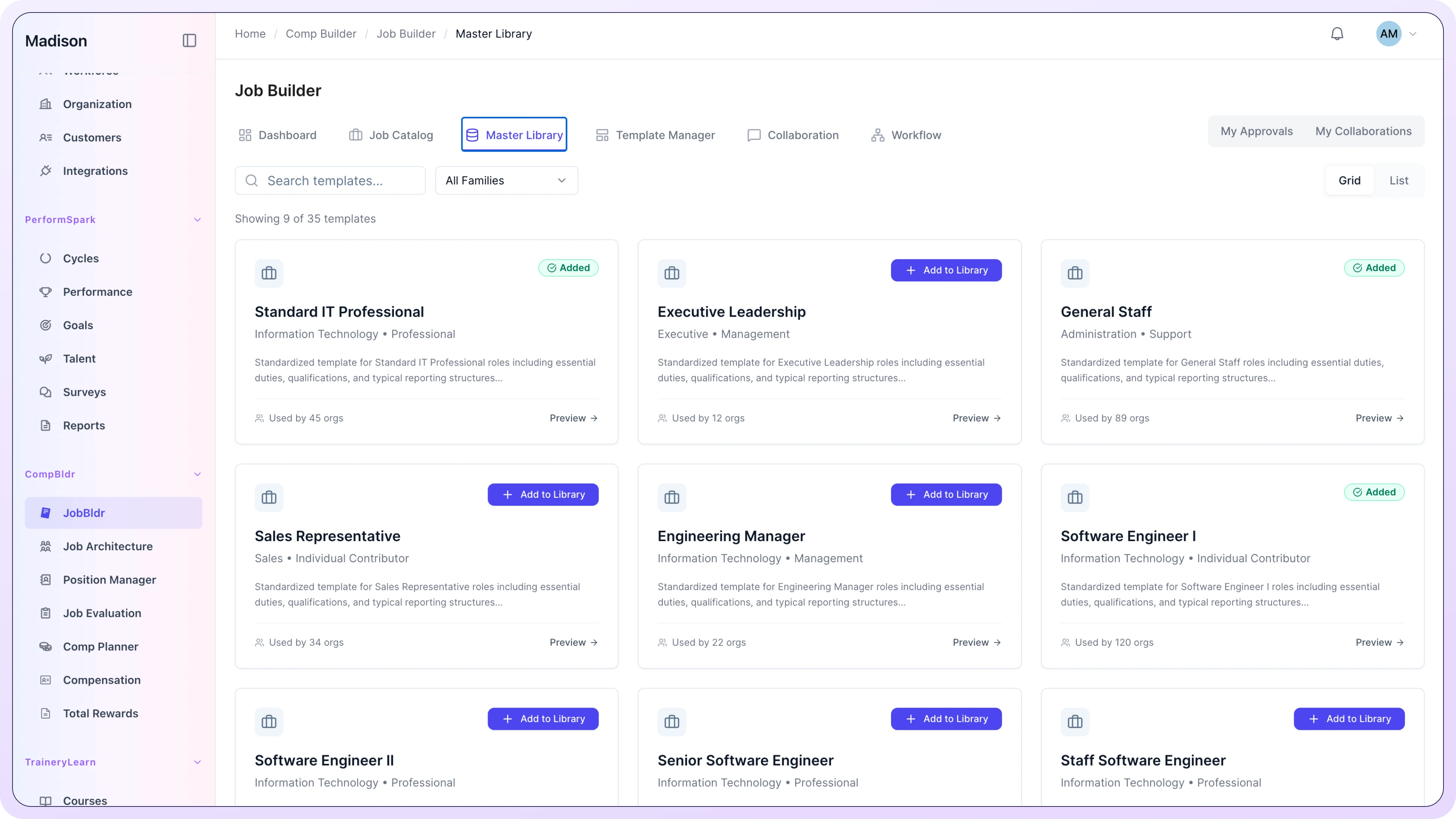
Keep evaluated role context connected with job architecture, employee records, performance expectations, reporting, and compensation across TraineryHCM. CompBldr owns the specialist job-evaluation workflow.
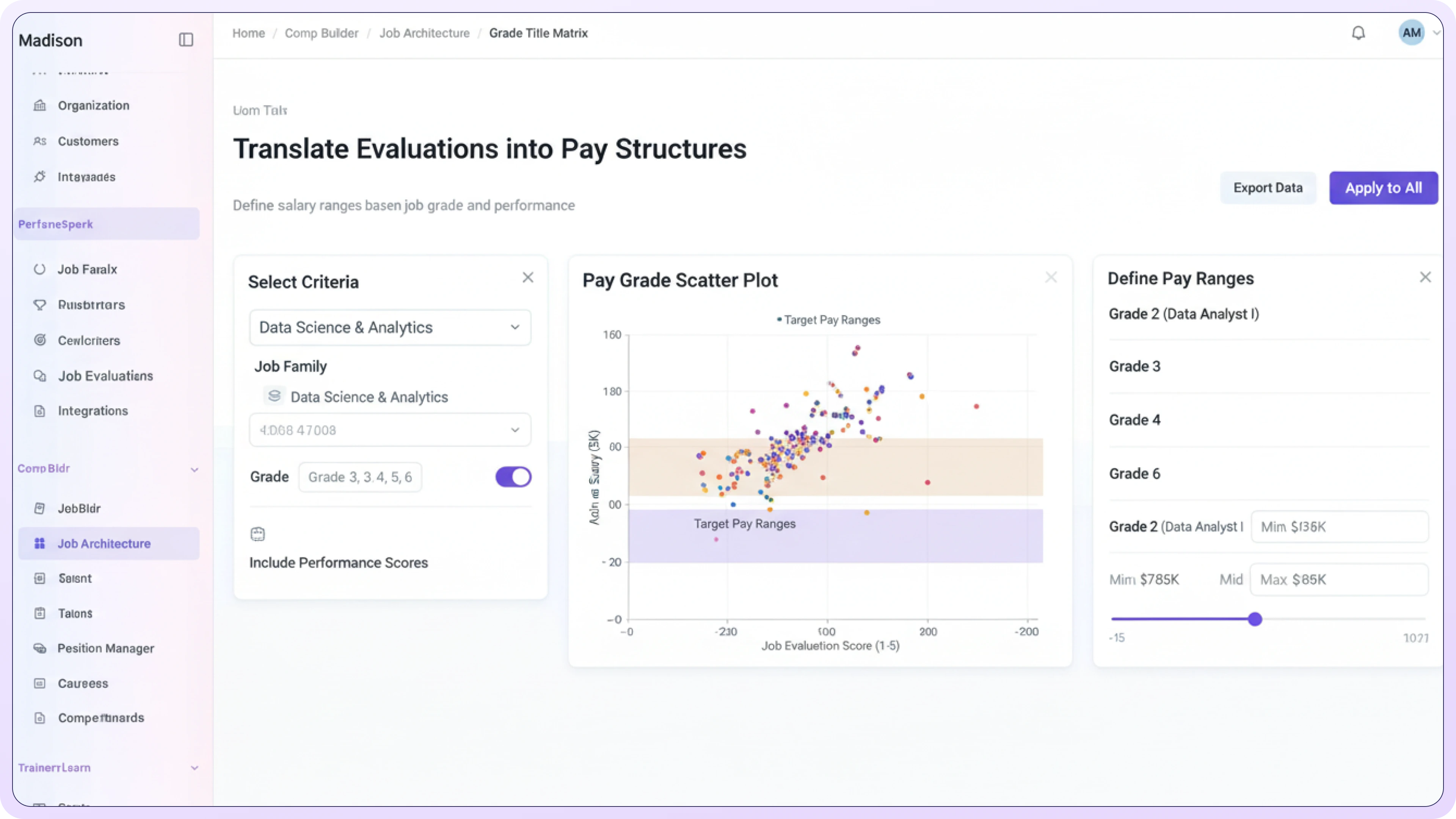
It supports a more consistent compensation foundation.
Job evaluation is not a formality.
A structured evaluation framework ensures compensation decisions are objective, consistent, and defensible across the organization.
When roles are evaluated inconsistently
.svg)
Built on the JESAP™ Methodology
CompBldr's specialist job-evaluation workflow can apply the JESAP® methodology, a structured 15-factor approach for evaluating positions against consistent, job-related criteria and connecting results to job architecture.
.svg)
- Experience – General
- Experience – Management
- Education
- Initiative & Ingenuity
- Mental Demand
- Analytical Ability & Problem Solving
.svg)
- Responsibility for Work of Others – Supervision
- Responsibility for Funds, Equipment, Property
- Responsibility for Accuracy
- Accountabilities & End Results
.svg)
- Contacts with Public
- Contacts with Employees
.svg)
- Machine & Computer Operations
- Working Conditions & Hazards
- Physical Demands
Evaluates Positions, Not People
Our job evaluation module supports the structured 15-factor evaluation methodology. It creates an objective internal hierarchy by evaluating roles across compensable factors such as:
.svg)
.svg)
.svg)
.svg)

Each role receives point-based scoring to establish objective internal hierarchy. This eliminates subjectivity and creates defensible structure.
Connect Evaluation Governance to the Wider HCM Context
A unified operating model that embeds structure, rules, and controls into every pay decision.
.svg)
Structured Point-Based Scoring
Apply consistent factor weighting to every job.
.svg)
Side-by-Side Role Comparison
Compare evaluation results to detect grading inconsistencies.
Transparent Grade Mapping
Map point totals to grade structures for review.
Version-Controlled History
Maintain audit-ready documentation of every evaluation.
.svg)
Calibration & Review Controls
Support committee review without spreadsheet chaos.
Defensible Hierarchy
Establish a rock-solid internal ranking backed by data.
Structured Evaluation Context for More Consistent Decisions
Built-in methodology transforms role and evaluation data into reliable, repeatable pay structures.
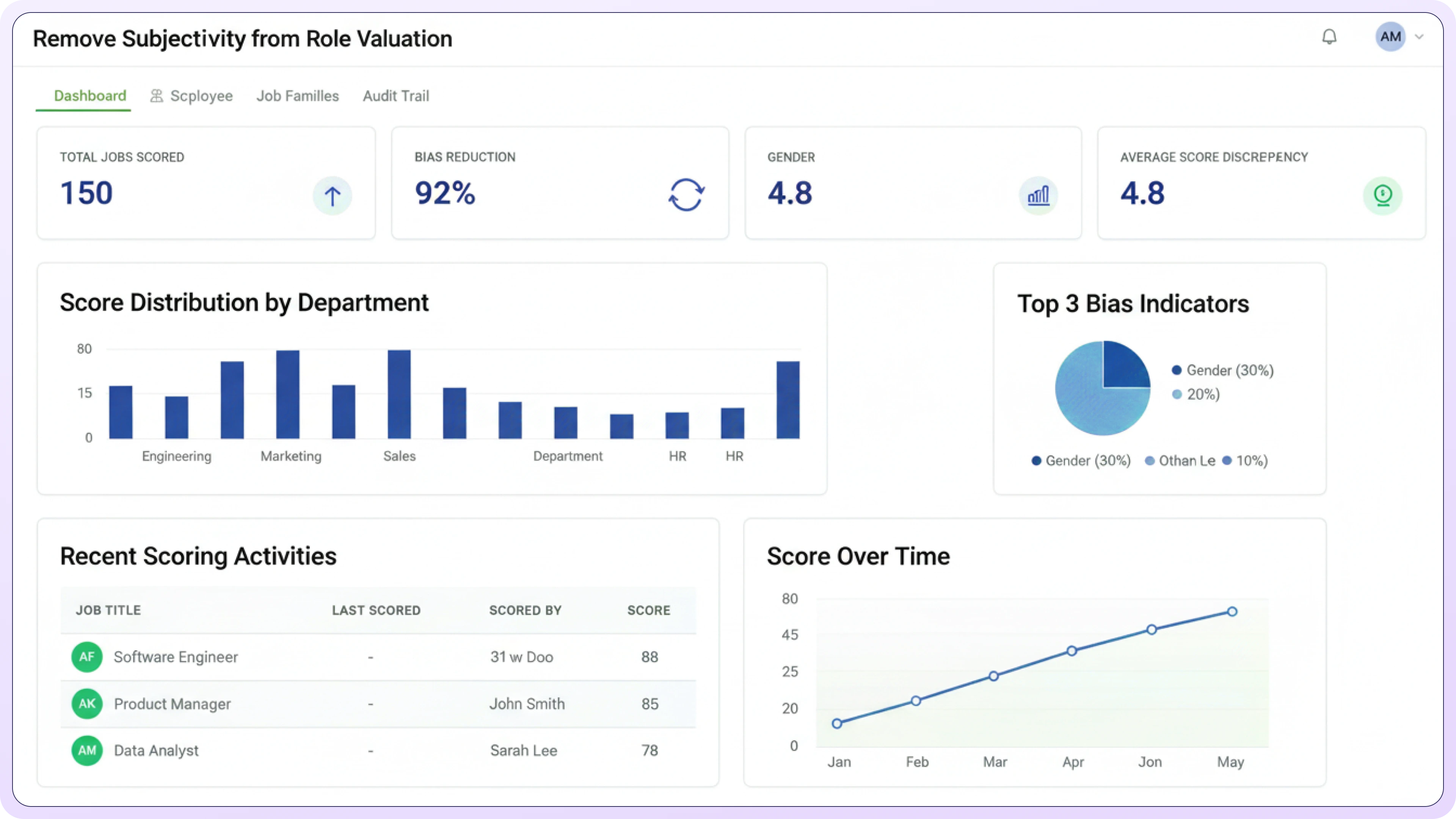
Reduce Subjectivity in Role Valuation
Structured factor scoring can reduce inconsistency by evaluating jobs against defined criteria. Roles can be documented using common dimensions so reviewers have a clearer basis for comparison.
.svg)
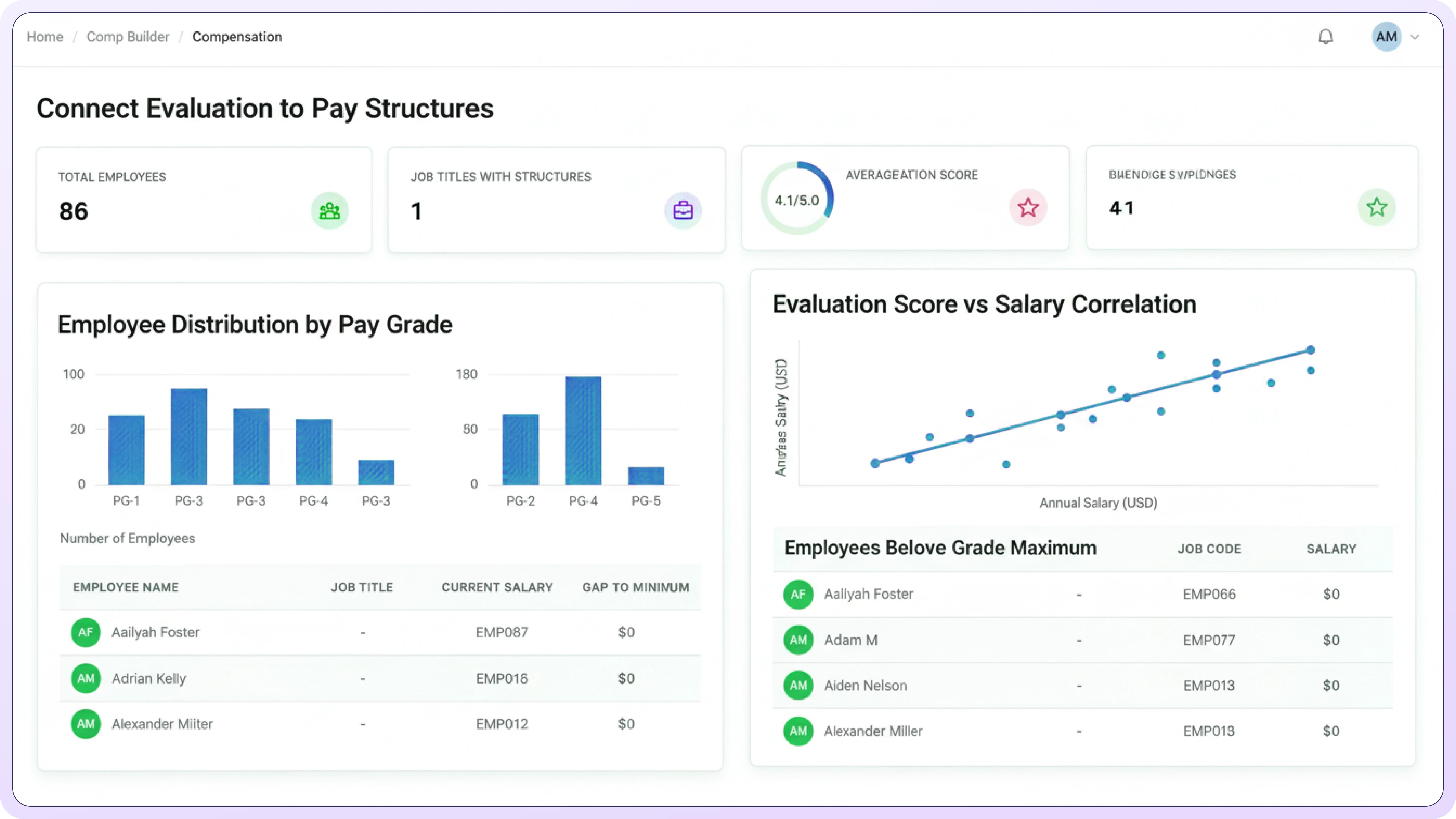
Connect Evaluation to Pay Structures
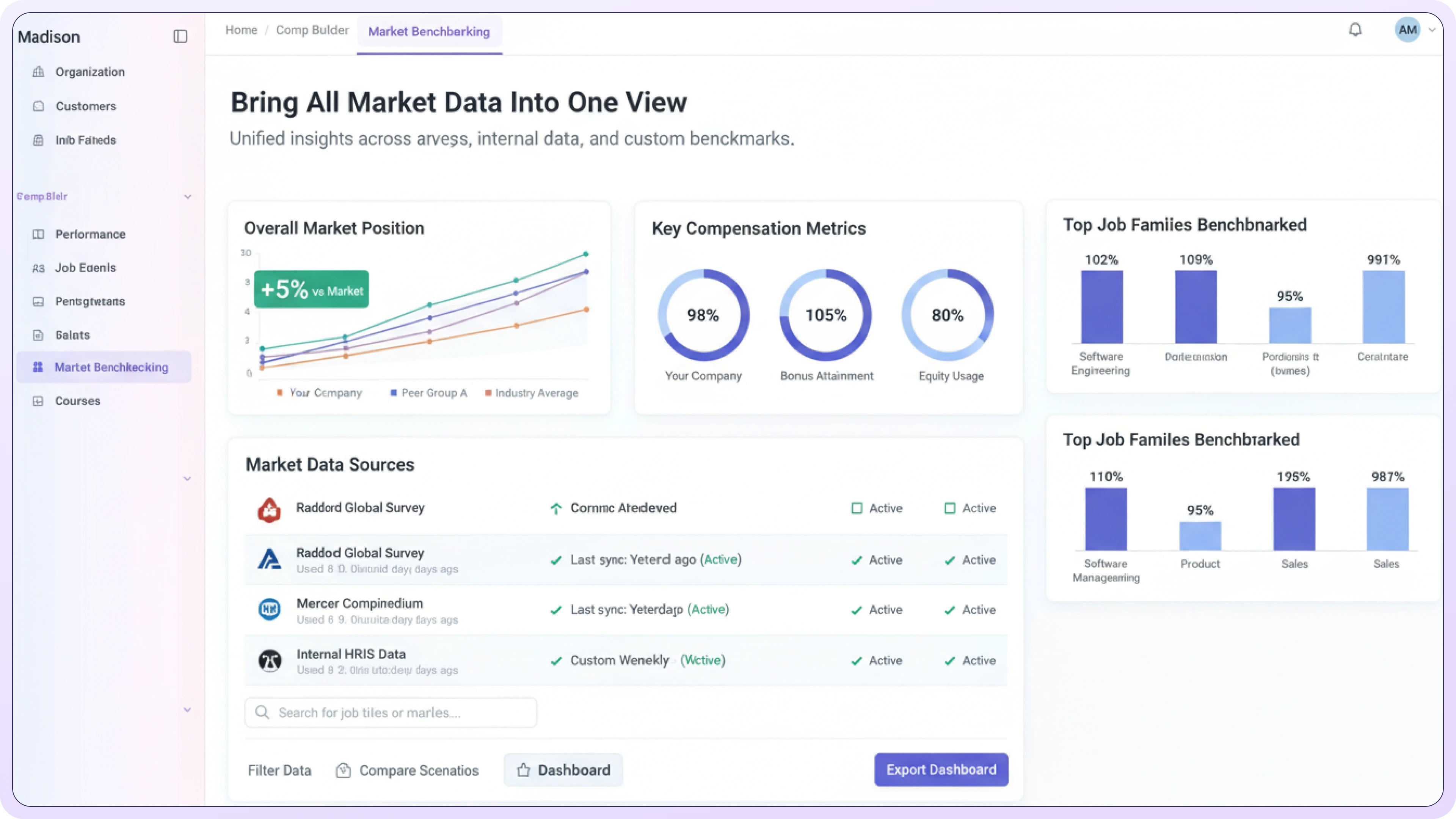
Evaluation outputs feed directly into grade architecture, market benchmarking, and compensation planning. Close the loop between internal worth and external competitiveness.
Why JESAP Is Different
Use a consistent, factor-based framework to evaluate roles across departments, locations, and job families.

Focus on vague descriptions
Lack structured factor weighting
Allow inconsistent interpretation
Cannot scale across departments
.svg)
Separates job from employee
Uses defined compensable factors
Applies structured point allocation
Produces defensible internal hierarchy
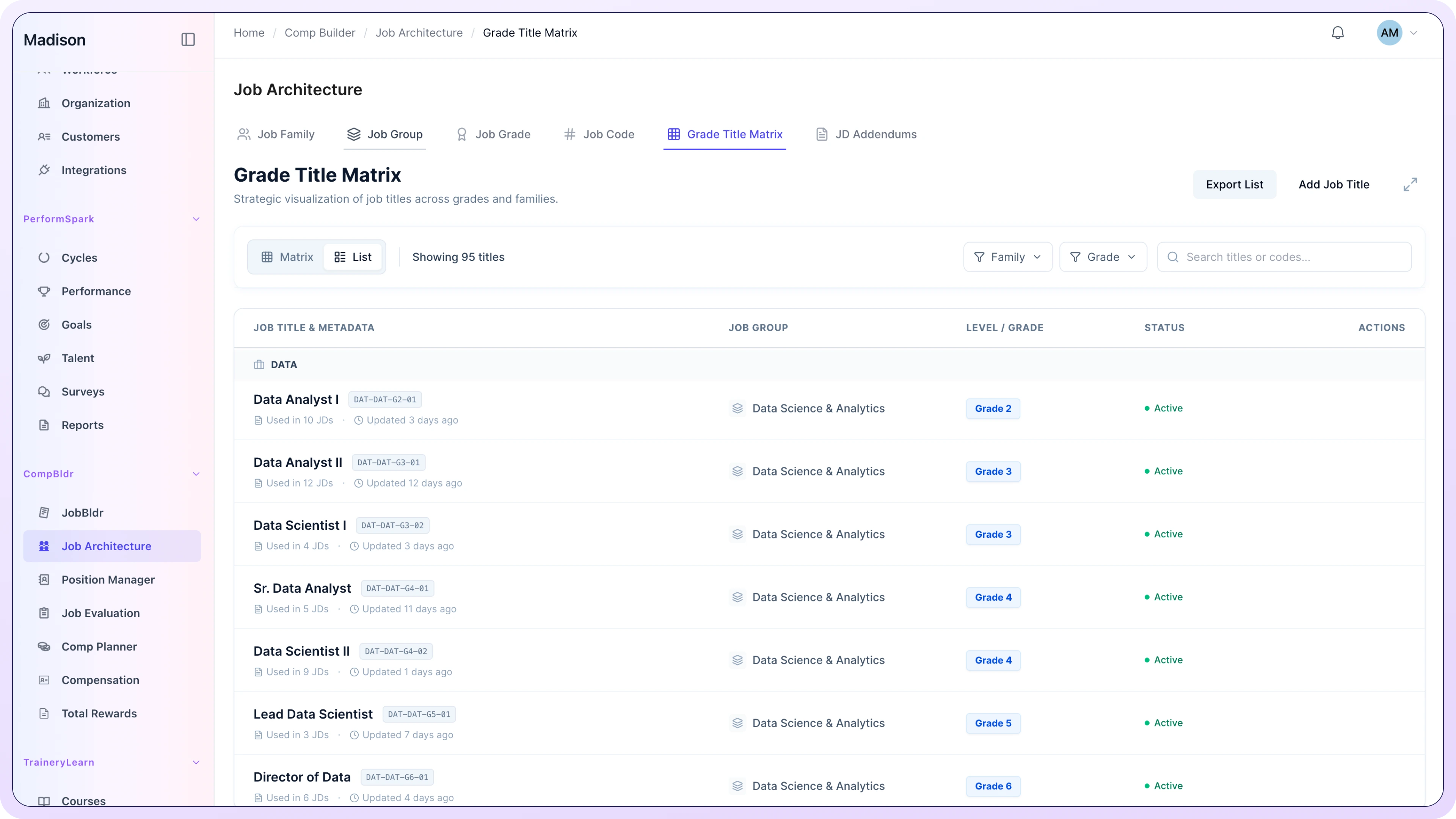
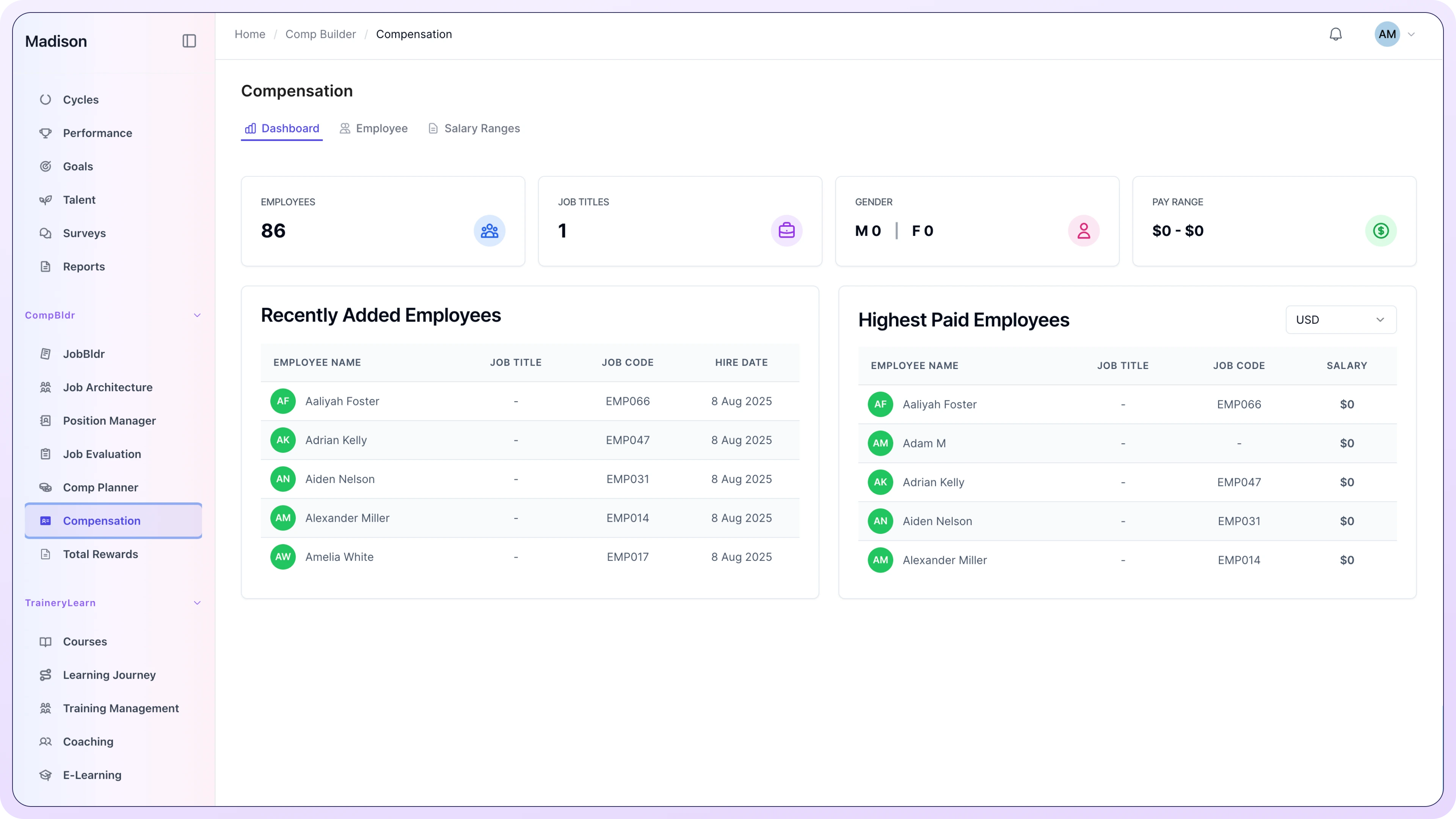
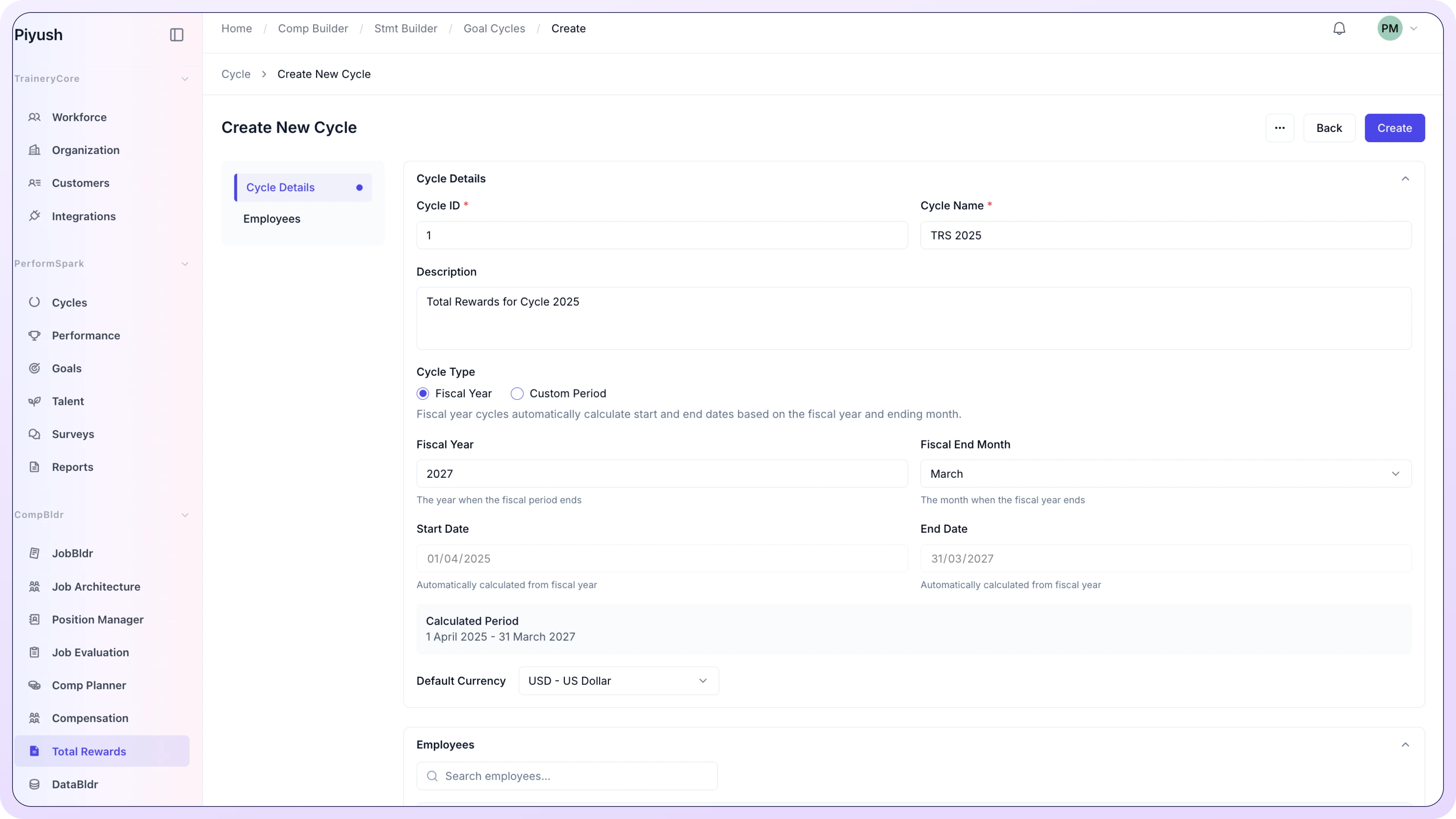
How Each Module Works Together
Take a deep dive into the specialized tools that power your compensation strategy.
- Managers often don’t know how to give useful feedback, and employees often don’t know how to take criticism and grow from it.
- Managers can move employees from ‘recommendation to doing’ by accessing subscribed learning solutions within the portal.
.svg)
- Managers often don’t know how to give useful feedback, and employees often don’t know how to take criticism and grow from it.
- Managers can move employees from ‘recommendation to doing’ by accessing subscribed learning solutions within the portal.
- Managers often don’t know how to give useful feedback, and employees often don’t know how to take criticism and grow from it.
- Managers can move employees from ‘recommendation to doing’ by accessing subscribed learning solutions within the portal.

- Managers often don’t know how to give useful feedback, and employees often don’t know how to take criticism and grow from it.
- Managers can move employees from ‘recommendation to doing’ by accessing subscribed learning solutions within the portal.
- Managers often don’t know how to give useful feedback, and employees often don’t know how to take criticism and grow from it.
- Managers can move employees from ‘recommendation to doing’ by accessing subscribed learning solutions within the portal.
- Managers often don’t know how to give useful feedback, and employees often don’t know how to take criticism and grow from it.
- Managers can move employees from ‘recommendation to doing’ by accessing subscribed learning solutions within the portal.
Support Enterprise Governance
transparency required for organizations under intense scrutiny.
Download the JESAP™ Methodology White Paper
Understand the 15-factor evaluation framework and how structured evaluation supports defensible compensation practices. Elevate your strategy from subjective to scientific.
Structured Job Evaluation vs Generic Tools
Compare consistent, factor-based job evaluation with subjective, spreadsheet-driven approaches that are harder to govern and audit.

Generic Tools
- Subjective ranking
- Limited factor transparency
- Spreadsheet-based
- Hard to defend in audits
- Seen as punitive

Specialist Job Evaluation in CompBldr
- Structured 15-factor evaluation
- Point-based scoring
- Grade mapping integration
- Audit-ready documentation
- Enterprise scalability
Your questions answered
What is job evaluation?
What methods are used for job evaluation?
What is the difference between job evaluation and job grading?
How does job evaluation connect to compensation bands?
How does CompBldr support job evaluation?
What is internal equity in job evaluation?
How often should job evaluations be updated?
What are the legal and compliance benefits of formal job evaluation?


Bring structure to evaluation.
Bring confidence to pay.
If job evaluation informs compensation, equity, or regulatory decisions in your organization, this module provides the structure and confidence to do it right.

.svg)

.svg)
.svg)

