
.svg)





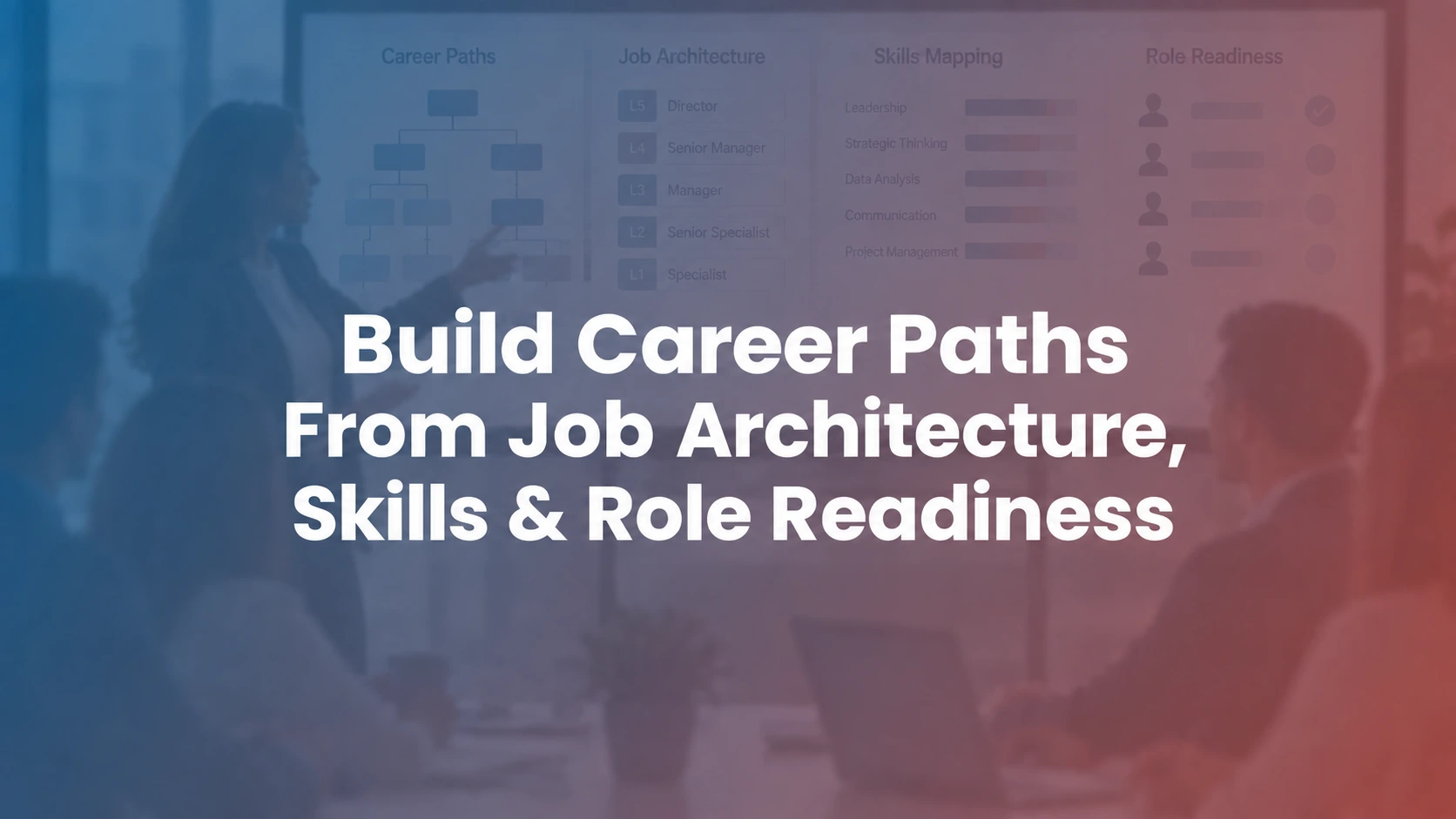

Table of Contents
Quick Takeaways
- Career paths should start with clear role architecture, not isolated job titles.
- Useful paths include lateral, specialist, and cross-functional moves as well as promotions.
- Skills should clarify capability gaps, while experience requirements show what must be practiced in real work.
- Role readiness should guide decisions without turning the path into a promotion guarantee.
- Track internal mobility and govern the framework so career paths stay aligned with changing work.
A useful career path is more than a sequence of job titles. It shows employees which moves are realistic, how roles relate to one another, what capabilities distinguish them, and what evidence suggests someone is becoming ready for a transition.
The strongest career paths connect three systems: job architecture, skills, and role readiness. TraineryHCM Career Pathing can connect those paths with Skills Management, Talent Review, Talent Pools and Bench Strength, and Succession Planning.
Start With Job Architecture, Not Career Arrows
Before drawing paths, define the role structure employees are moving through. Job architecture should establish role families, levels, scope, and meaningful differences between roles. Without that foundation, career paths become a collection of manager opinions and inconsistent title changes.
Career movement can take several forms. The distinction between career ladders, career lattices, and career paths is useful because not every valuable move is upward.
The U.S. Department of Labor's Career Pathways Toolkit is aimed at public workforce systems, but its structural model is still useful here: it treats career pathways as connected to job progression, competency models, multiple entry and exit points, and skill requirements. See the U.S. Department of Labor Career Pathways Toolkit notice.
What a Career Path Framework Should Contain
| Layer | What it defines | Why it matters |
|---|---|---|
| Role architecture | Families, levels, scope, relationships | Makes possible moves understandable and consistent |
| Skills | Capabilities required or useful in each role | Shows what employees may need to build |
| Experience | Work contexts that prepare someone for the next scope | Prevents paths from becoming training-only checklists |
| Readiness | Evidence needed before a move is credible | Separates development from guaranteed promotion |
| Governance | Who updates roles, skills, and path logic | Keeps the framework current as work changes |
Step 1: Group Roles Into Meaningful Families
Employees need to see how related roles connect. Group roles by the work and capability they share, not only by reporting line. A finance employee may have a vertical route inside finance, a specialist route, and an adjacent move into analytics or operations depending on the organization’s structure. Use workforce planning to validate which role families and capabilities are likely to matter as the organization changes.
Step 2: Define Levels by Scope, Not Title Alone
Levels should explain increasing complexity, autonomy, decision impact, knowledge depth, stakeholder responsibility, or leadership scope. If level definitions are vague, managers will interpret promotion differently and career paths will lose credibility. Keep current-role performance separate from next-role readiness so strong delivery today does not automatically become a promotion rule.
Step 3: Map Realistic Adjacent and Upward Moves
Do not build only a vertical ladder. Add lateral and diagonal transitions where the skill overlap and operating context make movement realistic. This improves internal mobility and gives employees more ways to grow without waiting for a management vacancy.
CIPD's 2026 discussion of internal mobility highlights the value of trusted internal pathways when organizations need to grow skills from within. That does not mean every employee should have a guaranteed route, but it reinforces the importance of making credible progression options visible. See the CIPD internal mobility discussion.
Step 4: Add Skills That Differentiate Roles
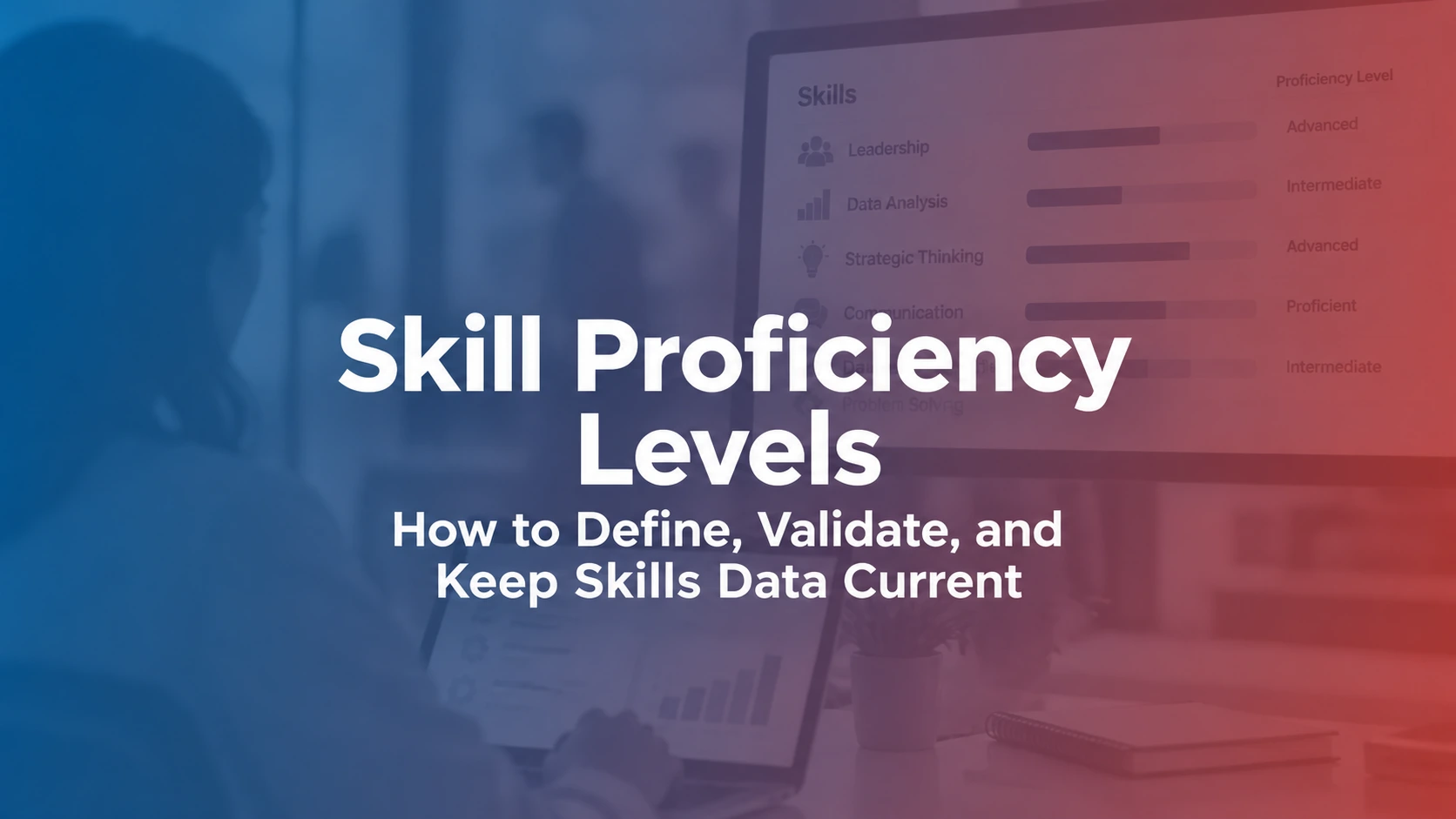
Start with a reliable skills inventory, then identify which capabilities matter for each role and how deeply they need to be applied. Define proficiency levels in observable terms that describe increasing complexity, independence, or application rather than generic labels with no behavioral meaning.
Use Skills Management to keep the capability view connected with employees and roles.
Step 5: Add Experience and Exposure Requirements
Not every career gap can be solved by a course. A future manager may need team leadership experience. A future director may need cross-functional ownership. A senior specialist may need evidence of handling higher-complexity work. Add these experiences to the path so development plans reflect real work.
Step 6: Define Role Readiness Without Making It Automatic
Use a promotion readiness framework for moves that increase level or scope. Readiness should combine performance, target-role skills, experience, judgment, and employee interest. Do not turn the path into a promise that completing a checklist guarantees a promotion.
Build a Career Path Data Model, Not Just a Diagram
A visual path becomes operational only when each role transition has enough structured data for employees, managers, and HR to interpret it consistently. At minimum, define the following for every important transition:
| Career-path field | What to record |
|---|---|
| Source role | The employee's current role or role family |
| Target role | A realistic next, adjacent, specialist, or cross-functional destination |
| Capability differences | Skills or knowledge that materially change between the two roles |
| Experience evidence | Work contexts or scope that should be demonstrated before the move |
| Readiness evidence | What would make the transition credible without implying a guaranteed promotion |
| Owner and review date | Who maintains the transition logic and when it was last validated |
Connect those fields through Career Pathing and Skills Management rather than maintaining separate diagrams, spreadsheets, and manager notes.
Step 7: Connect Career Paths With Talent Review and Succession
Talent Review helps leaders compare readiness evidence across teams. For broader future-talent visibility, use talent pools. For specific critical roles, connect the path with succession planning and critical-role assessment. A broader Talent Management view helps HR keep career development, mobility, and succession from becoming separate processes.
Show Employees More Than One Direction
Career transparency improves when employees can see several plausible destinations rather than one predetermined ladder. A path may include:
- vertical progression to a higher-level role;
- lateral movement to build adjacent capability;
- specialist progression without people management;
- cross-functional movement where skills transfer;
- temporary stretch assignments that build readiness.
Measure Whether the Career Path Is Actually Being Used
Do not stop at publishing role maps. Track internal applications, lateral moves, promotions, internal fill rate, time in role, movement between families, and recurring skill gaps. Use Reporting and Analytics to keep those patterns visible.
- Path usage: whether employees are actually viewing, discussing, or using defined paths in development conversations.
- Internal movement: whether lateral moves and promotions are occurring across the role relationships the framework says are realistic.
- Repeated readiness gaps: whether the same skills or experiences keep blocking movement into important roles.
- Stale-path rate: how many role relationships have not been reviewed since the underlying role, skill, or organizational structure changed.
Treat these as internal operating measures rather than universal benchmarks. The goal is to find where the framework is helping movement and where the path is only a diagram.
Govern Career Paths as the Organization Changes
Assign owners for role definitions, level logic, skills, and path relationships. Review the framework when jobs change, new capabilities emerge, organizational structures shift, or mobility data shows that the path no longer reflects how work actually moves. A path should have a visible last-reviewed date and a clear owner so employees are not making development decisions from obsolete role information.
Give employees career paths they can actually use
TraineryHCM connects role relationships, skills, readiness, talent reviews, and internal talent visibility so career paths become working development tools instead of static diagrams.
Explore Career PathingCommon Career Path Framework Mistakes
- Starting with titles instead of job architecture: path logic becomes inconsistent.
- Showing only promotions: lateral and specialist growth disappear.
- Using generic skill lists: employees cannot tell what meaningfully changes between roles.
- Ignoring experience: development becomes a training checklist.
- Publishing and forgetting: outdated paths remain visible after roles and skills change.
Final Takeaway
Build career paths from role architecture first, then add skills, experience, readiness, and governance. The goal is not to predict one future for every employee. It is to make realistic options, requirements, and development actions visible enough that employees and managers can make better decisions.
Turn Career Paths Into a Working Talent Process
See how TraineryHCM connects job relationships, skills, readiness, talent reviews, internal mobility, and succession so employees can understand realistic growth options and what development comes next.
Book a Demo
.svg)

.svg)
.svg)

