

.svg)





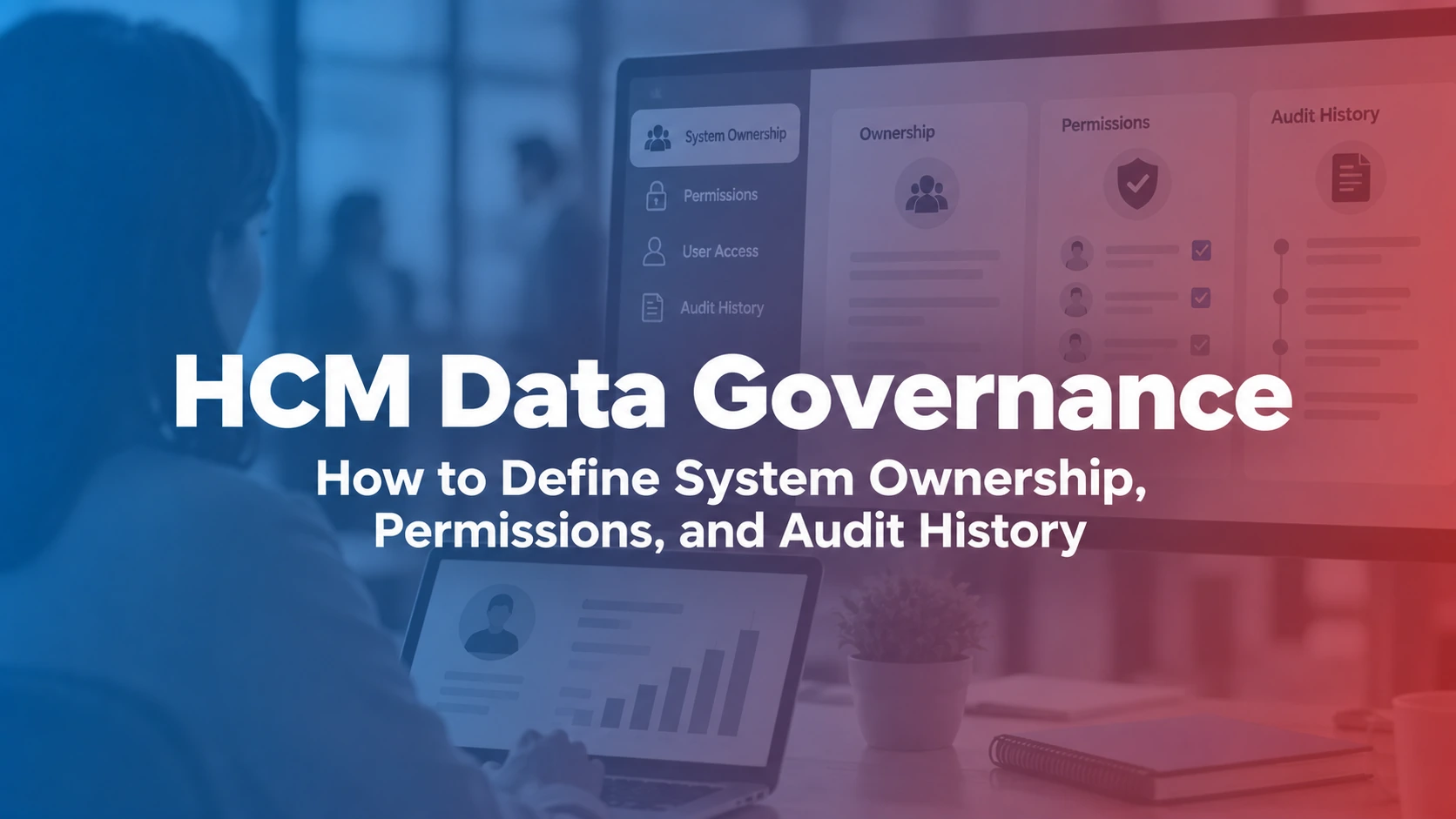

Table of Contents
Quick Takeaways
- HCM data governance defines ownership, access, edit authority, definitions, and auditability.
- Assign business owners by data domain instead of treating IT as the owner of workforce meaning.
- Use least-privilege access and review permissions when roles change and on a recurring cadence.
- Keep audit history for material talent and workforce-data changes.
- Focus data-quality rules on fields that materially affect decisions, reporting, and employee outcomes.
HCM data governance defines who owns workforce data, who can see or change it, what each field means, how changes are approved, and how the organization can trace important decisions over time. Without governance, even a modern HCM environment can produce conflicting records, stale skills data, unclear permissions, and talent decisions that are difficult to explain.
Governance matters across performance, Skills Management, Career Pathing, Talent Review, Succession Planning, and Reporting and Analytics.
HCM Data Governance Has Four Core Questions
| Governance question | What it controls | Example |
|---|---|---|
| Who owns it? | Definition and accountability | HR owns talent definitions; IT owns integration controls |
| Who can access it? | Permissions and visibility | Managers see only relevant employee or team data |
| Who can change it? | Edit authority and workflow | Role changes require an approved owner |
| Can we trace it? | Audit history and accountability | Readiness status records who changed it and when |
Start With Data Domains and Named Owners
Do not assign one person as the owner of every HCM field. Divide data into domains such as employee profile, organization structure, role and job architecture, performance, skills, career interests, talent review, succession, compensation inputs, and reporting definitions.
For each domain, name the business owner responsible for meaning and quality. Technical teams may manage systems and integrations, but they should not be forced to decide the talent meaning of a field. Connect the highest-priority domains to workforce planning so governance effort follows the data that materially affects future workforce decisions.
Define a Source of Truth for Each Critical Data Element
When the same concept exists in multiple systems, identify which source controls the authoritative value and how other systems receive updates. This is especially important for employee identifiers, role, level, manager, location, employment status, skills, and talent decisions.
Without a source-of-truth rule, reporting becomes a reconciliation exercise instead of decision support.
Use Role-Based Access Instead of Broad Manual Permissions
Permissions should follow the principle of least privilege: users receive only the access needed for their responsibilities. Separate view, edit, approve, and administrative permissions where the workflow requires different levels of authority.
The NIST Privacy Framework includes identity management, authentication, and access-control outcomes, including managing permissions with least privilege and separation of duties. It is a voluntary risk-management framework rather than an HCM-specific legal requirement, but it provides a useful control principle for workforce systems. See the NIST Privacy Framework.
Review access whenever a person's role changes and on a recurring schedule. Sensitive talent and employee data should not remain visible simply because access was granted years earlier.
Define Who Can Edit Consequential Talent Data
Not every manager input should become an unreviewed system-of-record value. For fields that influence consequential decisions—such as succession status, potential, role readiness, or validated proficiency—define who can enter the value, who can challenge it, and whether approval or calibration is required.
Talent Review can provide a structured place to calibrate talent judgments instead of allowing isolated edits to determine the outcome. Use a promotion readiness framework where a field influences advancement decisions so the underlying evidence and target-role requirements remain visible.
Keep Audit History for Material Changes
Audit history should answer who changed a value, what changed, and when. Depending on the workflow, it may also need the reason or approval context.
Examples include role or level changes, manager changes, access changes, skill validation, succession status, talent-pool membership, and other records that influence important workforce decisions.
Minimum audit-history fields
- Record changed: the field, object, or decision that changed.
- Previous and new value: enough context to reconstruct the change where appropriate.
- Changed by: the user, integration, or workflow responsible.
- Timestamp: when the change occurred.
- Reason or approval context: where the workflow requires justification or sign-off.
Govern Skills Data Separately From Generic Profile Data
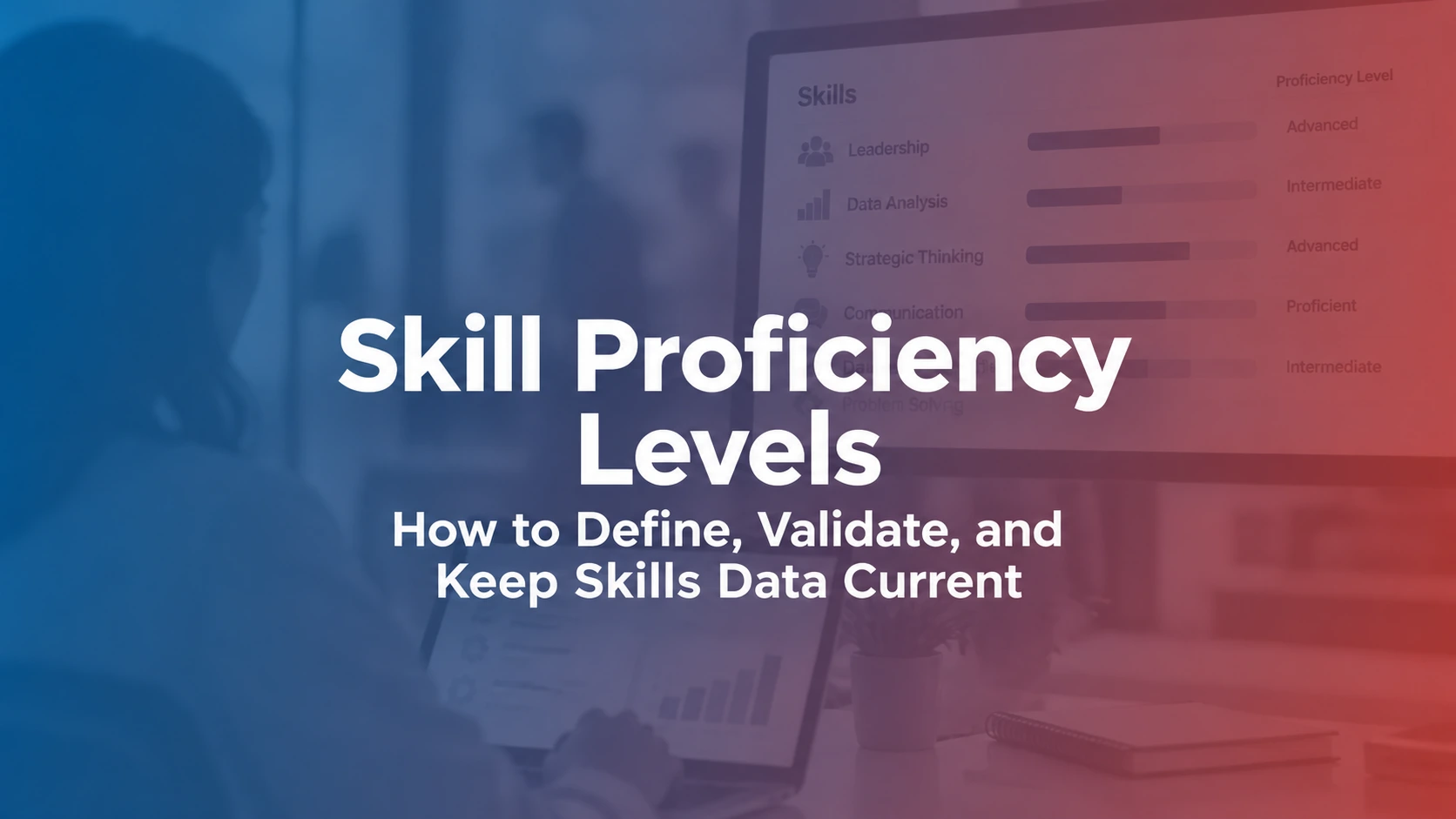
Skills data changes quickly and can come from self-assessment, managers, learning, projects, or other evidence. Use a skills inventory to establish the vocabulary and skill proficiency levels to define assessment meaning.
Then govern who can add new skills, who can change definitions, what evidence validates proficiency, and how stale assessments are handled inside Skills Management.
Govern Career and Mobility Data With Employee Intent in Mind
Career interests, preferred moves, location flexibility, and development goals can be highly useful for career pathing and internal mobility. But these fields should have clear visibility rules so employees understand who can see their preferences and how they may be used.
Use internal mobility metrics to analyze movement without exposing unnecessary individual-level detail in broad reporting. A broader internal mobility framework helps HR separate employee-facing career preferences from the aggregated movement data used for planning and analysis.
Govern the Full Data Lifecycle
Governance should cover more than creation and access. For important workforce data, define how the record is created, validated, updated, retained, archived, and retired. This is especially important for fields that can become stale while still looking authoritative.
| Lifecycle stage | Governance question | Example control |
|---|---|---|
| Create | Who can create the record and from what source? | Approved source system or controlled workflow |
| Validate | What makes the value trustworthy? | Allowed values, evidence, approval, or reconciliation |
| Use | Who may view or use it, and for what purpose? | Role-based visibility and documented use |
| Refresh | When does the value become stale? | Review date, event trigger, or freshness rule |
| Retire | When should the record be archived, superseded, or removed? | Retention and deletion rule aligned with business and legal requirements |
Define Data Quality Rules That Match the Decision
Not every field needs the same quality standard. Focus governance effort where incorrect or stale data creates material risk. Critical fields may require validation, allowed values, completeness rules, date checks, or reconciliation across systems.
| Data type | Example quality control | Why it matters |
|---|---|---|
| Role and level | Approved values tied to job architecture | Supports career, reporting, and workforce decisions |
| Skills proficiency | Assessment source and last-validated date | Prevents stale capability assumptions |
| Succession readiness | Defined categories, reviewer, review date | Improves explainability and freshness |
| Career interest | Employee-confirmed preference and visibility rule | Avoids building plans around assumed aspirations |
Use Governance to Improve Succession and Bench Strength
Succession planning depends on accurate role criticality, successor identity, readiness, and employee interest. Talent Pools and Bench Strength depends on reliable membership criteria and current capability evidence.
Use critical-role assessment and bench strength analysis with governed inputs so the resulting risk view is explainable. Succession planning metrics should use the same definitions for readiness, critical roles, and coverage across reports.
Document Definitions Used in Reporting
A metric can be technically correct and still misleading if different teams use different definitions. Define terms such as active employee, promotion, internal move, critical role, ready now, high potential, and internal fill rate.
Keep those definitions connected with reporting and analytics so dashboards do not become detached from the workforce processes they represent. A broader Talent Management view can help ensure the same employee, role, skills, and readiness concepts are not defined differently in separate talent processes.
Create a Governance Cadence
Governance should have recurring work: access review, data-quality review, definition review, stale-record cleanup, integration monitoring, and review of material changes. Assign owners and escalation paths instead of depending on ad hoc cleanup after a problem appears.
Example governance cadence
- On change: role, manager, employment status, permission, or system-integration changes trigger targeted review.
- Monthly or quarterly: review stale records, failed integrations, data-quality exceptions, and unresolved ownership issues according to business risk.
- Periodic access review: confirm whether users still need the workforce data they can view or edit.
- Definition review: revalidate important metrics, role definitions, skills, and readiness categories when the business model or talent process changes.
Build talent decisions on data people can trust
TraineryHCM connects talent workflows and reporting so organizations can manage ownership, permissions, evidence, and change history around the workforce data used for decisions.
Explore Reporting and AnalyticsCommon HCM Data Governance Mistakes
- No named business owner: technical teams become responsible for definitions they do not own.
- Permissions only grow: old access is never reviewed or removed.
- No audit history: important talent changes cannot be reconstructed.
- One quality rule for every field: effort is spent evenly instead of focusing on decision risk.
- Reporting definitions are undocumented: teams argue about metrics after dashboards are built.
Final Takeaway
HCM data governance is the operating system behind trustworthy talent data. Define owners, sources of truth, permissions, edit authority, quality rules, and audit history for the data that influences workforce decisions. Then review those controls as roles, systems, and business needs change.
Build Talent Decisions on Data People Can Trust
See how TraineryHCM connects ownership, permissions, skills evidence, talent decisions, reporting definitions, and change history across workforce workflows.
Book a Demo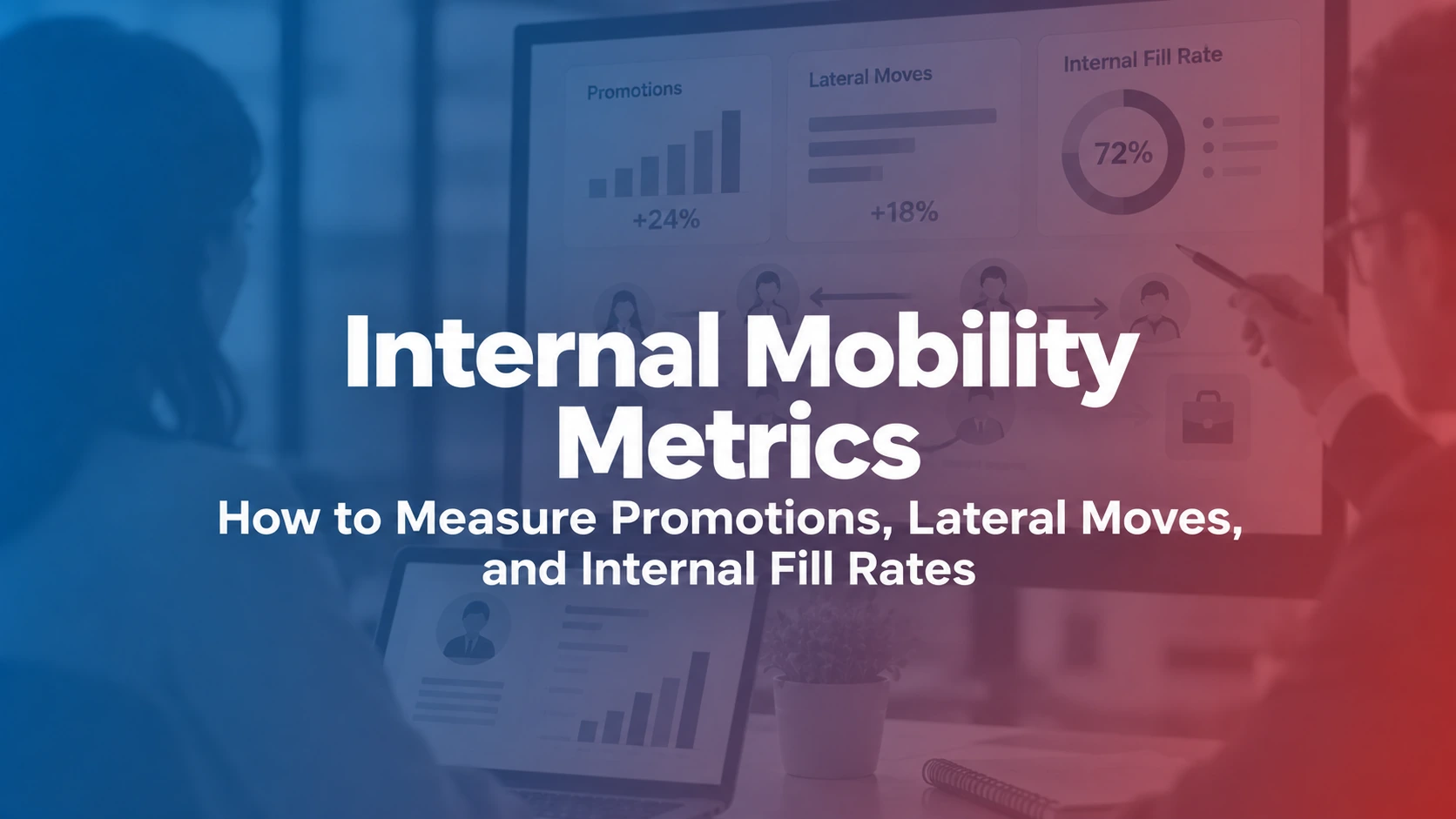
.svg)

.svg)
.svg)

