Bring all training, performance, and compliance data into a single, centralized reporting hub. Gain real-time visibility, reduce manual reporting, and make confident decisions with unified insights across your organization.
Centralizing HR, learning, performance, and compensation management within a single platform is more than just a smart strategy; it represents a step toward achieving operational excellence.
When HR, performance, learning, and compensation records are all stored together, data silos are removed. This allows relevant data to easily connect across different areas, such as linking performance results to learning activities or turnover to inadequate pay.
Executives, HR leaders, and team leaders use role-based access to current reports and metrics. Centralized dashboards allow Admins to view data at both macro and micro levels with just a few clicks.
HR, administrators, and program leaders can access real-time data and gain insights on demand. Customized alerts can notify leaders of anomalies, and automated reports can be distributed whenever needed or at scheduled times.
A centralized reporting structure isn’t just about making data accessible – it’s about turning workforce insights into a competitive advantage. It drives transparency, agility, and better decision-making at every level of the organization.
TraineryHCM™ makes it easy to manage complex organizational structures regardless of the number of business units you have while providing a unified view across all your subscribed modules.
Every action is tracked in the centralized system, providing added security and a reliable audit trail for compliance needs.
With intuitive dashboards and reports, you get a clear, at-a-glance understanding of your organization’s data, performance, and key metrics, all in one place.
Monitor learning, performance, and compensation activities across teams with seamless visibility—aligned to your subscription level.
Use ready-made report templates or create custom dashboards tailored to your organization’s unique goals and reporting needs.
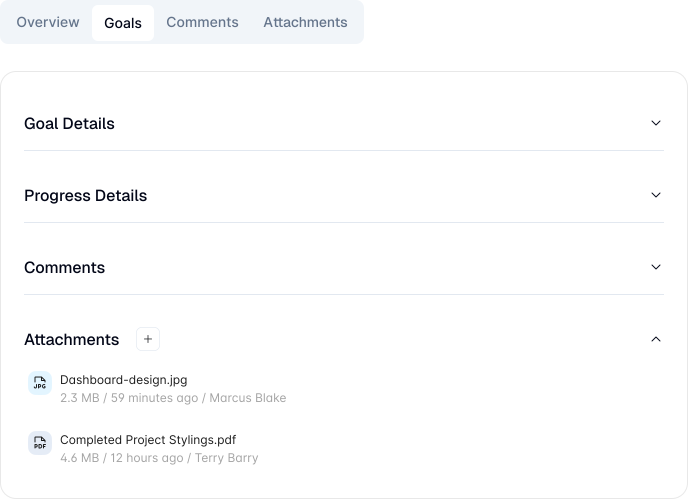
Users see relevant information based on role-based assignments. HR, Finance, and L&D teams can drill down into specific modular dimensions based on needs. Individual users have unique engagement, activity and workflow views.
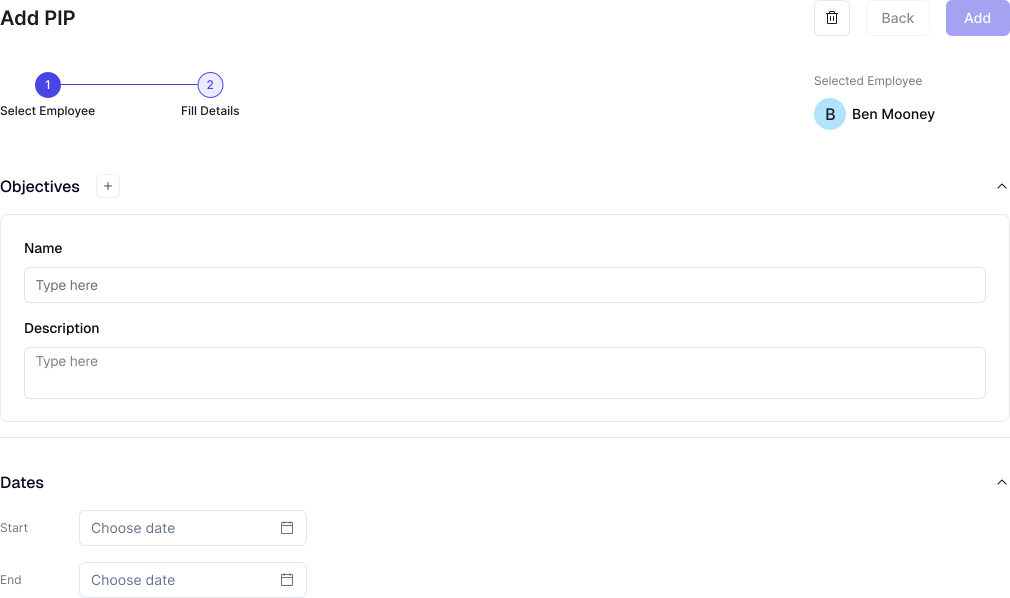
HR reporting software is a platform that aggregates workforce data from across HR systems and presents it in structured reports and dashboards, enabling HR leaders and business managers to make data-driven people decisions. It covers metrics including headcount, attrition, performance rating distributions, learning completion rates, compensation spend, and pay equity indicators. TraineryHCM's analytics module draws from all four platform pillars, providing cross-functional workforce insights in a single dashboard.
People analytics (also called workforce analytics or HR analytics) is the practice of using data about employees and organizational dynamics to improve hiring, development, performance, retention, and compensation decisions. It moves HR from reactive, administrative function to proactive, strategic partner. TraineryHCM's analytics draws on performance, learning, and compensation data simultaneously, enabling the kind of cross-pillar insights, such as training impact on performance rating change, that single-pillar tools cannot produce.
TraineryHCM's analytics module reports on: performance rating distributions and calibration outcomes, goal and OKR completion rates, 360 feedback themes, check-in frequency, IDP progress, learning completion rates and skill coverage, training ROI metrics, compensation band positioning and pay equity indicators, merit budget utilization, credential compliance rates, and attrition risk signals surfaced by TrAI. Reports can be filtered by department, level, location, manager, and time period.
Yes. TraineryHCM's reporting module allows HR teams to build custom dashboards by selecting metrics from across the performance, learning, and compensation data sets and arranging them in configurable report layouts. Custom dashboards can be saved, shared with specific stakeholders (such as department heads who need their own team view), and scheduled for automated delivery via email to HR leadership or the executive team on a weekly, monthly, or quarterly basis.
HR reporting presents historical data: what happened, when, and to how many employees. HR analytics interprets that data to explain why it happened and predict what will happen next. Reporting answers "what is our current attrition rate?" Analytics asks "which employee segments are at the highest attrition risk in the next 90 days and what is driving it?" TraineryHCM supports both through standard report templates and TrAI-powered predictive analytics.
Yes. All reports in TraineryHCM can be exported as CSV or Excel files for further analysis, or as formatted PDF reports for sharing with executive stakeholders. Reports can also be scheduled for automated export and delivery to designated email recipients at set intervals. HR teams with data warehouse environments can connect TraineryHCM data via the platform API for more advanced analytics in external business intelligence tools such as Tableau or Power BI.
TraineryHCM's unique cross-pillar reports include: training completion rate vs performance rating change (does learning investment improve performance?), IDP progress vs review cycle outcome (do employees with active development plans receive higher ratings?), compensation band positioning vs attrition rate (are underpaid employees leaving at higher rates?), and merit increase distribution vs pay equity indicators (does this merit cycle widen or narrow pay gaps?). These reports require data from multiple pillars in a single system.
TraineryHCM's analytics supports workforce planning by surfacing the data HR leaders need to anticipate future talent gaps: current skill coverage by department, certification expiry rates by team, high-performer attrition risk signals from TrAI, performance distribution trends over rolling periods, and learning investment patterns relative to business unit growth projections. These inputs enable HR to shift from reactive hiring to proactive talent development and succession planning.
Centralize HR, learning, performance, and compensation data into one unified reporting dashboard. Make fast, confident decisions with insights that are connected, visual, and actionable.